
Emily Raubenheimer’s radiant celebrations of Australian bush botanicals—featuring fluid, energetic lines and playful colour combinations—exemplify a powerful shift happening across the nation’s contemporary art scene. After her tree change from Melbourne to northern Victoria crystallised her artistic focus on native flora, Raubenheimer joined a growing cohort of Australian artists transforming eucalyptus, banksia, and wattle into abstract visual experiences that captivate collectors and interior designers alike. Susan Trudinger, listed in Bluethumb’s Top 10 Artists of 2024, similarly uses the diverse colours, shapes, and forms of Australian landscapes, flora, and native birds as her canvas for constant reinvention, while Joseph Russell’s “Eucalyptus High” collection merges digital mixed media techniques with serene botanical abstractions from his Byron Bay studio.
This intersection of native Australian flora and modern abstract art represents more than aesthetic experimentation—it signals a fundamental recalibration of how contemporary artists engage with the Australian landscape. Unlike the literal botanical illustrations that dominated earlier eras, today’s practitioners distil native plants into expressive forms, bold colour fields, and layered compositions that honour their subjects while embracing pure abstraction. From Alexandra Hirst’s meticulous glass engravings celebrating the quandong fruit to HSIN LIN’s seasonal interpretations of Banksia coccinea at Melbourne’s Mackley Gallery, artists across diverse media are proving that native flora offers boundless inspiration for contemporary abstract practice.
Key Takeaways
- Emily Raubenheimer and Susan Trudinger represent a 2024-2025 wave of artists featured in national “artists to watch” lists for their native flora abstractions
- Joseph Russell’s “Eucalyptus High” collection demonstrates how digital mixed media techniques are revolutionising botanical abstract art from Byron Bay studios
- HSIN LIN’s “The First Bloom” solo exhibition (June 2-30, 2024) at Mackley Gallery showcased seasonal approaches to Banksia coccinea interpretation
- The Botanical Art Society of Australia (BASA) continues expanding native flora representation through exhibitions like “Flora: Nature’s Gift” scheduled for July 5, 2026
- Laura’s Eyre Peninsula photography business proves commercial viability exists for native flora abstractions in modern Australian interiors
Contemporary Pioneers Reimagining Native Flora
Bluethumb, Australia’s leading online art marketplace, recognised a significant shift in its January 2025 announcement of Top 10 Artists of 2024. Among those honoured was Susan Trudinger, a full-time Canberra-based artist whose practice has been shaped by decades of creative exploration focused on landscapes, flora, and Australian birds. Trudinger’s approach exemplifies how native botanical subjects become vehicles for pure abstraction—she uses their diverse colours, shapes, and forms not as endpoints but as starting points for constant artistic reinvention.
What distinguishes Trudinger’s work from traditional botanical illustration is her willingness to sacrifice literal representation for emotional resonance. Her evolving personal style demonstrates how native flora can serve abstract composition rather than merely documenting species. This philosophy mirrors the broader movement among Australian contemporary artists who view eucalyptus gum nuts, banksia cones, and wattle blossoms as abstract elements rather than botanical specimens requiring faithful reproduction.
Meanwhile, in northern Victoria, Emily Raubenheimer’s journey illustrates how geographical relocation can crystallise artistic vision. After painting abstract compositions in Melbourne, her tree change fundamentally altered her relationship with native flora. Home Beautiful’s October 2025 feature “40 Australian Artists to Watch in 2025” highlighted Raubenheimer’s radiant celebrations of Australian bush botanicals, noting her distinctive use of fluid, energetic lines and playful colour combinations. Her work “Wattle Season” exemplifies this approach—golden yellows explode across canvas in gestural marks that suggest rather than depict the iconic native bloom.
Joseph Russell brings a different dimension to native flora abstraction from his Byron Bay studio. As both a visual artist and filmmaker, Russell created “Blue Banksia” in 2024 using digital mixed media techniques that blur boundaries between photography, painting, and digital manipulation. His “Eucalyptus High” collection produces serene abstract botanical art prints that capture the ethereal quality of eucalyptus forests without rendering individual leaves or branches. Russell’s work demonstrates how contemporary digital tools enable new forms of botanical abstraction impossible in traditional media.


These artists share common ground despite their geographical dispersion and varied techniques. Each recognises that Australia’s unique flora offers visual languages unavailable in European or North American botanical traditions. The angular geometry of banksia cones, the delicate chaos of eucalyptus foliage, and the explosive yellow of wattle blossoms provide compositional elements that naturally lend themselves to abstract interpretation. Moreover, these subjects carry cultural resonance for Australian audiences, connecting contemporary abstract practice to deeply rooted national identity.
Eucalyptus as Abstract Subject: The Digital Revolution
Joseph Russell’s “Eucalyptus High” collection represents a watershed moment in how digital technologies are transforming native flora abstraction. Created in 2024 from his Byron Bay base, these works employ digital mixed media techniques that layer photographic elements, digital painting, and algorithmic processing. The resulting prints capture what Russell describes as the “serene” quality of eucalyptus environments—not through literal depiction but through colour harmonies, layered transparencies, and suggested organic forms that evoke rather than illustrate.
The technical possibilities of digital abstraction allow artists to manipulate botanical source material in ways traditional media cannot match. Russell can isolate specific hues from eucalyptus bark, amplify the silvery-green tones of gum leaves, or create composite images blending dozens of tree specimens into unified abstract compositions. This approach aligns with broader trends in contemporary abstract art where digital tools enable unprecedented control over colour, texture, and compositional elements.
However, the eucalyptus presents unique challenges as an abstract subject. Unlike flowers with clear focal points, eucalyptus trees feature dispersed foliage, complex bark textures, and subtle colour variations that resist simple reduction. Artists working with eucalyptus must decide which elements to emphasise—the vertical rhythm of tree trunks, the gestural quality of hanging branches, or the atmospheric haze created by dense forests. Russell’s work suggests that successful eucalyptus abstraction often focuses on mood and atmosphere rather than specific botanical features.
The commercial success of eucalyptus abstractions reflects broader interior design trends favouring biophilic elements and connections to Australian landscape. Prints like “Gum Joy – Abstract Eucalyptus Art Print” and “Festive Leaves Falling – Abstract Eucalyptus Art Print” appeal to homeowners seeking artwork that references native environment without literal landscape representation. These works function equally well in contemporary living spaces and professional environments where abstract botanical themes provide visual interest without dominating spaces.
Colour Palettes Derived from Eucalyptus Species
Different eucalyptus species offer dramatically varied colour palettes for abstract interpretation. The ghost gum’s brilliant white bark suggests high-key compositions with crisp contrasts, whilst the red-flowering varieties provide opportunities for warm accent colours. Russell and other contemporary practitioners mine these natural colour relationships, extracting palettes that feel inherently Australian while functioning as sophisticated abstract colour schemes.
This approach differs fundamentally from imported abstract traditions that developed in European or American contexts. Where mid-century colour field painters might derive palettes from industrial materials or pure colour theory, Australian eucalyptus abstractionists ground their chromatic choices in observed natural phenomena. The dusty blue-greens, warm ochres, and silvery greys that dominate eucalyptus-inspired abstractions carry both aesthetic and cultural weight, connecting contemporary practice to generations of Australian artists who’ve grappled with representing the unique light and colour of the continent.
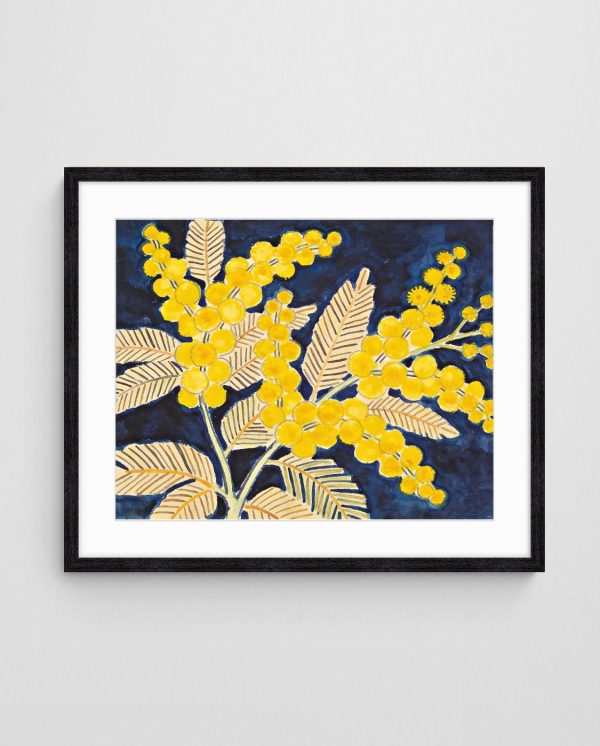


Banksia and Wattle: Bold Statements in Modern Collections
Banksia’s sculptural form makes it perhaps the most visually arresting native subject for abstract interpretation. The distinctive cylindrical cones, covered in hundreds of individual flowers, present artists with built-in abstract qualities—repetitive patterns, complex textures, and bold silhouettes that read powerfully even when simplified. Artists like HSIN LIN have made Banksia coccinea (the scarlet banksia) central to their practice, recognising how its vivid red blooms translate effectively into abstract compositions.
HSIN LIN’s solo exhibition “The First Bloom,” held June 2-30, 2024, at Mackley Gallery within the Victorian Artists Society, demonstrated contemporary approaches to banksia abstraction. The exhibition focused on capturing “the first bloom around surroundings during flowering season,” treating the temporal aspect of banksia flowering as integral to the work’s meaning. This seasonal approach adds conceptual depth to what might otherwise be purely formal exercises, grounding abstract compositions in specific ecological moments.
The “Banksia Blush – Australian Abstract Floral Art Print” exemplifies how contemporary artists balance botanical recognition with abstract freedom. Viewers can identify the work’s banksia inspiration through characteristic shapes and colour relationships, yet the composition operates according to abstract principles rather than botanical accuracy. This tension between recognition and abstraction creates engaging visual experiences that reward both casual viewing and sustained attention.
Wattle presents different opportunities for abstraction due to its explosive yellow blooms and delicate foliage. Emily Raubenheimer’s “Wattle Season” captures the sheer exuberance of wattle in flower without depicting individual blossoms. Instead, gestural marks and saturated yellow pigment convey the experience of encountering wattle in full bloom—a visceral response translated into abstract visual language. This experiential approach distinguishes contemporary native flora abstraction from earlier documentary traditions.
Banksia’s Geometric Potential
The banksia cone’s cylindrical form and regular pattern of follicles provide ready-made geometric structures that artists can emphasise or subvert. Some practitioners amplify these geometric qualities, creating compositions that border on geometric abstraction. Others deliberately disrupt the banksia’s inherent order, fragmenting cones or isolating individual elements to create more organic, gestural works. Both approaches demonstrate the banksia’s versatility as an abstract subject.
Alexandra Hirst’s 2024 glass engraving “Santalum Acuminatum (Quandong),” featured in JamFactory’s “Lush: South Australian Botanicals” exhibition in June 2024, extends native flora abstraction into three-dimensional media. Though focused on quandong rather than banksia, Hirst’s meticulous glass engraving demonstrates how native botanical forms translate across diverse artistic practices. Her work celebrates the vibrant quandong fruit through material transparency and engraved marks that abstract natural forms whilst fostering deeper appreciation for Australia’s botanical diversity.


Institutional Movements: BASA and Indigenous Practices
The Botanical Art Society of Australia (BASA) occupies a complex position within the native flora abstraction movement. Whilst BASA traditionally emphasises botanical accuracy over abstract interpretation, the organisation’s exhibitions increasingly include works that blend scientific documentation with contemporary abstraction. BASA’s annual exhibitions in Sydney, Melbourne, and regional centres provide platforms where traditional botanical illustrators and contemporary abstractionists engage in productive dialogue about representing Australian flora.
BASA’s upcoming exhibition “Flora: Nature’s Gift,” scheduled for July 5, 2026, at RQAS Gallery in Broadbeach, Queensland, promises to showcase diverse approaches to native plant representation. The organisation’s participation in the Botanical Art Worldwide Exhibition further connects Australian native flora practitioners to international conversations about botanical art’s evolving role. These institutional frameworks support both traditional and experimental approaches, recognising that native flora representation encompasses multiple valid methodologies.
Indigenous Australian art organisations offer parallel but distinct perspectives on native flora abstraction. Desart, incorporated in 1993 and supporting 39 member centres as of 2025, mounts the annual Desert Mob exhibition at Araluen Arts Centre in Alice Springs. Similarly, Arnhem, Northern and Kimberley Artists (ANKA) represents almost 50 member centres with up to 5,000 artists. Within these networks, native plants carry deep cultural and spiritual significance that extends far beyond aesthetic concerns.
Bush Medicine Leaves serve as a key motif for Gloria Petyarre and other Aboriginal artists from Utopia in Central Australia. These works, whilst often described as abstract by Western art discourse, emerge from detailed knowledge systems connecting plants to Country, ceremony, and healing practices. The apparent abstraction in these works reflects sophisticated visual languages developed over millennia, not modern abstract art’s rejection of representation. This distinction matters when considering the full spectrum of native flora abstraction in Australian art.
Bridging Indigenous and Contemporary Practices
Some non-Indigenous contemporary artists working with native flora abstraction acknowledge and engage with Indigenous visual traditions, though this engagement requires sensitivity and appropriate consultation. The challenge involves respecting Indigenous knowledge systems and artistic ownership whilst exploring how native plants might inspire contemporary abstract practice. Artists who navigate this terrain successfully often emphasise their personal relationships with specific landscapes or species rather than appropriating broader cultural narratives.
The institutional support structures for Indigenous and non-Indigenous practitioners remain largely separate, reflecting different histories, purposes, and communities. However, major public galleries increasingly present both traditions, allowing audiences to appreciate diverse approaches to representing Australian flora. This institutional recognition validates native flora as a subject worthy of serious contemporary artistic investigation across multiple cultural contexts and aesthetic frameworks, as explored in discussions about what inspires Australian artists.


Commercial Success and Interior Design Integration
Laura’s photography business, operating from the Eyre Peninsula in South Australia since 2009, demonstrates the commercial viability of native flora imagery for contemporary interiors. Laura captures the beauty of Australia’s native plants and flowers in their natural habitats, then processes images with signature white backgrounds and botanical styling using diffused light. Her work draws inspiration from “the raw yet fragile beauty of the Australian bush,” translating this aesthetic into prints and digital downloads that appeal to design-conscious consumers.
The success of businesses like Laura’s reflects broader interior design trends favouring biophilic elements and Australian content. Native flora abstractions function particularly well in modern Australian homes where they provide cultural specificity without the literal landscape imagery that can feel dated or limiting. Abstract interpretations offer visual interest and connection to Australian environment whilst maintaining the flexibility to complement diverse interior styles.
Kate Allen, listed in Bluethumb’s “10 Emerging Nature Artists to Watch in 2025” (published April 2025), bridges realism and abstraction in her “Flower Fields” series. The Western Australian artist mixes fine details with colour blocking, creating energetic textures that reimagine florals in fresh, contemporary styles. Allen’s work appeals to collectors seeking pieces that reference botanical subjects without traditional floral painting’s sometimes saccharine associations. This market positioning demonstrates how native flora abstraction occupies profitable territory between pure abstraction and literal representation.
Interior designers and stylists increasingly specify native flora abstractions for residential and commercial projects. These works provide Australian cultural markers without clichéd koalas or literal Uluru sunsets. In professional environments like corporate offices, native flora abstractions project sophistication whilst maintaining approachability—a balance that literal abstractions sometimes struggle to achieve. The “Golden Wattle on Blue – Australian Native Floral Wall Art Print” exemplifies this commercial appeal, combining recognisable Australian subject matter with contemporary abstract treatment suitable for diverse settings.
Price Points and Market Segments
Native flora abstractions occupy varied price points depending on medium, artist recognition, and edition size. Limited edition giclée prints typically range from $58 to $72 for standard sizes, whilst original paintings command significantly higher prices based on artist reputation and scale. This pricing structure makes native flora abstraction accessible to emerging collectors whilst maintaining premium segments for established practitioners.
The print market has proven particularly robust for native flora subjects. High-quality reproduction technologies allow artists to reach broader audiences whilst maintaining control over their work’s presentation. Collectors appreciate the accessibility of prints whilst artists benefit from recurring revenue streams that support their ongoing practice. This economic model has enabled artists like Joseph Russell to sustain full-time practices whilst building recognition through accessible print editions.
Seasonal Interpretations: First Bloom and Beyond
HSIN LIN’s approach of painting “the first bloom around surroundings during flowering season” introduces temporal specificity often absent in abstract art. By grounding abstract compositions in particular ecological moments—the first scarlet banksia flowers opening, wattle’s early spring explosion—artists create works that resonate with viewers’ lived experiences of Australian seasons. This specificity adds conceptual depth without sacrificing abstract freedom.
Australian flora’s seasonal rhythms differ markedly from Northern Hemisphere patterns, offering unique opportunities for artists attuned to local ecology. Spring’s wattle profusion, summer’s eucalyptus flowering, autumn’s banksia cones, and winter’s subtle shifts all provide distinct visual vocabularies. Artists working with these seasonal markers create bodies of work that track environmental changes whilst exploring formal abstract concerns. The “Festive Leaves Falling 2 – Abstract Eucalyptus Art Print” captures autumn’s particular quality through abstract means, connecting seasonal experience to aesthetic interpretation.
Climate change adds urgency to seasonal documentation through abstract practice. As flowering times shift and some species face threatened status, artistic records—even abstract ones—gain additional significance. Artists like HSIN LIN, who focus on first blooms, inadvertently create temporal markers that may gain documentary value as environmental conditions evolve. This unintended consequence adds weight to what might otherwise be purely aesthetic exercises.
Regional Variations in Flora and Practice
Australia’s vast geography produces dramatic regional variations in native flora, which in turn influences artistic practice. Emily Raubenheimer’s move from Melbourne to northern Victoria changed her available subject matter and quality of light. Byron Bay’s subtropical environment surrounding Joseph Russell’s studio differs entirely from Laura’s Eyre Peninsula territory. These geographical specificities mean that native flora abstraction remains grounded in particular places despite abstract treatment.
Regional galleries and artist-run initiatives support native flora practitioners across the continent. Canberra’s established arts infrastructure nurtures Susan Trudinger’s practice, whilst Melbourne’s Victorian Artists Society hosted HSIN LIN’s solo exhibition. This distributed network ensures native flora abstraction develops through multiple regional perspectives rather than becoming dominated by major urban centres. The result is a richer, more varied movement that reflects Australia’s geographical and botanical diversity.
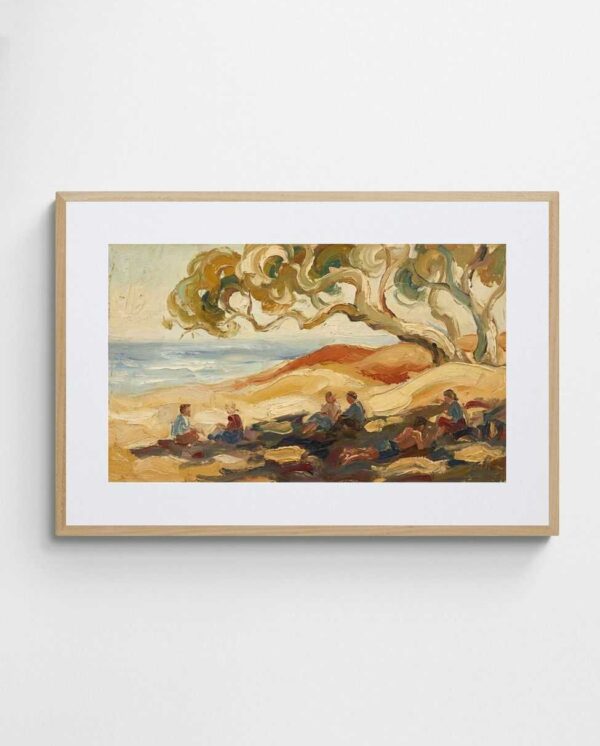


Historical Context: Margaret Preston’s Legacy
No discussion of native flora in Australian abstract art can ignore Margaret Preston, the modernist painter and printmaker celebrated for bold, decorative works inspired by Australian flora and Indigenous art. Preston’s practice, active through the mid-twentieth century, established native plants as legitimate subjects for serious artistic investigation. Her use of bold colours, simplified forms, and focus on native flora and fauna created templates that contemporary practitioners continue engaging with, whether consciously or not.
Preston’s later works demonstrate increasing abstraction, showing influence “in the use of colours, in the interplay of figuration and abstraction in the formal structure.” This progression from representation toward abstraction whilst maintaining botanical subjects prefigures current practitioners’ approaches. Preston proved that native flora could sustain sophisticated formal investigation, validating the subject matter for subsequent generations of Australian artists.
However, Preston’s engagement with Indigenous art raises complex questions that contemporary practitioners must navigate carefully. Her appropriation of Indigenous visual elements, whilst common in her era, would be considered inappropriate today. Current artists working with native flora must establish their own authentic relationships with subjects rather than relying on Preston’s models. This requires developing personal visual languages that honour both native plants and Indigenous custodianship without appropriating cultural knowledge.
The distance between Preston’s era and today highlights how dramatically Australian art discourse has evolved. Contemporary native flora abstractionists operate within frameworks that emphasise environmental awareness, Indigenous perspectives, and global contemporary art conversations. Yet Preston’s fundamental insight—that Australian flora offers unique visual possibilities unavailable in European traditions—remains valid and continues inspiring new generations of practitioners, as discussed in reimagining Australian art beyond traditional frameworks.
Printmaking Traditions and Contemporary Practice
Preston worked extensively in printmaking, particularly woodcuts and linocuts, techniques that naturally favour simplified forms and bold compositions. Contemporary artists continue exploring these media for native flora subjects, recognising how printmaking’s technical requirements encourage abstraction. The reduction of forms necessary for successful prints aligns naturally with abstract interpretation, making printmaking particularly suited to native botanical subjects.
Digital technologies now enable hybrid approaches that combine traditional printmaking aesthetics with contemporary production methods. Artists can create works with woodcut or linocut visual qualities using digital tools, then produce editions through giclée printing. This technological evolution allows broader audiences to access printmaking aesthetics whilst giving artists greater control over editions and colour variations. The result is contemporary practice that honours printmaking traditions whilst embracing current production possibilities.
The Future Trajectory of Native Flora Abstraction
The momentum behind native flora abstraction shows no signs of diminishing as we move deeper into 2025 and beyond. Multiple factors suggest this trajectory will continue strengthening. Environmental awareness increasingly shapes cultural production, with audiences seeking art that reflects ecological consciousness. Native flora abstraction satisfies this desire whilst avoiding the didacticism that can undermine environmental art’s effectiveness. These works celebrate Australian botanical diversity through aesthetic means, creating emotional connections that support broader conservation awareness.
Technological developments continue opening new possibilities for botanical abstraction. Artificial intelligence, augmented reality, and advanced image processing tools offer artists unprecedented capabilities for manipulating and reimagining botanical source material. However, the most compelling work will likely continue balancing technological possibility with authentic engagement with actual plants in specific environments. Technology serves the vision rather than substituting for direct observation and experience.
The commercial viability demonstrated by practitioners from Joseph Russell to Laura suggests sustainable career paths exist for artists focusing on native flora abstraction. As Australian interiors increasingly favour local content over imported aesthetic formulas, demand for sophisticated native flora interpretations should continue growing. This market support enables artists to develop sustained practices rather than treating native flora as occasional subjects, similar to how emerging Australian abstract artists are building recognition.
Educational institutions play crucial roles in supporting emerging practitioners. Art schools increasingly emphasise Australian content and environmental awareness, preparing students to engage thoughtfully with native subjects. Mentorship networks connecting established practitioners like Susan Trudinger with emerging artists ensure knowledge transfer and practice development. These institutional supports create ecosystems where native flora abstraction can flourish across multiple generations of artists.
Climate Change as Catalyst
As species face increasing environmental pressures and familiar landscapes transform, artists feel greater urgency to document and celebrate botanical diversity. Abstract interpretation offers ways to honour plants’ essence without claiming scientific documentation’s authority. This approach acknowledges emotional and aesthetic responses to environmental change whilst respecting scientific discourse’s distinct role.
The “Earthy Banksia Boho – Australian Native Boho Wall Art Print” demonstrates how native flora abstraction intersects with broader design trends like bohemian aesthetics. These crossover moments expand audiences beyond traditional art collectors, integrating native flora abstraction into mainstream design consciousness. As these works become familiar presences in Australian homes and public spaces, they shape how Australians visualise and value native botanical heritage.
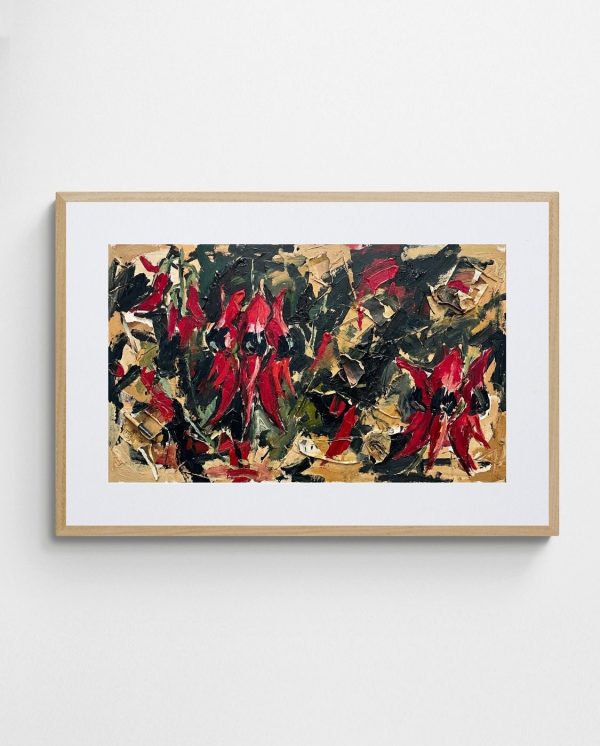
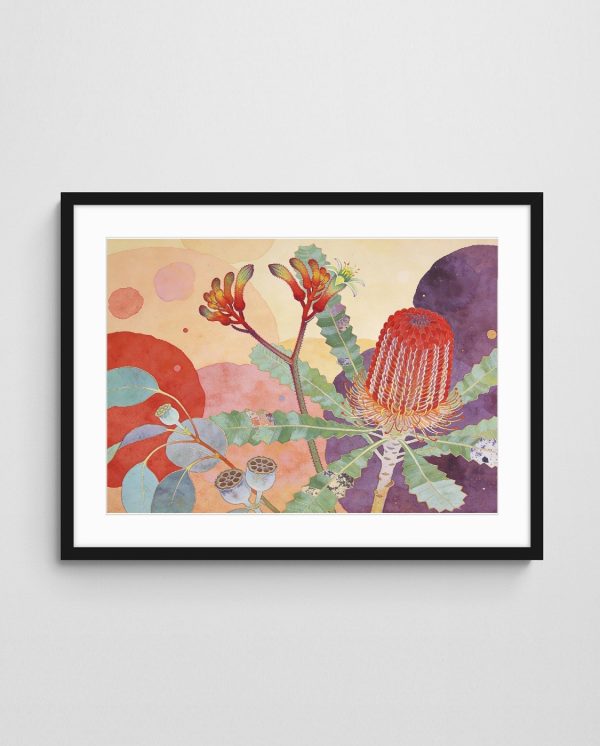


International audiences increasingly recognise Australian native flora abstraction as a distinct contribution to contemporary art discourse. Current practitioners confidently assert Australian subject matter’s validity. This cultural confidence reflects broader shifts in how Australian art positions itself globally—not as peripheral response to metropolitan centres, but as equal participant in international conversations with unique perspectives to contribute.
The artists featured in publications like Home Beautiful’s “40 Australian Artists to Watch in 2025” and Bluethumb’s various “artists to watch” lists represent just the visible edge of a much larger movement. Hundreds of practitioners across Australia engage with native flora through contemporary abstract approaches, many operating outside major gallery systems through independent studios, online platforms, and regional networks. This distributed, decentralised character ensures native flora abstraction remains responsive to local conditions rather than homogenising around single aesthetic approaches.
Collaboration between artists, botanists, and land managers offers promising directions for future development. Artists bring aesthetic sensitivity and communication skills, whilst scientists contribute ecological knowledge and species expertise. Indigenous knowledge holders can share appropriate cultural perspectives when collaboration protocols are respectfully established. These interdisciplinary approaches create richer understandings of native flora whilst producing artwork grounded in authentic relationships with subject matter, particularly relevant for those exploring Australian botanical prints in their spaces.
Public art commissions increasingly feature native flora abstractions, bringing these works into shared civic spaces. Large-scale installations, architectural integrations, and temporary exhibitions introduce broader audiences to contemporary interpretations of Australian botanical subjects. These public presentations validate native flora abstraction as culturally significant practice whilst creating opportunities for artists to work at ambitious scales. The visibility gained through public commissions often translates into commercial gallery opportunities and collector interest.
Educational and Community Engagement
Many native flora abstractionists engage in educational activities—workshops, artist talks, and community projects—that share their practices with broader audiences. These educational initiatives build appreciation for both native plants and abstract art, creating informed audiences who understand the artistic choices involved in translating botanical subjects into abstract compositions. Emily Raubenheimer, Susan Trudinger, and others contribute to public understanding through these engagement activities, enriching cultural discourse around Australian flora.
Children’s exposure to native flora abstraction through school programmes, public gallery education initiatives, and accessible print markets shapes future generations’ aesthetic preferences and environmental awareness. Young Australians growing up with native flora abstractions in homes, schools, and public spaces develop visual literacy around both contemporary art and botanical subjects. This generational shift suggests native flora abstraction will remain culturally relevant for decades to come.
The integration of native flora abstraction into interior design discourse, as seen through works like the “Waratah Whispers – Vibrant Abstract Botanical Art Print Australia,” demonstrates how artistic movements gain cultural traction through multiple channels simultaneously. Gallery exhibitions, online marketplaces, interior design features, and social media exposure work synergistically to build awareness and appreciation. This multi-platform presence ensures native flora abstraction reaches diverse audiences with varied entry points to engagement.
Looking toward 2026 and beyond, native flora abstraction has moved from marginal practice to recognised movement within Australian contemporary art. The artists, institutions, and commercial frameworks now in place provide infrastructure for sustained development. Environmental pressures, technological possibilities, and cultural confidence combine to create conditions where native flora abstraction can flourish. The challenge now involves maintaining aesthetic innovation and authentic engagement as the movement matures and attracts broader participation.
The specific named practitioners discussed throughout this analysis—Emily Raubenheimer, Susan Trudinger, Joseph Russell, HSIN LIN, Alexandra Hirst, Kate Allen, and Laura—represent diverse approaches unified by commitment to finding abstract visual languages appropriate to Australian botanical subjects. Their collective work demonstrates that native flora abstraction encompasses multiple valid methodologies rather than single prescribed approach. This diversity ensures the movement remains vital, contested, and capable of surprising developments as new practitioners bring fresh perspectives to established subjects, much like the evolution seen in emerging abstract art trends.
Frequently Asked Questions
How do contemporary Australian artists balance botanical accuracy with abstract interpretation when depicting native flora?
Contemporary artists like Emily Raubenheimer and Joseph Russell prioritise emotional resonance and aesthetic composition over botanical accuracy, using native flora’s colours, shapes, and forms as starting points for abstract exploration rather than endpoints requiring faithful documentation. They capture the essence or experience of encountering native plants—such as wattle’s explosive yellow or eucalyptus forests’ serene atmosphere—through gestural marks, colour relationships, and layered compositions that evoke rather than illustrate their subjects.
What makes banksia and eucalyptus particularly suitable subjects for abstract art interpretation?
Banksia cones offer built-in abstract qualities through their cylindrical forms, repetitive patterns of hundreds of individual flowers, and bold silhouettes that read powerfully even when simplified, whilst eucalyptus provides atmospheric qualities, complex bark textures, and subtle colour variations that naturally lend themselves to mood-based abstraction. Both species present visual characteristics unavailable in European or North American flora—banksia’s geometric potential and eucalyptus’s ethereal dispersed foliage—that inspire distinctly Australian abstract visual languages.
How has digital technology changed the way artists create native flora abstractions?
Digital mixed media techniques allow artists like Joseph Russell to layer photographic elements, digital painting, and algorithmic processing in ways impossible with traditional media, enabling unprecedented control over colour isolation, transparency layering, and composite image creation from multiple botanical specimens. These technologies also facilitate hybrid approaches that combine traditional printmaking aesthetics with contemporary production methods through giclée printing, making sophisticated native flora abstractions accessible to broader audiences whilst maintaining high quality reproduction.
Why are native flora abstractions increasingly popular in Australian interior design?
Native flora abstractions provide culturally specific Australian content that connects interiors to local environment without the literal landscape imagery or clichéd koala motifs that can feel dated or limiting in contemporary design schemes. They satisfy growing preference for biophilic elements and locally relevant art whilst maintaining the aesthetic flexibility to complement diverse interior styles from minimalist to maximalist, making them particularly valuable for both residential and commercial applications where sophisticated Australian identity markers are desired.
What role does seasonal timing play in contemporary native flora abstract art?
Artists like HSIN LIN ground their abstract compositions in specific ecological moments—first blooms, seasonal flowering peaks—which adds temporal specificity and conceptual depth whilst connecting viewers’ lived experiences of Australian seasons to aesthetic interpretation. This approach recognises that native flora’s seasonal rhythms differ markedly from Northern Hemisphere patterns, offering unique visual vocabularies for spring’s wattle profusion, summer’s eucalyptus flowering, and autumn’s banksia cone development that create bodies of work tracking environmental changes alongside formal abstract concerns.
 | Joseph Russell Joseph is an Australian abstract artists and curator of the Inomaly art collection. |