
Lyrical Abstraction emerged from the ashes of post-war Europe in 1947, when French artist Georges Mathieu and art critic Jean José Marchand coined the term “Abstraction Lyrique” in Paris to describe a new wave of spontaneous, emotionally-charged abstract painting. Unlike the calculated geometries of earlier abstract movements, this approach embraced improvisation, with paint applied directly to canvas in sweeping, expressive gestures. By 1971, the movement had crossed the Atlantic, where collector Larry Aldrich staged his landmark exhibition at the Whitney Museum of American Art in New York, redefining the term for an American context and cementing Lyrical Abstraction’s place in modern art history.
Fast-forward to 2025, and Lyrical Abstraction is experiencing a remarkable resurgence. A major retrospective of Georges Mathieu opened at Monnaie de Paris in collaboration with Centre Pompidou, whilst contemporary practitioners like German-Brazilian artist Janaina Tschäpe are attracting institutional attention and critical acclaim. Meanwhile, the market for historical Lyrical Abstraction works continues to soar—Joan Mitchell’s “Composition” (1969) sold for $14 million at Art Basel in Basel in 2024, and Zao Wou-Ki’s “29.09.64” fetched $26 million at Sotheby’s Hong Kong in 2021. This convergence of museum recognition and market momentum signals what many curators now call a “lyrical renaissance” in contemporary abstract art.
The Paris Origins: Mathieu and Post-War Innovation
The story of Lyrical Abstraction begins in 1947 Paris, where Georges Mathieu earned his reputation as “the fastest painter in the world.” Mathieu’s approach was radical: rather than carefully planning compositions, he improvised directly on canvas, allowing spontaneous movement to guide his brush. This methodology represented a sharp departure from the cerebral abstractions that had dominated pre-war European art. Working alongside art critic Jean José Marchand, Mathieu articulated the principles of what they termed “Abstraction Lyrique”—a form of painting that prioritised emotional immediacy and gestural freedom over geometric precision.
Mathieu’s influence extended beyond his own studio walls. He organised crucial exhibitions that brought together artists who shared this lyrical sensibility, establishing Paris as the epicentre of post-war abstract innovation. His recent 2025 retrospective at Monnaie de Paris, staged in collaboration with Centre Pompidou, has reintroduced his work to contemporary audiences. One of his signature pieces, “Souvenir de la Maison d’Autriche,” sold for €2.3 million in 2022, demonstrating sustained collector interest nearly eight decades after the movement’s inception. This Paris-based movement attracted international artists who had returned to the city after World War II, creating a cosmopolitan atmosphere where Eastern and Western aesthetic philosophies could converge.
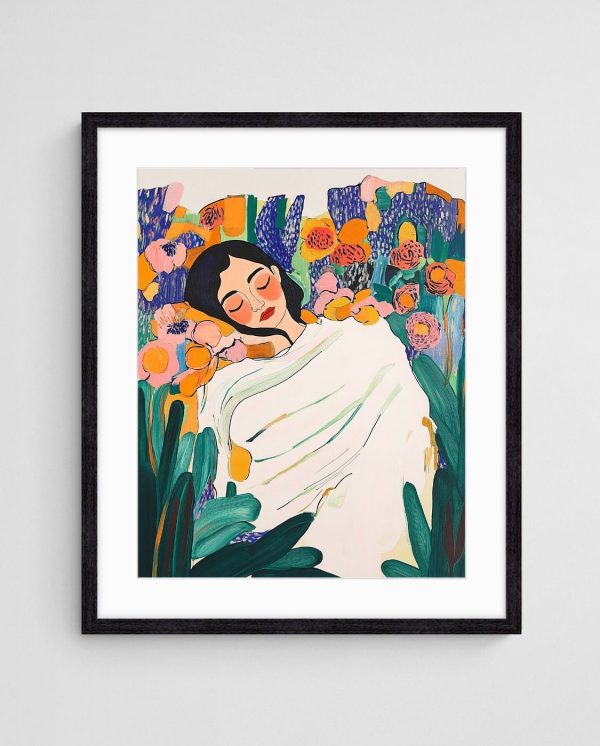
The spontaneous, improvisational quality of early Lyrical Abstraction found visual expression through fluid forms and vibrant colours that conveyed poetic emotional resonance. The “Blue Banksia – Australian Abstract Floral Art Print” channels this lyrical sensibility through its flowing organic forms and expressive colour palette, bringing the movement’s emotional immediacy into contemporary Australian contexts.


The American Translation: From Studios to Museums
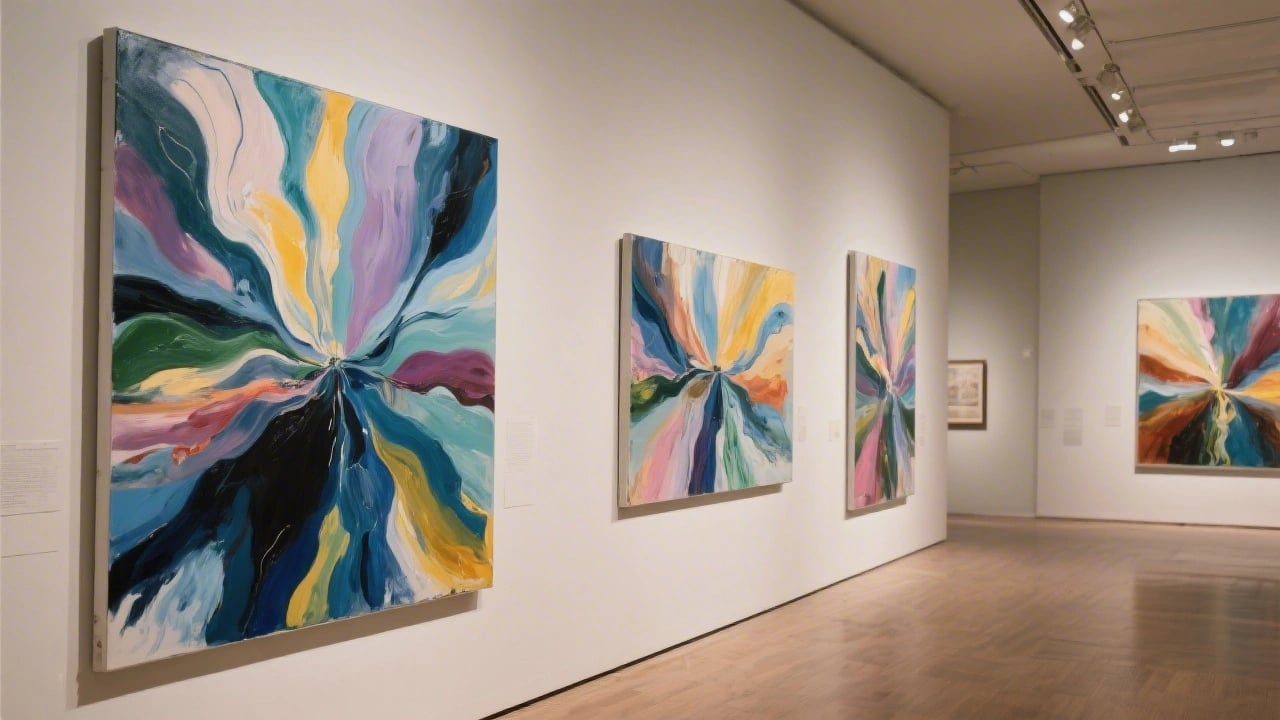
By the late 1960s, Lyrical Abstraction had migrated across the Atlantic, where it took on distinctly American characteristics. Fashion designer and collector Larry Aldrich became the movement’s most influential American champion after visiting numerous artists’ studios in 1969 and recognising a common aesthetic thread. Aldrich founded the Aldrich Contemporary Art Museum in Ridgefield, Connecticut, and organised a touring exhibition titled “Lyrical Abstraction” that opened at his museum from April 5 through June 7, 1970. The exhibition subsequently travelled to the Whitney Museum of American Art in New York, where it ran from May 25 to July 6, 1971.
This institutional recognition proved pivotal in establishing Lyrical Abstraction as a legitimate movement within American art history. The Whitney Museum’s imprimatur lent credibility to what Aldrich described as an “uncompromising return to painterly abstraction.” After the exhibition, Aldrich generously donated paintings from the show to the Whitney’s permanent collection, ensuring the movement’s preservation for future generations. The Aldrich Contemporary Art Museum continues to document this watershed exhibition on its website, providing valuable historical context for researchers and enthusiasts.
The American interpretation of Lyrical Abstraction differed from its European predecessor in several key ways. Where Mathieu emphasised speed and spontaneous gesture, American practitioners often incorporated techniques borrowed from Abstract Expressionism whilst maintaining a more lyrical, less aggressive sensibility. This synthesis created a distinctive visual language that balanced emotional expressiveness with chromatic sophistication. For those looking to explore how different abstract styles can be identified and distinguished, understanding these transatlantic variations provides valuable insight.
Institutional Impact and Curatorial Recognition
Beyond Aldrich’s groundbreaking efforts, several major museums formally named and identified the movement during the late 1960s. The Whitney Museum and other institutions recognised Lyrical Abstraction as representing an important shift away from the geometric abstractions that had dominated the mid-century. This curatorial consensus helped establish clear parameters for what constituted lyrical abstract work, whilst also acknowledging the movement’s diversity and range. The validation from respected institutions transformed Lyrical Abstraction from a loose association of like-minded artists into a historically significant movement with clear aesthetic principles.


Helen Frankenthaler’s Soak-Stain Revolution
Among American Lyrical Abstraction’s most innovative practitioners, Helen Frankenthaler developed a technique that would influence generations of painters. On October 26, 1952, in her West 23rd Street studio in New York, Frankenthaler created “Mountains and Sea,” one of her most celebrated works. She painted onto unprimed canvas with oil paints heavily diluted with turpentine, allowing the thinned pigments to soak directly into the fabric. Frankenthaler named this approach the “soak stain” technique, and it created a liquefied, translucent effect that merged painting with staining.
The revolutionary aspect of Frankenthaler’s method lay in how it eliminated the traditional distinction between paint and canvas. Rather than applying pigment onto the surface, her technique allowed colour to become part of the canvas itself. This approach created a sense of atmospheric depth and luminosity that conventional painting methods couldn’t achieve. “Mountains and Sea” was inspired by the landscape of Nova Scotia, and its flowing forms and gentle colour transitions exemplify the lyrical quality that defined the movement. Frankenthaler’s influence extended well beyond her own practice—artists like Morris Louis and Kenneth Noland adopted variations of her soak-stain technique, helping establish Color Field painting as a distinct subcategory of Lyrical Abstraction.
In 2025, Frankenthaler’s legacy remains vibrant. Tate Modern currently displays her work alongside four other paintings on loan from the Helen Frankenthaler Foundation, introducing her innovations to new audiences. For collectors interested in exploring how colour can transform interior spaces, Frankenthaler’s approach to transparent, layered colour provides particularly relevant inspiration.
Joan Mitchell and the Contemporary Market Surge
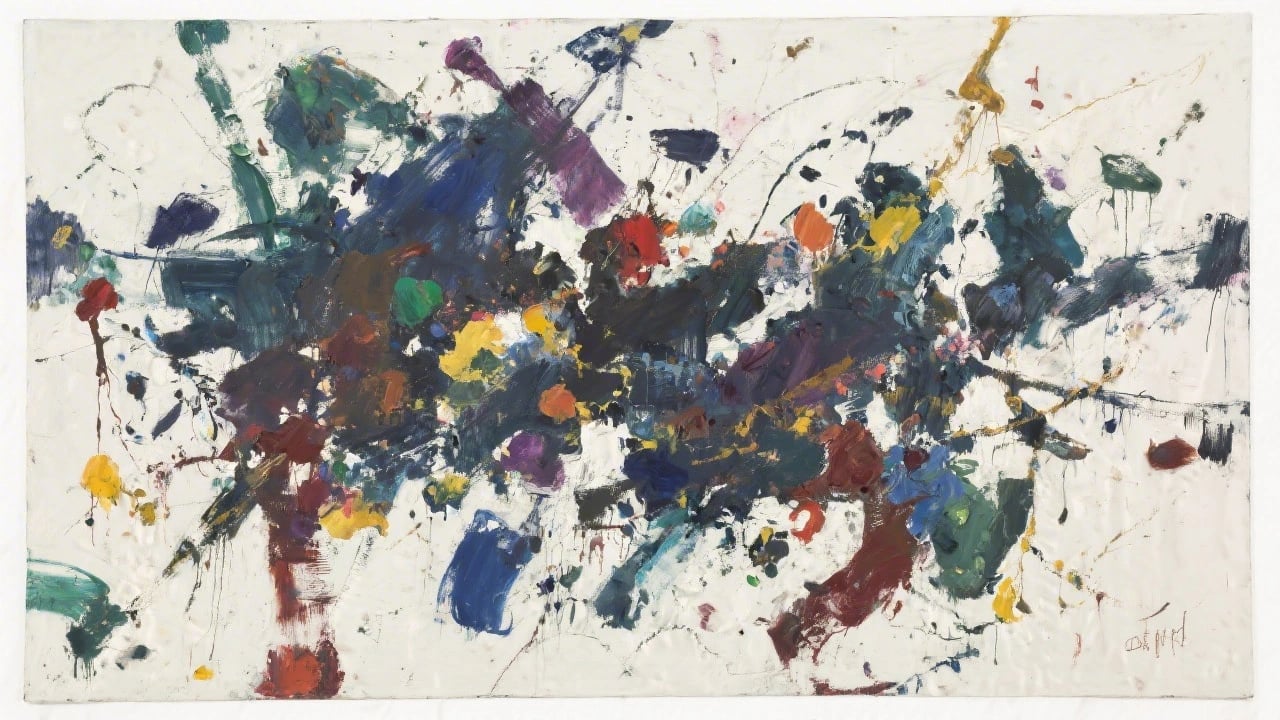
Joan Mitchell represents Lyrical Abstraction’s most commercially successful practitioner in today’s art market. Born in 1925, Mitchell settled in New York in 1950 after receiving her BFA from the Art Institute of Chicago. She quickly became a fixture on the avant-garde scene, creating exuberant abstractions that married writhing, lyrical lines with searing colours. Mitchell was among the few women included in the history-making “Ninth Street Show” in 1951, the exhibition that cemented Abstract Expressionism as a major movement. However, whilst often associated with Abstract Expressionism’s second generation, Mitchell’s work displays the chromatic sophistication and lyrical sensibility that distinguishes Lyrical Abstraction from its more aggressive predecessor.
The contemporary market for Mitchell’s work has reached stratospheric levels. At Art Basel in Basel in 2024, her “Composition” (1969) from the “Sunflower” series sold for $14 million at Hauser & Wirth’s booth, setting a new benchmark for female abstract painters of her generation. This extraordinary valuation reflects not only Mitchell’s historical importance but also growing institutional and collector recognition of Lyrical Abstraction’s significance. Mitchell’s work occupies a unique position—bridging Abstract Expressionism’s gestural energy with a more melodic, colour-focused approach that defines lyrical practice.
Mitchell’s paintings typically feature bold, energetic brushstrokes organised into complex, layered compositions. Unlike the all-over chaos of Jackson Pollock’s drip paintings, Mitchell’s works maintain a sense of structure beneath their apparent spontaneity. This balance between control and improvisation exemplifies what makes Lyrical Abstraction distinct: it channels emotional intensity through considered chromatic relationships rather than pure gestural abandon. The “Colourful Abstract Art Print – Island Life 3” echoes this balance, combining vibrant colour with structured composition in a contemporary interpretation of lyrical principles.

Global Practitioners and Cross-Cultural Synthesis
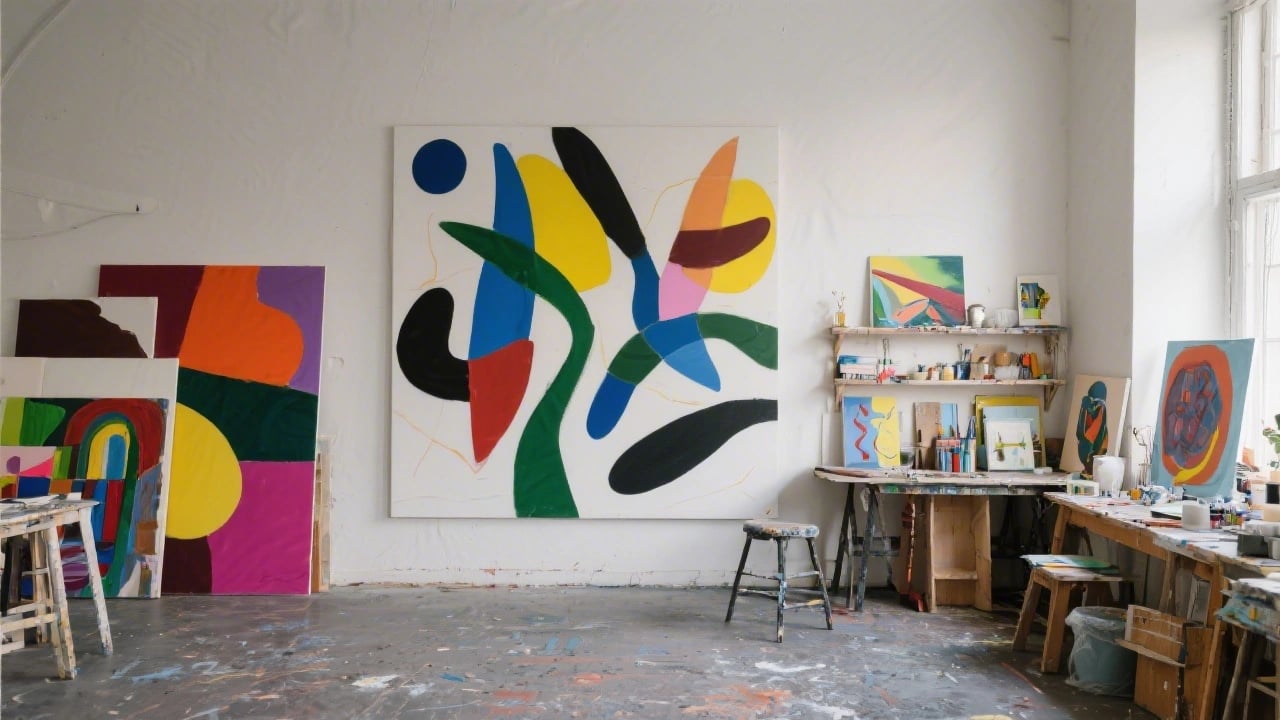
Lyrical Abstraction’s appeal extended far beyond Europe and America, attracting practitioners who brought diverse cultural perspectives to the movement. Chinese-French artist Zao Wou-Ki exemplifies this global reach. Born in China in 1920, Zao moved to Paris after World War II, where he encountered the burgeoning Lyrical Abstraction movement. His work embodies a remarkable synthesis of Western gestural abstraction and Chinese void thinking—the philosophical concept of emptiness as generative space. This fusion created paintings that feel simultaneously spontaneous and meditative, bridging Eastern and Western aesthetic traditions.
The international art market has embraced Zao’s cross-cultural synthesis with enthusiasm. His painting “29.09.64” sold for $26 million at Sotheby’s Hong Kong in 2021, demonstrating how Lyrical Abstraction resonates across different cultural contexts. Zao’s success paved the way for other artists who brought non-Western perspectives to abstract painting, expanding the movement’s vocabulary beyond its European origins. This cultural exchange enriched Lyrical Abstraction, transforming it from a specifically Western phenomenon into a truly global movement.
In 2006, the Musée du Luxembourg in Paris staged “l’Envolée lyrique” (The Lyrical Flight, Paris 1945–1956), bringing together works by 60 painters and repositioning European Lyrical Abstraction artists within art historical discourse. The exhibition highlighted how Paris served as a melting pot where artists from diverse backgrounds—including Zao and other international practitioners—converged to explore spontaneous, emotionally-driven abstraction. This cosmopolitan character distinguishes Lyrical Abstraction from more nationally-defined movements, reflecting post-war Paris’s role as a cultural crossroads. Those exploring Australian abstract art traditions will find interesting parallels in how local artistic sensibilities interact with international movements.
European Artists and the Broader Movement
Alongside Mathieu and Zao, numerous other European artists contributed to Lyrical Abstraction’s development. Paul Jenkins, Norman Bluhm, Sam Francis, and Jules Olitski each brought distinctive approaches whilst maintaining the movement’s core emphasis on spontaneous, colour-focused abstraction. These artists worked across different media and techniques, expanding the movement’s visual range whilst adhering to its fundamental principles: prioritising emotional immediacy, embracing improvisation, and exploring colour’s expressive potential. Their collective work demonstrates how Lyrical Abstraction accommodated individual variation whilst maintaining coherent aesthetic values.
The 2025 Resurgence and Future Directions
The contemporary art world is witnessing what curators describe as a “lyrical renaissance.” German-Brazilian artist Janaina Tschäpe exemplifies this renewed interest in Lyrical Abstraction’s principles. Her work already appears in prestigious collections including the Guggenheim Museum in New York, Centre Pompidou in Paris, and the 21st Century Museum of Contemporary Art in Kanazawa, Japan. In autumn 2024, Tschäpe staged a major solo exhibition at Sean Kelly in New York, coinciding with the release of an extensive monograph on her practice. Art consultant Gladys Lin describes Tschäpe’s paintings as “lyrical abstractions” that are “rich with context and open portals to ancestral landscapes,” suggesting how contemporary artists are expanding the movement’s conceptual framework.
This resurgence extends beyond individual artists to encompass major institutional recognition. Georges Mathieu’s 2025 retrospective at Monnaie de Paris signals museums’ renewed interest in reassessing Lyrical Abstraction’s historical significance. Similarly, Helen Frankenthaler’s ongoing presence at Tate Modern demonstrates how these pioneering artists continue to influence contemporary practice. The movement’s market strength—evidenced by record-breaking sales for works by Mitchell, Zao, and others—reflects collectors’ growing appreciation for Lyrical Abstraction’s emotional immediacy and chromatic sophistication.
Looking forward, Lyrical Abstraction’s principles seem particularly relevant to contemporary concerns. In an era characterised by digital precision and algorithmic art generation, the movement’s emphasis on spontaneity, improvisation, and human gesture offers a compelling counterpoint. Artists like Tschäpe demonstrate how lyrical approaches can address contemporary themes—including cultural identity, environmental change, and ancestral memory—whilst maintaining connection to the movement’s historical roots. This balance between tradition and innovation positions Lyrical Abstraction not as a historical relic but as a living practice capable of continued evolution. For those interested in understanding why contemporary artists continue embracing abstraction, Lyrical Abstraction’s enduring appeal offers valuable insights.
Bringing Lyrical Abstraction Into Your Space
The renewed interest in Lyrical Abstraction extends beyond museums and galleries into residential and commercial interiors. The movement’s emphasis on colour, gesture, and emotional expression makes it particularly suited to contemporary spaces seeking warmth and personality. Whether through original works or high-quality prints, incorporating lyrical abstract pieces can transform environments by introducing dynamic colour relationships and gestural energy. The key lies in selecting works that resonate with your space’s existing palette whilst introducing the spontaneous, expressive qualities that define the movement. For practical guidance on displaying abstract paintings effectively at home, understanding spatial relationships and lighting proves essential.
Lyrical Abstraction’s journey from post-war Paris to today’s international art scene demonstrates the movement’s enduring relevance. From Georges Mathieu’s explosive improvisations in 1947 to Janaina Tschäpe’s contemporary explorations in 2024, the lyrical approach to abstraction continues evolving whilst maintaining its core commitment to spontaneity, emotion, and chromatic expression. As major museums mount retrospectives and contemporary artists embrace lyrical principles, the movement stands poised for continued influence. Its emphasis on human gesture and emotional immediacy offers a vital counterbalance to our increasingly digital world, ensuring that Lyrical Abstraction will remain relevant for generations to come. The convergence of institutional recognition, market strength, and contemporary practice suggests that what began in post-war Paris has matured into one of abstract art’s most vital and enduring traditions.
 | Joseph Russell Joseph is an Australian abstract artists and curator of the Inomaly art collection. |