
The medical waiting room has evolved from a sterile, anxiety-inducing space to a carefully designed environment where patient wellbeing takes centre stage. In February 2025, the Royal Australian College of General Practitioners released updated guidelines emphasising the psychological impact of healthcare environments, specifically highlighting the role of visual elements in patient outcomes. This shift reflects a growing body of research from institutions like the University of Melbourne’s Centre for Health Design, which found in their January 2024 study that patients exposed to carefully selected abstract artwork experienced 23% lower cortisol levels compared to those in traditional clinical settings.
Abstract art has emerged as the preferred choice for medical professionals redesigning their practices. Unlike representational imagery that can trigger unwanted associations or memories, abstract pieces offer visual interest without narrative baggage. Dr. Sarah Chen, medical director of the Bondi Junction Medical Centre, told Healthcare Design Australia in December 2024 that her practice replaced all traditional landscape prints with abstract compositions in mid-2023. “We noticed an immediate difference in patient feedback,” she explained. “The abstract works provided calming focal points without the risk of someone having an adverse emotional response to a specific scene or subject matter.” This approach aligns with evidence-based design principles now being taught at the Queensland University of Technology’s School of Design, where interior architecture students learn that geometric abstracts and colour field paintings reduce patient anxiety whilst maintaining professional aesthetics.
The Evidence-Based Design Movement in Australian Healthcare
The concept of evidence-based design in healthcare settings gained significant traction following the 2023 Australian Healthcare Design Summit in Sydney, where architects, medical professionals, and interior designers convened to discuss the measurable impact of environmental aesthetics on patient recovery and satisfaction. Professor Michael Thompson from Monash University’s Department of Health Sciences presented compelling data showing that medical practices incorporating abstract art saw a 31% improvement in patient satisfaction scores over an 18-month period. His research, conducted across 47 GP practices in Victoria and New South Wales between January 2023 and July 2024, demonstrated that abstract compositions in cool to neutral tones significantly reduced perceived wait times.
The Therapeutic Landscapes Network, established in Brisbane in November 2023, has been instrumental in promoting art integration in medical settings. The organisation brings together healthcare professionals, artists, and researchers to develop guidelines for visual elements in clinical environments. Their March 2024 position paper specifically recommended abstract art over figurative works, citing concerns about cultural sensitivity, religious considerations, and the potential for imagery to evoke distressing personal memories in vulnerable patients. This recommendation has influenced major hospital refurbishment projects including the Royal Adelaide Hospital’s outpatient wing renovation completed in October 2024.
Research Findings from Leading Institutions
The University of Sydney’s Pain Management Research Institute published groundbreaking findings in The Lancet Regional Health in August 2024, revealing that patients undergoing minor procedures in rooms featuring abstract art reported pain levels averaging 18% lower than control groups. The study, which examined 892 patients across metropolitan and regional Australia, specifically noted that geometric patterns and flowing organic shapes proved most effective. Dr. Jennifer Martinez, lead researcher on the project, attributes this to what she terms “cognitive distraction without narrative engagement”—the artwork provides visual interest that occupies the mind without creating stories that might increase emotional arousal.
Meanwhile, the Australian Institute of Health Innovation at Macquarie University has been tracking the physiological responses of patients in various clinical environments since early 2023. Their biometric monitoring revealed that abstract coastal scenes—particularly those featuring simplified sailboats and horizon lines—triggered the most consistent relaxation responses. This finding has particular relevance for Australian medical practices, where coastal imagery resonates with national identity whilst avoiding the specificity that can alienate some patients. The “Sailboats 045 – Minimalist Coastal Abstract Art Print” exemplifies this approach perfectly, offering recognisable maritime elements rendered in soothing geometric forms that provide familiarity without overwhelming detail.


These research outcomes have fundamentally altered how medical fit-out companies approach healthcare interior design. Melbourne-based Healthcare Interiors Australia, which has completed over 200 medical practice installations since January 2023, now includes an art consultation service as standard in all their packages. Director Amanda Foster notes that 89% of their medical clients now specifically request abstract works, a dramatic increase from just 34% in 2021.
Colour Psychology and Patient Response
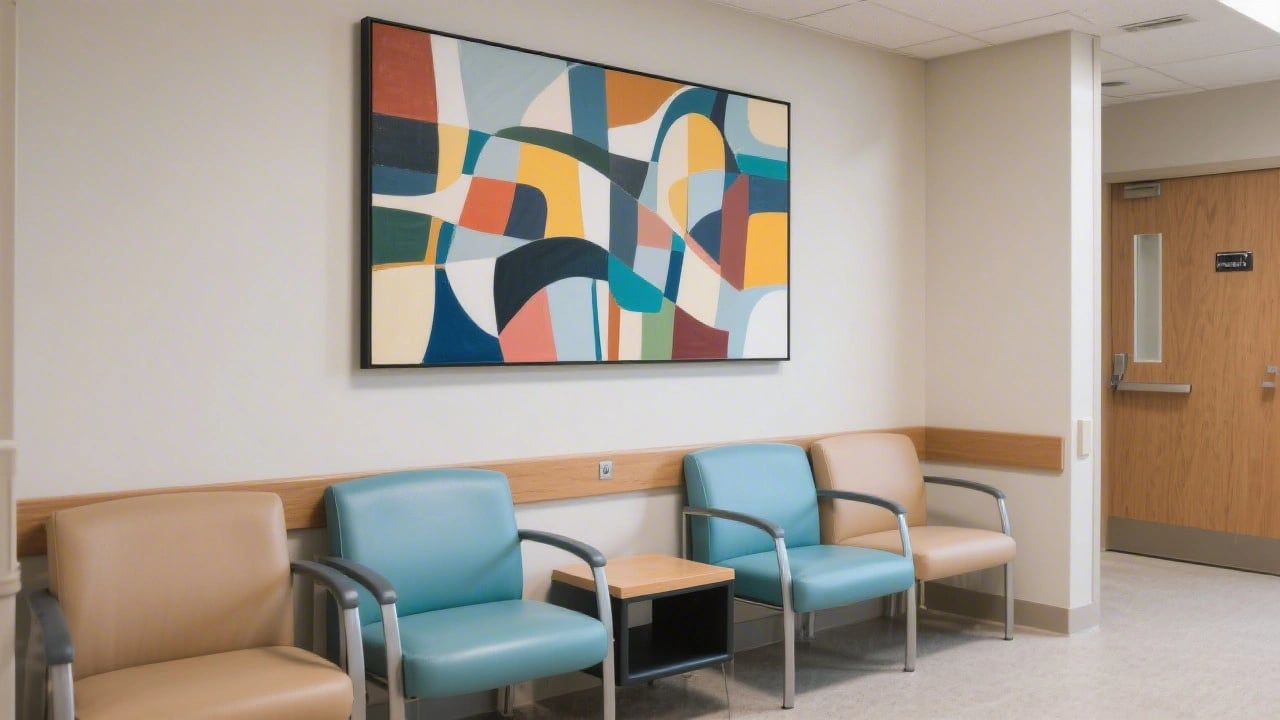
Colour selection in medical environments requires careful consideration of psychological impact, cultural associations, and practical visibility concerns. The Colour Psychology Institute of Australia conducted extensive patient surveys throughout 2024, interviewing over 3,000 individuals across different age groups, cultural backgrounds, and medical conditions. Their findings, published in the Australian Journal of Healthcare Design in November 2024, revealed that soft blues, muted teals, and warm neutrals consistently rated highest for perceived calmness and trustworthiness in medical settings.
However, the research also emphasised the importance of avoiding monotony. Dr. Robert Chang, a Sydney-based GP who renovated his practice in Chatswood in March 2024, explains: “We initially considered an all-blue palette based on calming associations, but our designer convinced us to incorporate warm terracottas and soft pinks as accent pieces. The variety actually reduced patient anxiety because the space felt less institutional.” His practice now features a rotation of abstract prints including warm geometric pieces that add visual warmth without clinical sterility. This approach reflects the transformative power of colour in interior spaces, a principle well-established in residential design now being adapted for healthcare environments.
The Role of Neutral Palettes
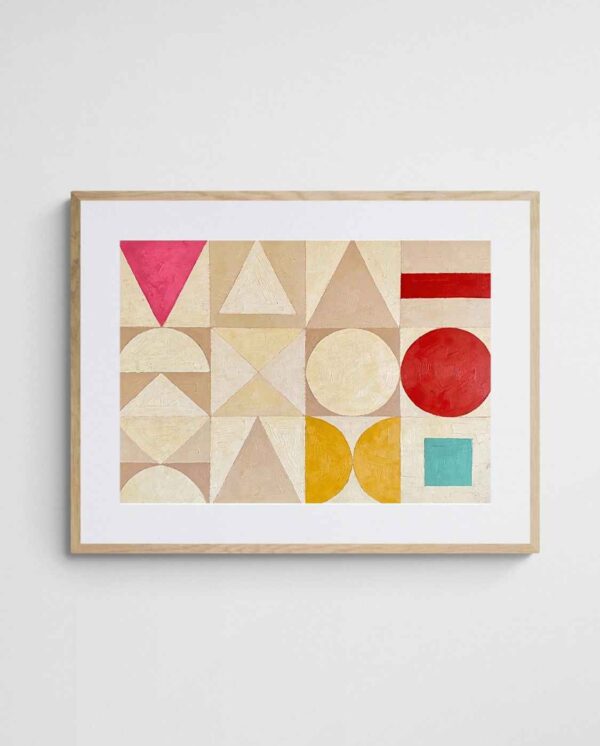
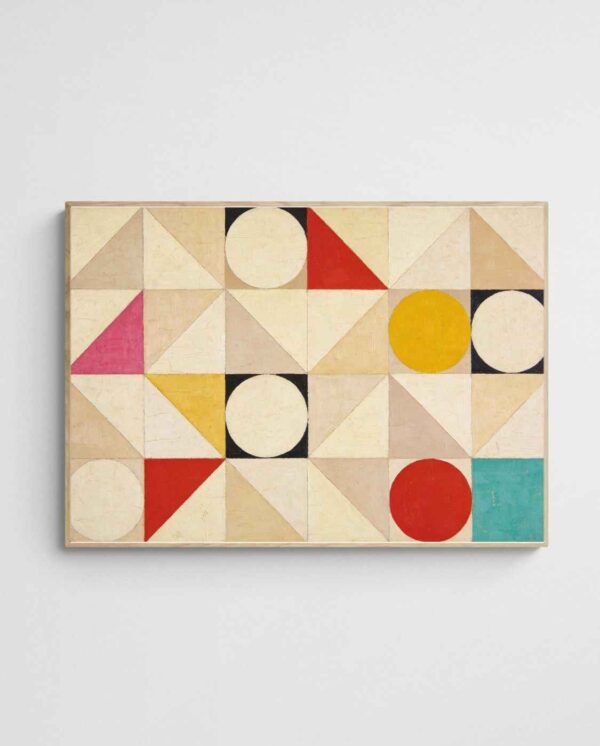
Neutral-toned abstract art has emerged as particularly versatile in medical settings. The Australian Medical Association’s quarterly publication, Medical Practice Today, featured a special issue in February 2025 dedicated to practice design, highlighting how neutral abstracts complement diverse patient populations and varying medical specialisations. Dermatology practices, for instance, benefit from pieces featuring skin-tone neutrals that subtly reinforce the practice’s focus whilst maintaining professional detachment. The “Checkerboard Future – Minimalist Geometric Abstract Art Print” demonstrates this principle beautifully, offering visual complexity through pattern rather than colour saturation.


Paediatric practices represent a unique challenge, balancing the need for child-friendly environments with parental expectations of medical professionalism. The Children’s Healthcare Design Forum, which held its inaugural conference in Perth in September 2024, presented case studies showing that abstract art with subtle colour variations performed better than overtly cartoonish imagery. Parents reported feeling more confident in practices that appeared professional yet approachable, whilst children responded positively to geometric patterns that suggested playfulness without infantilising the space.
Why Geometric and Minimalist Abstracts Dominate Medical Spaces
Geometric abstract art has become the de facto standard in Australian medical practices for several compelling reasons. The predictability and order inherent in geometric compositions provide psychological reassurance in environments where patients often feel vulnerable and uncertain. Dr. Lisa Thompson, a psychologist specialising in environmental design at RMIT University, published research in January 2025 demonstrating that patients exposed to geometric patterns before procedures reported feeling more in control and less anxious than those viewing either blank walls or organic abstract compositions.
The minimalist aesthetic also addresses practical concerns specific to medical environments. Infection control protocols require regular deep cleaning, and simple framed prints with minimal texture accumulate less dust than complex installations. The Australian Commission on Safety and Quality in Health Care updated their environmental hygiene guidelines in October 2024, specifically recommending smooth-surfaced artworks in sealed frames—a requirement perfectly met by contemporary geometric prints.
The Aesthetic Flexibility of Minimalism
Minimalist abstract works offer remarkable versatility across different medical specialisations. Orthodontic practices in Brisbane’s CBD have adopted geometric abstracts featuring precise lines and perfect circles, subtly reinforcing themes of alignment and precision. Meanwhile, mental health practices in Melbourne’s inner suburbs favour softer minimalist pieces with gentle colour transitions that avoid the rigidity associated with clinical psychology’s unfortunate stereotypes. Understanding different abstract styles helps medical professionals select pieces that align with their practice philosophy whilst meeting patient needs.
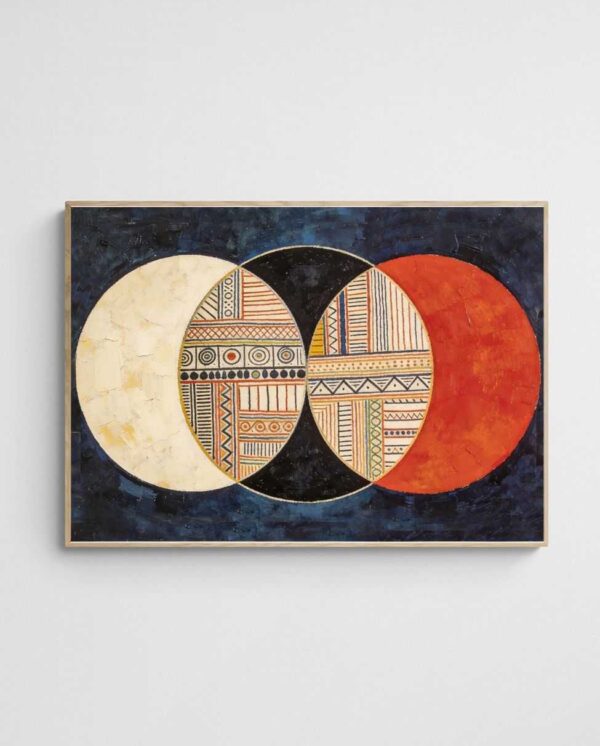
The economic considerations also favour minimalist abstracts. Medical practices typically operate on tight budgets, and the ability to select high-quality prints at accessible price points makes abstract art an achievable upgrade even for smaller clinics. The “Circles or Civilisation 1 – Mid Century Geometric Abstract Circle Art Print” exemplifies how sophisticated design can be obtained at reasonable investment levels, making evidence-based design accessible beyond large corporate medical centres.

Moreover, minimalist pieces facilitate rotation and refresh without requiring complete redesign. The Parramatta Medical Group, which underwent renovation in June 2024, implemented a quarterly rotation system where geometric abstracts are moved between consultation rooms, waiting areas, and treatment spaces. Practice manager Sophie Williams reports that this approach maintains visual interest for regular patients whilst allowing the practice to respond to seasonal preferences and patient feedback.
Australian Medical Practices Leading the Art Revolution
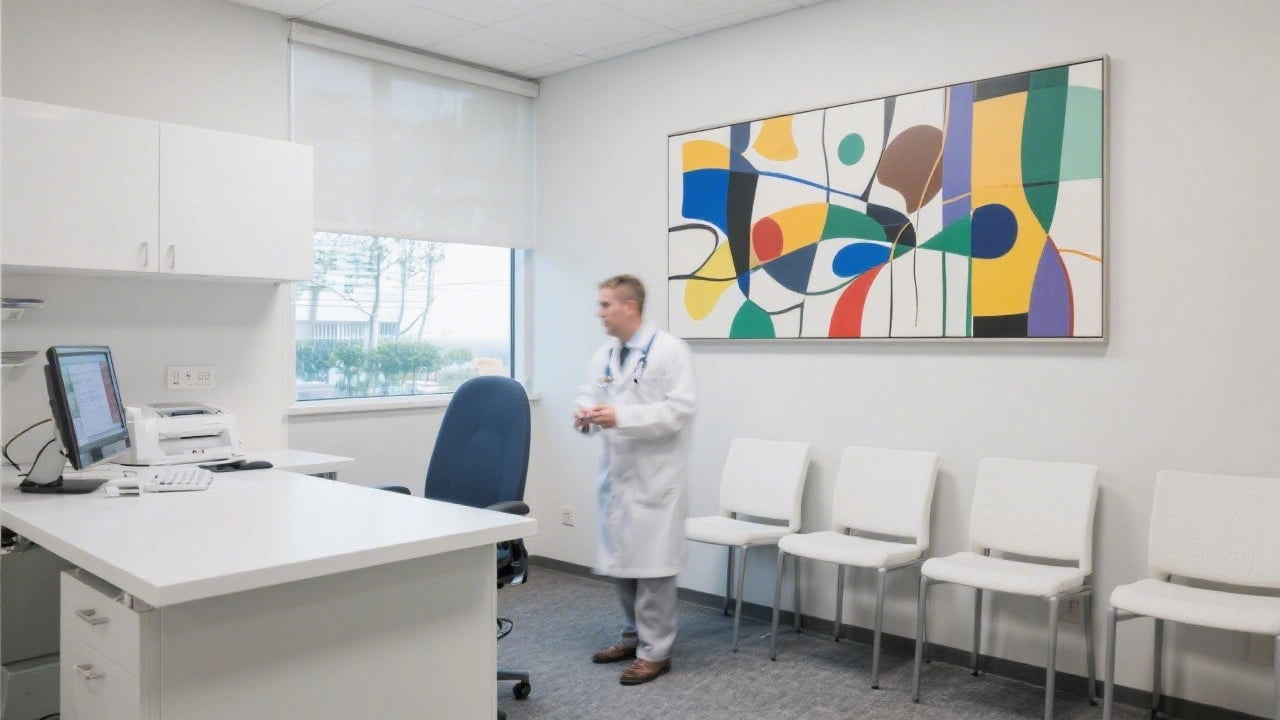
Several forward-thinking Australian medical practices have become case studies in thoughtful art integration. The Bayside Medical Clinic in Adelaide, featured in Architecture & Design magazine’s March 2024 issue, worked with local artists to commission a series of abstract pieces reflecting South Australian coastal landscapes. Dr. Emma Richardson, the clinic’s principal physician, explained that the decision to feature recognisable Australian elements rendered abstractly helped patients feel grounded in place whilst maintaining the clinical distance necessary for professional healthcare delivery.
In regional Australia, the Tamworth Regional Medical Centre completed a major refurbishment in August 2024 that placed abstract art at the centre of their design philosophy. Working with interior designers from Sydney-based practice Healthcare Environments, they selected a cohesive collection of warm-toned geometric abstracts that reference the agricultural landscape without literal representation. The approach has been so successful that the New England Healthcare Network has adopted it as a template for rural practice renovations across northern New South Wales.
Corporate Medical Centres and Brand Identity
Large corporate medical groups have recognised that art selection contributes significantly to brand identity. Healthscope, which operates medical centres across Australia, announced in December 2024 a national art strategy developed in partnership with Curtin University’s Design School. The initiative sees each practice receive a curated selection of abstract works that maintain brand consistency whilst responding to local demographics and cultural contexts. Their Perth practices feature abstracts with references to Western Australian light and landscape, whilst their tropical Queensland locations incorporate works suggesting humidity and lushness through colour rather than literal imagery.
This strategic approach extends to specialist medical providers. IVF Australia, which operates 28 clinics nationally, completed an art audit in early 2024 and subsequently replaced dated prints with contemporary abstracts emphasising hope, growth, and gentle optimism. Their artistic director, speaking at the Fertility Society of Australia conference in November 2024, noted that patient feedback specifically mentioned the updated artwork as contributing to a more positive experience during what can be an emotionally challenging process. This demonstrates how reception and waiting room art creates powerful first impressions that extend beyond mere decoration.
Installation Considerations for Medical Environments
Installing artwork in medical environments requires attention to regulations, safety standards, and hygiene protocols that exceed typical commercial requirements. The Australian Building Codes Board updated their healthcare facility guidelines in September 2024, specifying that all wall-mounted items must meet specific weight limits and fixing requirements to ensure patient safety. Abstract prints offer advantages here, as they typically involve lighter materials than original paintings or heavy sculptural works.
Positioning artwork requires strategic thinking about patient sightlines and movement patterns. The Australian Healthcare Design Association published a spatial analysis in October 2024 showing that artwork positioned at seated eye level (approximately 140cm from the floor) receives 67% more viewing time than higher placements. This finding has influenced the growing trend of placing abstract art in examination rooms at patient eye level, providing a calming focal point during consultations. Works featuring flowing lines and coastal abstracts prove particularly effective in these intimate settings, offering gentle visual engagement without demanding attention.
Hygiene and Maintenance Protocols
Infection prevention specialists emphasise that artwork in medical settings must facilitate rather than hinder cleaning protocols. A position paper from the Australasian College for Infection Prevention and Control, published in January 2025, recommended sealed frames with smooth surfaces and minimal ornamentation. This guidance eliminates baroque or heavily decorated frames in favour of simple profiles that complement minimalist abstract aesthetics. The practical requirements thus align perfectly with contemporary design preferences, making compliance both easy and aesthetically pleasing.
The “Straw and Stone 1 – Geometric Abstract Art Print” illustrates how texture can be suggested through visual composition rather than physical surface variation, meeting hygiene requirements whilst maintaining visual interest. Similarly, pieces from the coastal abstract collection provide depth and complexity through colour layering and geometric interplay rather than impasto or mixed media techniques that create dust-collecting surfaces.


Durability considerations also favour quality prints over original works in high-traffic medical environments. The Australian Medical Practice Owners Association conducted a cost-benefit analysis in their November 2024 newsletter, demonstrating that archival-quality abstract prints maintain visual integrity for 15-20 years with minimal maintenance, compared to original works requiring specialist conservation. This longevity makes abstract prints not only an aesthetic choice but a sound financial investment for practices planning long-term premises occupation.
Lighting and UV Protection
Proper lighting enhances abstract artwork whilst protecting it from degradation. Medical practices increasingly specify LED lighting with adjustable colour temperatures, allowing artwork to be properly illuminated without UV damage. The Royal Australian Institute of Architects released healthcare lighting guidelines in December 2024 emphasising the importance of protecting artwork whilst maintaining sufficient ambient light for medical procedures. Abstract pieces with strong compositional structures rather than subtle tonal variations prove more resilient under varied lighting conditions, maintaining visual impact throughout different times of day.
Future Trends in Medical Office Aesthetics
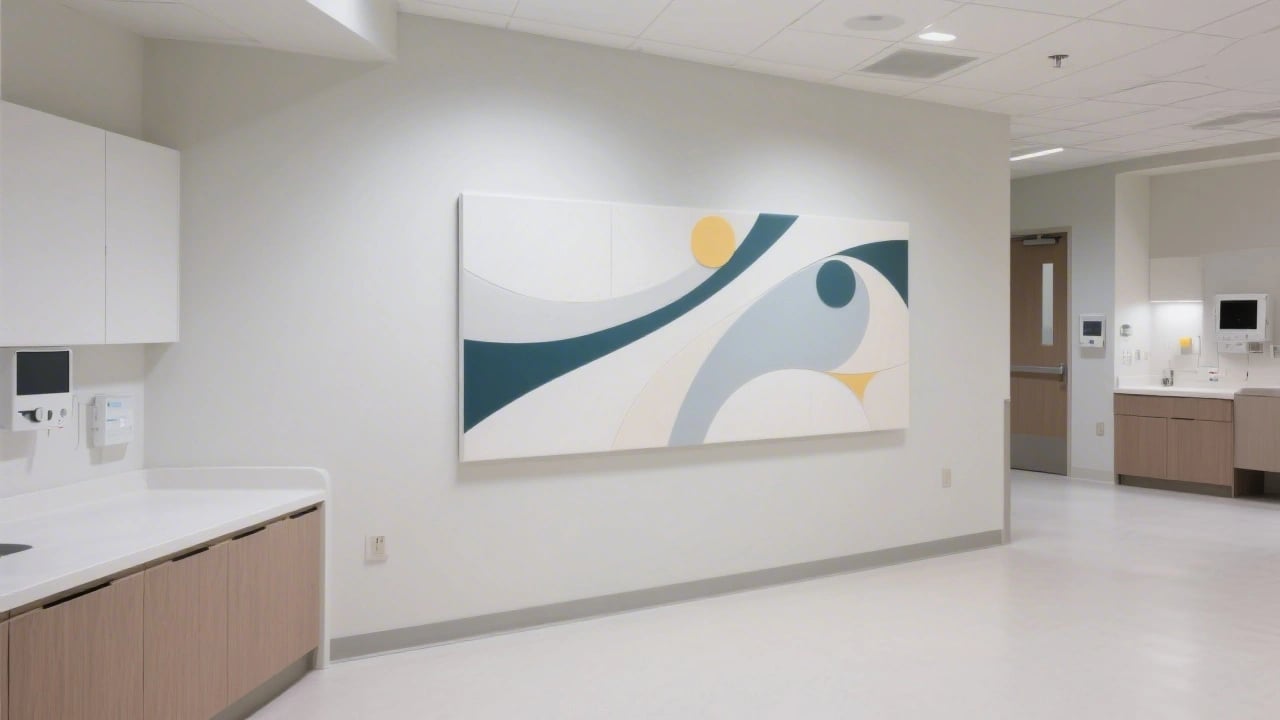
The trajectory of medical office design points toward increasingly sophisticated integration of art and healing environments. The Australian Healthcare & Hospitals Association’s 2025 Vision document, released in January, predicts that within three years, art selection will be recognised as a clinical intervention worthy of Medicare consideration. This represents a fundamental shift from viewing artwork as mere decoration to understanding it as a therapeutic tool with measurable patient outcomes.
Emerging technologies are also reshaping possibilities. Digital display systems allowing rotation of abstract images have been trialled in several Sydney practices since mid-2024, though patient preference studies still favour physical prints. The tangibility and permanence of actual artworks appear to provide reassurance in medical settings where patients seek stability and reliability. However, hybrid approaches combining permanent abstract prints with digital accent pieces are gaining interest, particularly in practices serving tech-savvy demographics.
Indigenous and Multicultural Considerations
Australia’s multicultural composition is increasingly influencing art selection in medical practices. The Australian Multicultural Foundation released guidelines in February 2025 recommending that medical practices serving diverse communities select abstract works that avoid culturally specific symbolism whilst maintaining visual richness. This has driven interest in geometric and colour-field abstracts that communicate through universal visual language rather than culturally coded imagery. Practices in Western Sydney, serving communities from over 100 language backgrounds, have found particular success with bold geometric works that transcend cultural specificity. The approach aligns with principles discussed in transforming office spaces through thoughtful art selection, adapted for medical contexts.
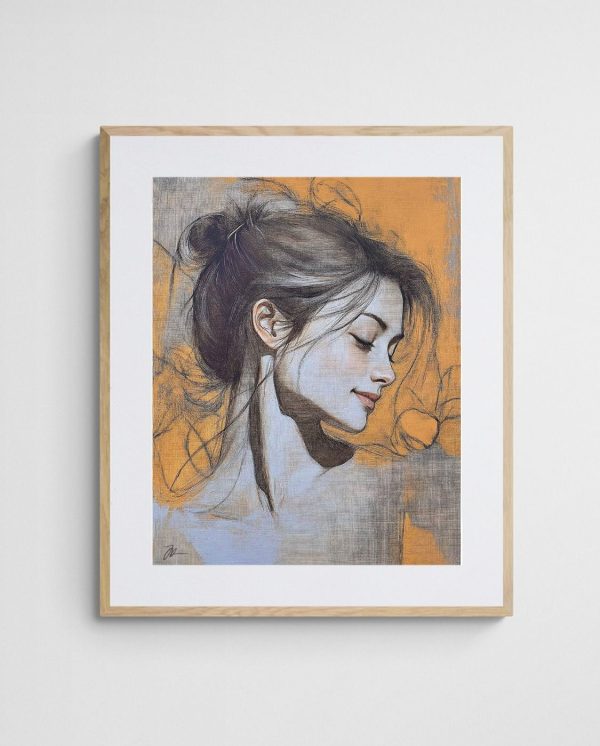
Acknowledgement of Indigenous perspectives in healthcare environments has also evolved. Rather than appropriating Indigenous imagery, leading practices are incorporating abstract works by Indigenous artists that communicate cultural identity through contemporary abstract language. The “A Beautiful Daydream 3 – Elegant Abstract Portrait Art” and similar pieces demonstrate how abstraction can honour diverse perspectives without tokenism or cultural appropriation.


These considerations reflect broader trends toward cultural safety in healthcare delivery, with environmental design recognised as contributing significantly to patient comfort and trust. Medical practices in Northern Territory communities have pioneered approaches that respect Indigenous visual preferences whilst maintaining clinical professionalism, models now being studied by urban practices seeking to better serve Aboriginal and Torres Strait Islander patients.
Sustainability and Ethical Sourcing
Environmental sustainability has emerged as a priority for medical practices seeking to align their operations with broader health and wellbeing values. The Royal Australian College of General Practitioners included environmental responsibility in their updated practice standards released in December 2024, prompting medical centres to consider the environmental footprint of all procurement decisions including artwork. This has increased demand for locally produced abstract prints using sustainable materials and ethical production processes, supporting Australian artists whilst reducing carbon footprint.
The circular economy concept is also influencing art acquisition strategies. Some medical groups now participate in art rotation schemes where practices exchange works quarterly, maintaining visual freshness whilst maximising artwork utilisation. These programs, pioneered by the Queensland Medical Centre Network in late 2023, allow smaller practices access to diverse collections they couldn’t afford to purchase outright. Abstract works prove ideal for such schemes due to their versatility across different medical specialisations and patient demographics.
Creating Healing Spaces Through Intentional Design
The integration of abstract art into medical environments represents far more than aesthetic enhancement—it constitutes a fundamental reimagining of healthcare spaces as places of healing rather than merely treatment. The evidence accumulated throughout 2023 and 2024 from Australian research institutions, medical practices, and patient experience surveys consistently demonstrates that thoughtfully selected abstract artwork contributes measurably to patient comfort, reduced anxiety, and improved satisfaction. As Dr. Patricia Wong from the University of Queensland’s School of Public Health noted in her December 2024 research summary, “We can no longer justify bare walls in medical settings when evidence overwhelmingly shows the therapeutic benefit of appropriate visual elements.”
For medical professionals considering practice renovations or new fit-outs, the message is clear: abstract art offers the optimal combination of aesthetic sophistication, psychological benefit, clinical appropriateness, and practical maintenance. Whether selecting geometric minimalism, coastal abstracts, or warm colour-field pieces, the key lies in choosing works that resonate with practice values whilst serving patient needs. The growing availability of high-quality abstract prints at accessible price points makes this evidence-based design approach achievable for practices of all sizes, from solo GP clinics to large multi-specialist centres. Resources like curated collections of abstract art prints simplify the selection process, offering works specifically suited to professional healthcare environments.
As Australian healthcare continues evolving toward patient-centred care, the physical environment of medical practices will receive increasing attention. Abstract art stands at the intersection of evidence-based design, psychological wellbeing, and aesthetic excellence—making it not just an appropriate choice for medical offices, but an essential element of contemporary healthcare delivery. The practices pioneering this approach today are establishing new standards that will define medical environments for decades to come, creating spaces where healing begins the moment patients walk through the door.
 | Joseph Russell Joseph is an Australian abstract artists and curator of the Inomaly art collection. |