
Australian art is experiencing a seismic shift that challenges every assumption we’ve held about what it means to create modern work on this continent. For decades, the global art market has pigeonholed Australian artists into predictable categories—ochre-stained landscapes, sunburnt plains, and endless variations on red earth iconography. This limiting narrative has overshadowed a diverse, sophisticated artistic movement that deserves recognition on its own terms. The conversation needs to change, and it needs to change now.
Modern Australian art has evolved far beyond stereotypical representations of the bush and Outback. Today’s artists are engaging with urban experiences, coastal environments, native flora abstraction, and conceptual explorations that reflect Australia’s multicultural identity and contemporary lived reality. From vibrant botanical interpretations to urban landscape reimaginings, Australian creators are establishing visual languages that resonate globally while remaining distinctly local. This evolution represents not a rejection of heritage but an expansion of possibility—a recognition that Australian identity encompasses far more than dusty horizons and red rock formations.
Key Takeaways
- Australian modern art encompasses diverse subjects beyond Outback stereotypes, including coastal environments, urban landscapes, and native botanical abstractions
- Contemporary Australian artists are developing sophisticated visual languages that balance global contemporary trends with distinctly local perspectives
- Native flora, particularly species like banksia, waratah, and eucalyptus, offer rich material for modern abstract interpretations
- Coastal and urban experiences represent equally authentic Australian narratives deserving recognition in modern art discourse
- The future of Australian art lies in embracing complexity and rejecting limiting categorizations imposed by international markets
Breaking the Outback Myth: Why We Need New Narratives
The tyranny of the Outback narrative in Australian art has created what I’d argue is a form of creative colonization—one where international expectations dictate what Australian artists “should” create to be considered authentically Australian. This problem runs deeper than mere market preferences. It reflects a fundamental misunderstanding of Australia’s demographic reality and contemporary culture. Over 80% of Australians live in coastal urban areas, yet the international art establishment continues demanding red dirt and remote landscapes as proof of Australian authenticity.
This expectation creates a perverse incentive structure. Artists who produce work reflecting their actual lived experiences—suburban beaches, metropolitan rhythms, coastal ecosystems—often face skepticism about whether their work is “Australian enough.” Meanwhile, artists producing Outback-themed work, regardless of whether they’ve spent meaningful time in those environments, receive instant recognition and validation. Furthermore, this narrative completely erases the sophisticated urban Indigenous art movements happening in cities like Sydney, Melbourne, and Brisbane, where First Nations artists are creating contemporary work that defies easy categorization.
The commercial gallery system bears significant responsibility for perpetuating these limitations. International buyers, particularly from North America, Europe, and Asia, often seek work that confirms preconceived notions about Australia. Galleries, responding to market demand, curate exhibitions that reinforce rather than challenge these stereotypes. The result is a feedback loop where genuinely innovative Australian artists struggle for recognition while derivative Outback imagery continues dominating export markets.
Australian modern art will only achieve its full potential when we stop performing authenticity for international audiences and start creating from genuine experience.
Breaking this pattern requires both artist and collector courage. Artists must resist the financial temptation to produce work that feeds stereotype. Collectors, particularly Australian collectors, must actively seek and support work that reflects contemporary Australian experience in all its complexity. The market will only change when enough participants refuse to accept the old rules. Some progressive Australian galleries are already leading this shift, prioritizing conceptual strength and technical innovation over marketable stereotypes. This represents hope, but the transformation needs acceleration.

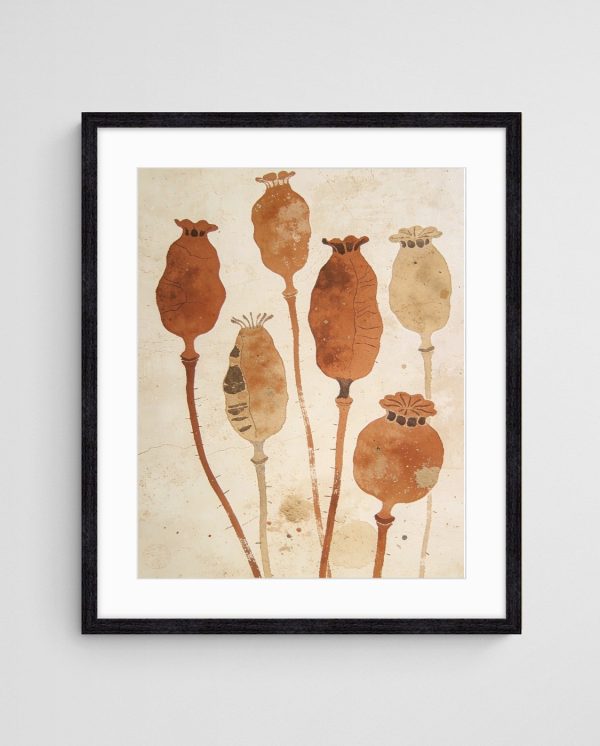


Coastal Modernism: Australia’s Overlooked Aesthetic
Australia’s coastline stretches over 34,000 kilometres, creating diverse marine and littoral ecosystems that have profoundly shaped the national psyche. Yet coastal themes in modern Australian art receive far less critical attention than their inland counterparts. This oversight ignores a rich aesthetic tradition that deserves recognition as a distinctly Australian modernist movement. Coastal modernism encompasses everything from abstract interpretations of reef systems to stylized beach scenes that capture the particular quality of Australian light reflecting off sand and surf.
The colours of Australian coastal environments differ markedly from Mediterranean or Caribbean palettes that dominate international beach art. Our coastal waters range from deep indigo in southern regions to the vibrant turquoise of tropical Queensland reefs. The distinctive pink and coral tones found in certain coastal rock formations, combined with the stark whites of bleached driftwood and sand, create colour relationships that resist easy categorization. Artists working in this space are developing visual vocabularies specific to these environments, moving beyond generic beach imagery to capture something genuinely local.
Consider how contemporary artists are interpreting coral ecosystems through abstract frameworks. These works move beyond literal representation to explore the organic patterns, colour relationships, and structural complexity of reef systems. The “Deep Colour” series, for instance, demonstrates how abstract coral interpretations can create sophisticated wall art that references Australian environments without resorting to documentary realism. This approach allows viewers to connect with coastal themes on emotional and aesthetic levels simultaneously.
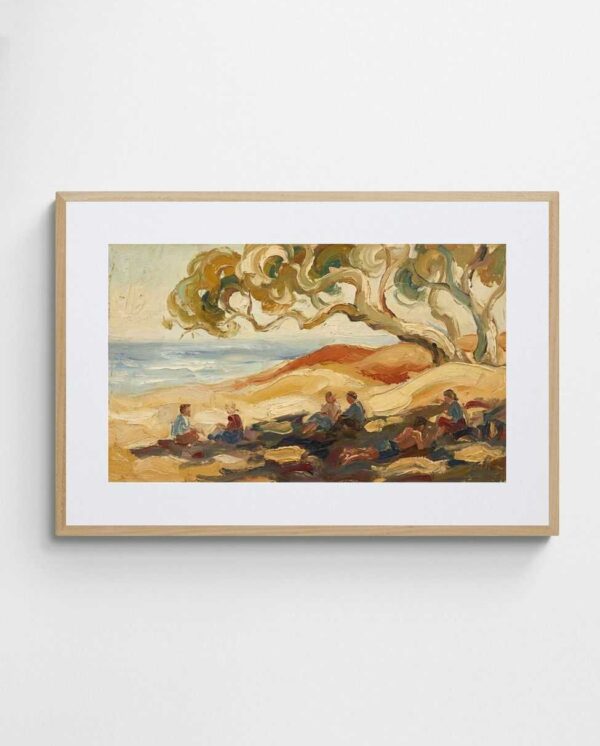
Beach culture itself represents another underexplored subject in Australian modern art. The social rituals around Australian beaches—surf lifesaving, beach cricket, coastal walking—offer rich material for contemporary artistic exploration. Works like “Cricket by the Sea” capture these uniquely Australian experiences through artistic interpretation rather than photographic documentation. This approach to depicting our relationship with coastal spaces holds far more contemporary relevance than romantic Outback imagery for the majority of Australians whose lives revolve around proximity to the ocean.

The technical challenges of representing coastal environments in abstract terms push artists toward innovation. Water’s reflective and translucent qualities, the way light behaves differently at various times of day and weather conditions, the interaction between solid and liquid elements—these complexities demand sophisticated colour theory and compositional approaches. Artists successfully navigating these challenges contribute meaningful developments to abstract art broadly, not just Australian art specifically. Their work deserves recognition in international contemporary art discourse, as explored in how Australian artists are redefining modern art movements.
Littoral Zones as Abstract Subject Matter
The littoral zone—that transitional space between land and sea—offers particularly rich material for abstract exploration. This liminal environment constantly shifts with tides, seasons, and weather patterns. Artists interpreting these spaces capture not static scenes but dynamic processes. The visual result often features layered compositions reflecting the geological, biological, and temporal complexity of these ecosystems. This approach aligns with broader contemporary art movements emphasizing process, change, and environmental awareness while remaining grounded in distinctly Australian coastal experiences.
Print works focusing on littoral abstraction often employ techniques like layering, texture building, and colour field approaches to suggest depth, movement, and complexity. The “Linoleum Beach” series exemplifies how printmaking techniques can create sophisticated interpretations of coastal environments that balance abstract formal concerns with environmental reference. These works succeed because they prioritize artistic merit while drawing inspiration from Australian landscapes, reversing the traditional formula where location dictated aesthetic rather than enhancing it.
Botanical Abstraction: Native Flora as Contemporary Subject
Australian native flora represents one of the most underutilized resources in contemporary abstract art globally. Species like banksia, waratah, grevillea, and eucalyptus offer extraordinary formal qualities—unusual shapes, dramatic colour contrasts, complex structural patterns—that translate beautifully into abstract visual languages. Yet these subjects remain significantly underrepresented in international contemporary botanical art, where European and Asian floral traditions dominate. This represents both a missed opportunity and a distinct competitive advantage for Australian artists willing to explore this territory seriously.
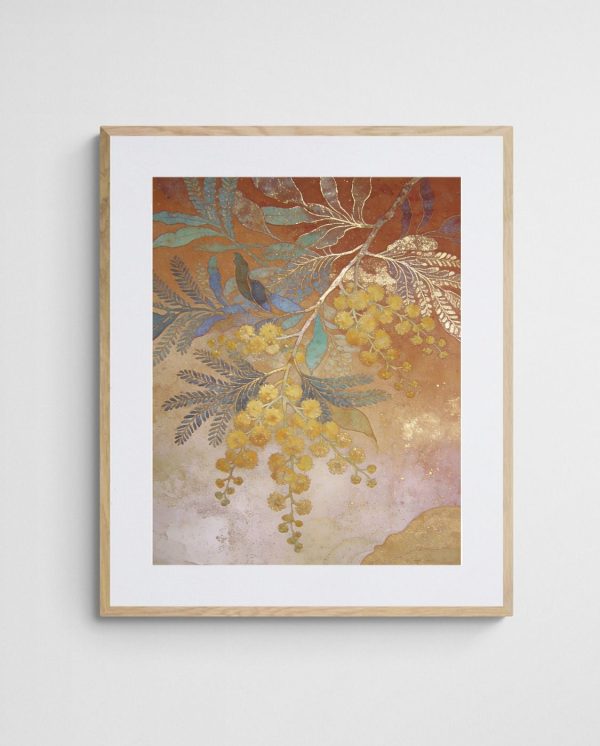
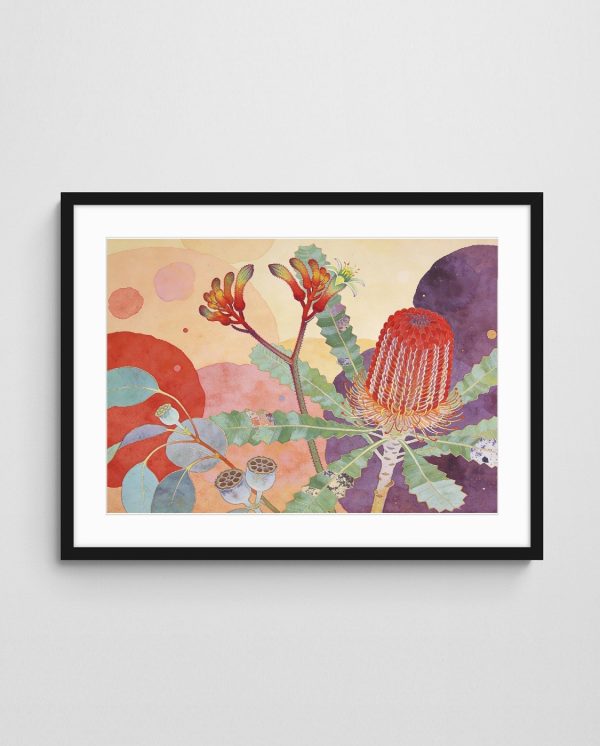
The structural complexity of native Australian plants lends itself naturally to abstraction. Consider the banksia flower head, with its thousands of individual florets creating geometric patterns that shift from tight cylindrical formations to explosive seed pod arrangements. Artists abstracting these forms can explore themes of growth, decay, pattern, and transformation while working from distinctly Australian source material. The “Earthy Banksia Boho” print demonstrates how native botanical subjects can be interpreted through contemporary bohemian aesthetics, creating work that feels both locally grounded and globally relevant.
Eucalyptus species, with their distinctive bark textures, leaf shapes, and flowering patterns, offer equally rich material for modern interpretation. The various eucalypt growth habits—from towering forest giants to twisted mallee formations—provide diverse formal starting points. Abstract interpretations can focus on colour relationships (the blues, greens, and silvers of eucalypt foliage), linear qualities (the distinctive pendant leaves), or pattern (bark textures and peeling patterns). This diversity within a single genus gives artists tremendous range while maintaining thematic coherence, as demonstrated in how native flora inspires modern abstract approaches.

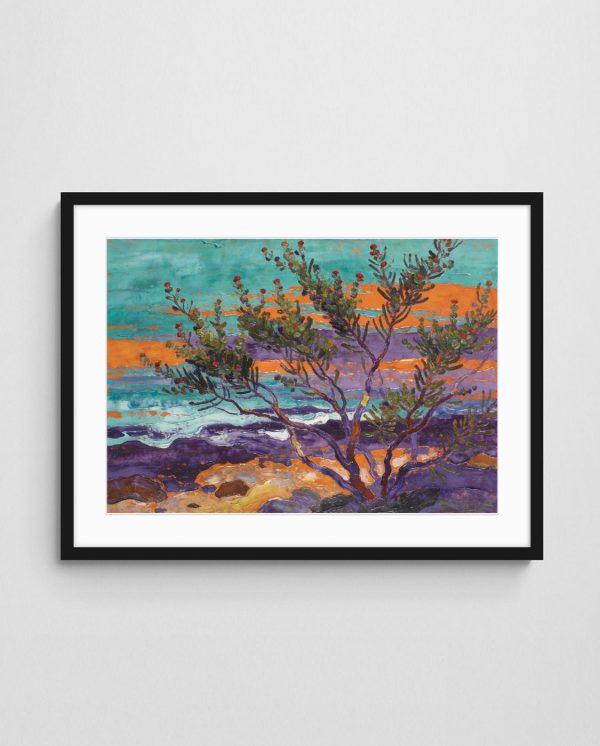

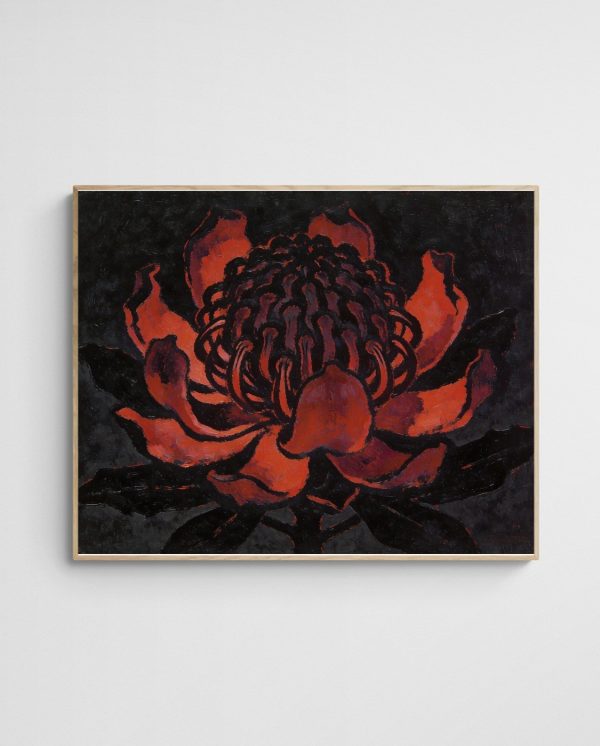
Waratah and other Proteaceae family members present bold, dramatic forms that translate powerfully into large-format abstract work. The intense reds of waratahs against deep green foliage create colour relationships that contemporary artists can push toward abstraction while retaining emotional resonance. The “Waratah Whispers” and “Waratah Noir” prints show how the same botanical subject can be interpreted through vastly different aesthetic frameworks—one emphasizing vibrant colour, the other exploring monochromatic drama. This versatility makes native flora particularly valuable for artists developing cohesive bodies of work across varied aesthetic approaches.
Seasonal Transformations and Cyclical Themes
Australian native plants’ seasonal cycles differ from the dramatic spring-to-winter transformations familiar in temperate Northern Hemisphere regions. Instead, many Australian species respond to rainfall patterns, fire cycles, and subtler temperature shifts. This creates opportunities for artists to explore non-linear time concepts and alternative seasonal narratives. Abstract work referencing these cycles can challenge viewer expectations about how botanical art should function, moving away from spring blossom clichés toward more sophisticated temporal explorations.
Fire ecology presents particularly compelling subject matter for modern Australian botanical art. Many Australian native species have evolved remarkable fire-adaptation strategies—serotinous seed release, lignotuber regrowth, fire-triggered flowering. Artists interpreting these phenomena can create work addressing resilience, transformation, destruction, and renewal simultaneously. These themes resonate far beyond Australian contexts, touching on universal concerns about environmental change, adaptation, and survival. Consequently, botanical abstract work grounded in Australian fire ecology can speak to global audiences while remaining authentically local in its source material and conceptual foundation.
Contemporary Colour Theory Through Native Palettes
The colour palettes found in Australian native flora challenge conventional colour theory assumptions based on European garden traditions. The combination of silver foliage, intense floral reds and oranges, and deep green backgrounds creates relationships that wouldn’t naturally occur in Northern Hemisphere ecosystems. Artists working with these palettes must develop colour approaches specific to these combinations. The results often feature earthy, sophisticated colour relationships that work beautifully in contemporary interior spaces while remaining distinctly Australian in character, similar to approaches discussed in modern home colour combination strategies.



Urban Australian Art: Cities as Creative Catalysts
Melbourne, Sydney, Brisbane, Perth, and Adelaide are sophisticated, multicultural cities with distinctive urban characters that deserve serious artistic exploration. Yet Australian urban landscapes remain underrepresented in both national and international perceptions of Australian art. This gap becomes particularly problematic when we recognize that Australian cities offer unique architectural, social, and environmental characteristics that distinguish them from Northern Hemisphere urban centres. The quality of light, the particular way cities interface with natural landscapes, the architectural heritage blending Victorian, Art Deco, and contemporary styles—these elements create visual environments worthy of sustained artistic attention.
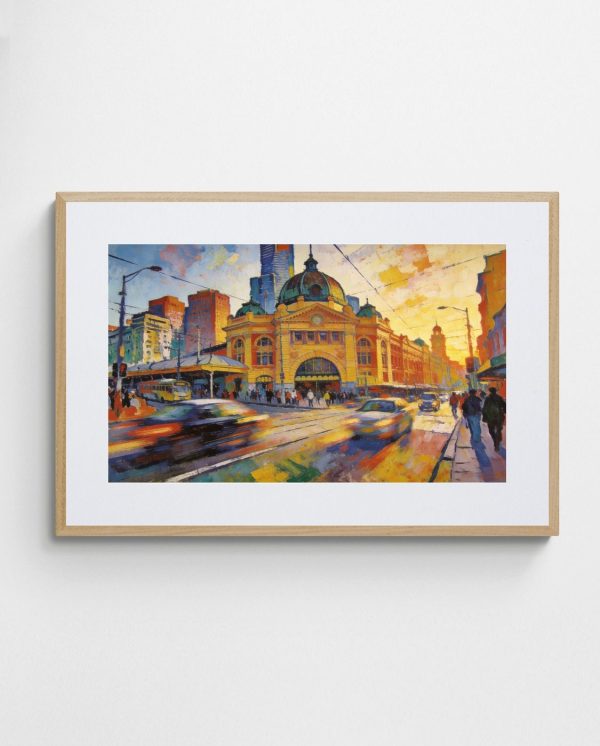
Urban Australian art can explore themes of multiculturalism, density, public space, and the relationship between built and natural environments in ways specific to Australian urban experiences. Our cities’ relatively recent establishment compared to European or Asian counterparts creates different historical layers and architectural palimpsests. The “Southern Cross Station – Melbourne Abstract Landscape Diptych” demonstrates how iconic urban landmarks can be interpreted through abstract contemporary frameworks, creating work that captures urban energy while maintaining artistic sophistication.
Public transportation infrastructure, street art traditions, laneways culture, and urban beach interactions all offer rich subject matter for contemporary artists. Melbourne’s famous laneway culture, Sydney’s harbour-city integration, Brisbane’s subtropical urban character—these distinctive urban qualities create opportunities for artistic exploration that would be impossible in other global cities. Artists developing visual languages around these subjects contribute to a specifically Australian urban modernism that deserves recognition alongside coastal and botanical movements.
The “Morning at Flinders Street Station” print shows how urban landmarks can be abstracted to capture emotional and experiential qualities rather than architectural documentation. This approach transforms familiar urban scenes into contemporary art that resonates with locals’ lived experiences while remaining accessible to international audiences unfamiliar with specific locations. The technical challenge lies in balancing recognition with abstraction—maintaining enough reference that the work connects to place while pushing formal qualities enough that it succeeds as contemporary art on its own merits.
Suburban Landscapes as Legitimate Subject Matter
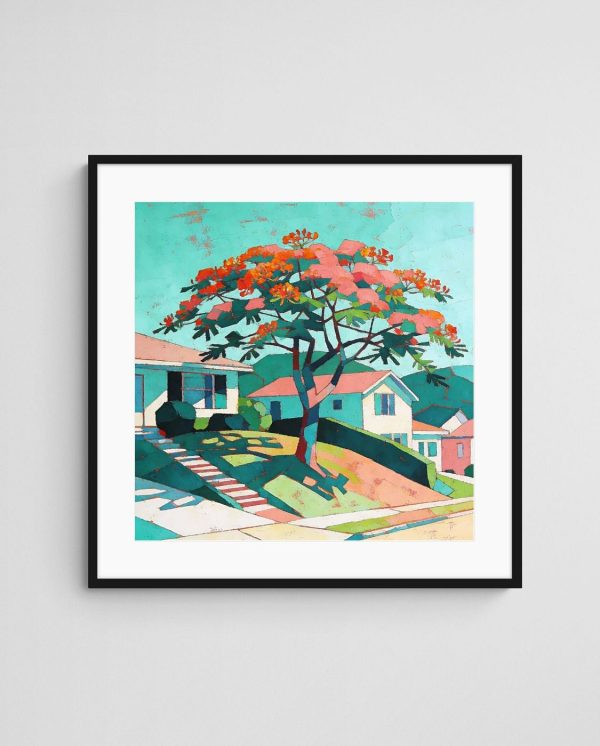
Australian suburbia, often dismissed as aesthetically uninteresting, actually offers fascinating material for contemporary artistic interpretation. The distinctive character of Australian suburban development—quarter-acre blocks, widespread swimming pool ownership, native garden integration, outdoor living emphasis—creates visual environments found nowhere else globally. Artists brave enough to explore these spaces seriously can develop work addressing home, belonging, aspiration, and the Australian dream’s evolution. This subject matter connects with the majority of Australians’ actual lived environments, making it potentially more relevant than either Outback or elite urban imagery.
The challenge with suburban subject matter lies in avoiding both condescension and uncritical celebration. The most successful work in this space acknowledges suburban environments’ complexity—their environmental challenges, social dynamics, and evolving character. Abstract approaches work particularly well for suburban subjects because they can capture feeling and experience without getting mired in documentary specificity or social commentary. Colour, pattern, light, and spatial relationships extracted from suburban environments can create sophisticated abstract work that references these spaces without requiring literal representation, as explored in approaches to transforming living spaces with statement art.
Colour Theory Reimagined: Beyond Ochre and Ultramarine
The assumption that Australian art should feature predominantly ochre, terracotta, and ultramarine blue reflects another limiting stereotype that constrains contemporary practice. While these colours certainly appear in Australian landscapes, they represent only a fraction of the colour relationships found across Australian environments. Modern Australian artists working in abstract modes have opportunities to develop sophisticated colour theories based on diverse Australian ecosystems—from tropical rainforest greens and floral brights to coastal pinks and corals, from alpine eucalypt silvers to urban sunset oranges reflected off glass and steel.
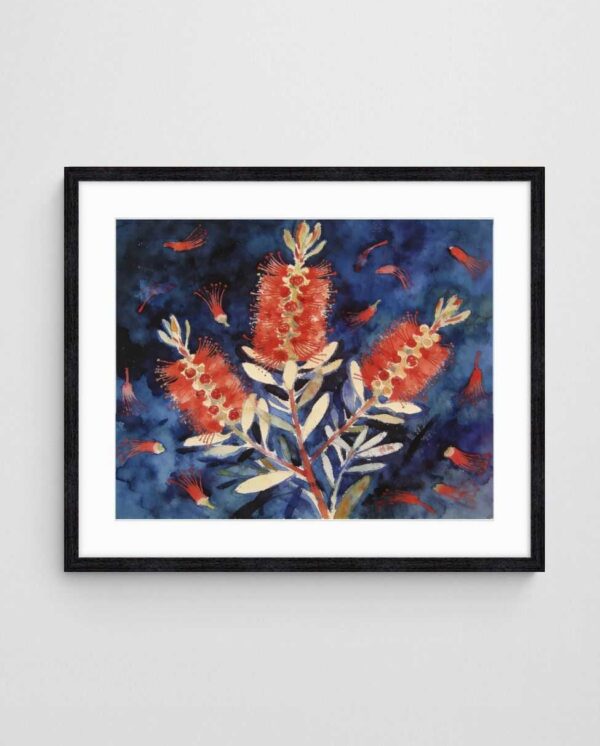
Consider the colour palette of a bottlebrush flower against an indigo sky—intense red-orange stamens creating striking contrast with deep blue backgrounds, moderated by green foliage and grey-green stems. The “Bottlebrush on Indigo” print explores precisely this colour relationship, demonstrating how native botanical subjects can inspire contemporary colour theory. These relationships differ fundamentally from European garden flower palettes or American wildflower combinations, offering Australian artists distinctive colour territories to claim and explore. According to established colour theory principles, such unique natural colour combinations can form the basis for sophisticated artistic palettes.


Coastal environments present particularly diverse colour opportunities. The pink and orange tones in certain sandstone and coral formations, combined with turquoise waters, white sand, and green coastal vegetation, create colour relationships that challenge conventional colour wheel logic. These combinations work because they evolved together in specific environmental contexts. Artists translating these palettes into abstract work can create pieces that feel simultaneously fresh and familiar—colours that wouldn’t conventionally be combined but that resonate because they reflect experienced reality.
Urban sunset colours reflecting off contemporary architecture offer another underexplored palette territory. Australian cities’ particular atmospheric conditions create sunset colours that differ from those in other global cities. The way these colours interact with glass, steel, and concrete creates unique visual phenomena. Artists capturing these colour relationships through abstract frameworks develop work that feels specifically Australian while engaging with global urban contemporary art movements. This dual character—locally grounded yet internationally relevant—represents precisely what modern Australian art should achieve.
Breaking Free from Earth Tone Limitations
The assumption that Australian art should feature predominantly earth tones does a profound disservice to the colour diversity found across the continent. Tropical and subtropical Australian regions feature intensely saturated colours—bright floral tones, vivid bird plumages, brilliant reef colours—that deserve exploration in contemporary abstract work. These palettes create opportunities for vibrant, optimistic, energetic work that challenges moody earth-tone assumptions. Artists working in these territories must navigate accusations of not being “Australian enough” simply because their colour choices don’t conform to Outback stereotypes, which demonstrates the limiting power of these narratives.
Monochromatic and near-monochromatic approaches also deserve consideration in Australian abstract art. The subtle tonal variations in eucalypt bark, the monochrome drama of charred forest post-fire, the silvery-grey of many Australian native plants—these subjects lend themselves to sophisticated monochromatic exploration. Such work can create contemplative, subtle pieces that contrast with more vibrant interpretations while remaining thoroughly grounded in Australian environmental reference. The diversity of possible approaches reflects Australia’s actual environmental diversity rather than reductive stereotypes, similar to strategies outlined in cool colour palette applications for contemporary spaces.
Demanding Global Recognition on Our Terms
The international contemporary art establishment has long relegated Australian artists to peripheral status, viewing Australian art as regionally interesting but not central to global contemporary movements. This positioning reflects both geographical isolation and the stereotyping discussed throughout this piece. However, the digital age has fundamentally changed how art circulates globally, creating opportunities for Australian artists to bypass traditional gatekeepers and reach international audiences directly. The question becomes whether Australian artists will use this opportunity to reinforce stereotypes or to assert more complex, contemporary identities.
International recognition should not require performing expected Australian-ness. Artists developing sophisticated contemporary practices grounded in genuine Australian experiences—whether urban, coastal, suburban, or botanical—deserve recognition for artistic merit rather than exotic curiosity. This requires both individual artist courage and institutional support from Australian galleries, museums, and arts organizations willing to champion work that doesn’t fit comfortable international expectations. Some progress is occurring, with Australian artists gaining recognition in international contemporary art circuits for conceptually sophisticated work that happens to be made in Australia rather than being “about Australia” in reductive ways.
The future of Australian art lies not in rejecting our context but in refusing to let that context be defined by others’ limited imaginations.
The commercial success of certain Australian artists in international markets sometimes comes at the cost of artistic compromise—producing work that confirms rather than challenges international expectations. While individual artists must make their own choices about these trade-offs, the broader Australian art community should celebrate artists who resist these pressures. Creating sustainable careers while maintaining artistic integrity requires both individual determination and supportive infrastructure. Australian collectors have particular responsibility here—choosing to support challenging contemporary work rather than safe, marketable pieces that reinforce stereotypes.


Building Alternative Distribution Networks
The traditional gallery system, with its emphasis on major art fairs and blue-chip gallery representation, inherently disadvantages geographically isolated artists. However, online platforms, social media, and direct-to-consumer models create alternative pathways for Australian artists to reach collectors globally. These models allow artists to maintain control over how their work is presented and interpreted, resisting the curatorial framing that often reduces Australian art to comfortable stereotypes. The most successful artists using these approaches combine strong online presence with strategic participation in traditional art world structures, using each to reinforce the other.
Print editions and accessible art offerings democratize access to contemporary Australian art while creating sustainable income streams for artists. This approach allows artists to develop ambitious, uncompromising artistic practices while maintaining commercial viability through affordable print work. The key lies in ensuring print work maintains the conceptual and aesthetic sophistication of unique pieces rather than becoming diluted commercial products. When executed thoughtfully, this model can actually expand Australian contemporary art’s reach more effectively than traditional gallery representation, bringing sophisticated work into homes and spaces where original works would never appear, as discussed in creating visual interest through accessible abstract art.
Collaborative Movements and Collective Power
Individual artists working in isolation struggle to shift entrenched narratives about Australian art. Collaborative movements, artist collectives, and shared exhibition platforms create opportunities for developing and promoting alternative narratives collectively. When multiple artists working in diverse contemporary modes present cohesive arguments through group exhibitions or publications, the impact multiplies exponentially. Such collaborations can articulate sophisticated positions about Australian contemporary art’s direction that individual voices cannot achieve alone. The challenge lies in building these collaborative structures in ways that maintain individual artistic identities while creating collective momentum.
Younger Australian artists, particularly those trained in international contexts or engaging extensively with global contemporary art discourse online, often approach Australian subject matter with fresh perspectives unconstrained by older narratives. Supporting these emerging voices becomes crucial for shifting the conversation. Mentorship programs, emerging artist prizes, and exhibition opportunities specifically supporting innovative contemporary approaches all contribute to building the infrastructure necessary for sustained change. The transformation won’t happen overnight, but consistent, sustained pressure from multiple directions can gradually shift both local and international perceptions of what Australian contemporary art can be.


The Role of Arts Criticism and Discourse
Australian arts criticism and discourse must evolve alongside artistic practice. Critics and writers who continue evaluating Australian art primarily through the lens of how it relates to landscape traditions or Indigenous heritage miss entirely the sophisticated contemporary practices developing across multiple territories. We need critical frameworks that can engage with Australian contemporary art on its own terms rather than constantly referring it back to heritage and tradition. This doesn’t mean abandoning attention to heritage—it means recognizing that contemporary practice can engage with tradition in complex, non-literal ways or can legitimately pursue entirely different concerns.
International art publications rarely feature Australian contemporary art except when it conforms to expected narratives. Changing this requires Australian critics, curators, and writers to actively pitch Australian artists to international publications, framing the work in ways that emphasize contemporary relevance rather than exotic difference. It requires building relationships with international critics and curators willing to engage with Australian art beyond superficial engagement. Most importantly, it requires confidence that Australian contemporary art has something valuable to contribute to global discourse—not as regional curiosity but as legitimate contemporary practice deserving serious critical attention, similar to the recognition sought in reimagining Australian art beyond traditional boundaries.
Looking Forward: Next Generation Possibilities
The next generation of Australian artists inherits both the burden of limiting stereotypes and unprecedented opportunities to transcend them. Digital tools, global connectivity, and evolving art market structures create possibilities that didn’t exist for previous generations. Young artists can build international audiences before ever securing traditional gallery representation. They can collaborate with artists globally while remaining based in Australian cities or regional areas. They can access contemporary art discourse and education resources that previous generations could only access through expensive international travel or relocation.
The question becomes how this generation will use these opportunities. Will they perpetuate successful commercial formulas from previous generations, or will they push into genuinely new territories? Early indications suggest reason for optimism—emerging Australian artists increasingly produce conceptually sophisticated work that engages with global contemporary concerns while maintaining distinctive perspectives shaped by Australian experiences. They move fluidly between abstraction and representation, digital and traditional media, political engagement and formal exploration. This fluidity, this refusal of simple categorization, represents perhaps the most authentically contemporary Australian art position possible.
Climate change, environmental crisis, urban density, multiculturalism, technological transformation—these pressing contemporary issues affect Australia as much as anywhere globally, yet Australian perspectives on these issues differ from Northern Hemisphere perspectives in meaningful ways. Artists engaging these subjects from Australian contexts contribute valuable perspectives to global conversations. This represents the path forward—not Australian art defined in opposition to international art, not Australian art performing expected difference for international audiences, but Australian art as legitimate participant in global contemporary discourse, bringing distinctive perspectives while engaging universal concerns. This is the modern Australian art we need, and this is the modern Australian art increasingly emerging from studios, galleries, and digital platforms across the continent.
Frequently Asked Questions
What defines modern Australian art beyond traditional Outback imagery?
Modern Australian art encompasses diverse subjects including coastal environments, urban landscapes, native botanical abstractions, and contemporary social themes that reflect Australia’s multicultural, predominantly urban population. It prioritizes conceptual sophistication and technical innovation over stereotypical regional imagery, engaging with global contemporary art movements while maintaining distinctly Australian perspectives shaped by local environments, light quality, and cultural experiences.
How can Australian native flora be effectively used in abstract art?
Australian native plants like banksia, waratah, and eucalyptus offer extraordinary formal qualities—unusual shapes, complex structural patterns, and distinctive colour relationships—that translate beautifully into abstract visual languages. Artists can focus on geometric patterns in flower structures, colour contrasts between blooms and foliage, textural qualities of bark and leaves, or seasonal transformation cycles to create sophisticated abstract work that references Australian environments without literal representation.
Why is coastal Australian art underrepresented compared to Outback themes?
International art markets have historically preferred Outback imagery because it confirms preconceived notions about Australian identity and offers exotic appeal to overseas buyers. This commercial reality has incentivized galleries and artists to prioritize inland landscapes despite over 80% of Australians living in coastal urban areas. However, contemporary artists are increasingly exploring coastal themes through sophisticated abstract approaches that capture Australia’s extensive marine and littoral environments.
What colour palettes distinguish Australian abstract art from international work?
Beyond the stereotypical ochre and ultramarine, Australian environments offer diverse colour relationships including coastal pinks and corals, tropical floral brights, eucalypt silvers and greens, reef turquoises, and urban sunset oranges. These combinations often challenge conventional colour theory because they evolved together in specific Australian ecosystems, creating distinctive palettes that feel simultaneously fresh and familiar when translated into abstract art.
How can Australian artists gain international recognition without compromising artistic integrity?
Australian artists can leverage digital platforms and direct-to-consumer models to reach international audiences while maintaining control over how their work is presented and interpreted. Building strong online presence, engaging with global contemporary art discourse, creating accessible print editions alongside unique works, and collaborating with other artists to develop collective movements all provide pathways to international recognition without requiring performance of stereotypical Australian-ness for overseas markets.
 | Joseph Russell Joseph is an Australian abstract artists and curator of the Inomaly art collection. |