
Transforming your living space with the right artwork starts with understanding how different art mediums can dramatically alter the atmosphere and aesthetic of your home. From the textured depths of oil paintings to the crisp clarity of digital prints, each medium brings unique visual qualities and emotional resonance that can elevate your interior design. Whether you’re decorating a minimalist apartment or adding character to a heritage home, selecting the appropriate art medium is just as crucial as choosing the right colour palette or furniture style. This comprehensive guide explores seven transformative art mediums that can redefine your space, offering practical insights into their characteristics, benefits, and ideal applications within Australian homes.
The selection of art mediums for your home should consider several key factors: the room’s function, existing décor style, lighting conditions, and the mood you wish to create. Giclée prints offer museum-quality reproduction with archival longevity, making them ideal for statement walls in living areas. Abstract expressionist works provide energetic movement and emotional depth, whilst geometric abstracts deliver structured sophistication. Watercolour-style pieces introduce softness and fluidity, perfect for creating calming environments. Digital art brings contemporary edge and bold colour, whilst mixed media pieces add textural interest and dimension. Line art offers minimalist elegance with maximum impact, and photographic prints ground spaces with realistic imagery. Each medium possesses distinct visual properties that interact differently with natural light, room proportions, and surrounding furnishings, ultimately shaping how your space feels and functions.
1. Giclée Prints: Museum-Quality Reproduction
Giclée printing represents the pinnacle of fine art reproduction technology, offering unparalleled colour accuracy and longevity that rivals traditional painting mediums. This sophisticated printing method uses archival-quality inks and premium substrates to create prints that maintain their vibrancy for decades, making them an excellent investment for homeowners seeking lasting beauty. The term “giclée” derives from the French word meaning “to spray,” referring to the precise inkjet technology that applies microscopic droplets of pigment-based inks onto canvas or fine art paper.
The primary advantage of giclée prints lies in their ability to reproduce intricate details and subtle colour gradations that cheaper printing methods simply cannot achieve. This makes them particularly well-suited for displaying complex abstract compositions or works featuring delicate tonal transitions. Moreover, giclée prints offer the aesthetic appeal of original artwork at a fraction of the cost, democratising access to gallery-quality pieces for Australian homeowners. When properly framed and displayed away from direct sunlight, these prints can maintain their original appearance for 100 years or more, making them ideal for feature walls in living rooms where you want to create a lasting impression.
Ideal Applications for Giclée Prints
Consider giclée prints for formal spaces such as dining rooms, home offices, or master bedrooms where you want artwork that commands attention and respect. These prints work exceptionally well in contemporary and traditional interiors alike, bridging aesthetic divides with their refined appearance. Additionally, their durability makes them suitable for high-traffic areas where lesser-quality prints might fade or deteriorate quickly. When selecting giclée prints, pay attention to the paper or canvas weight and the reputation of the printing studio to ensure you’re receiving genuine museum-quality reproduction.
2. Abstract Expressionism: Energy and Movement
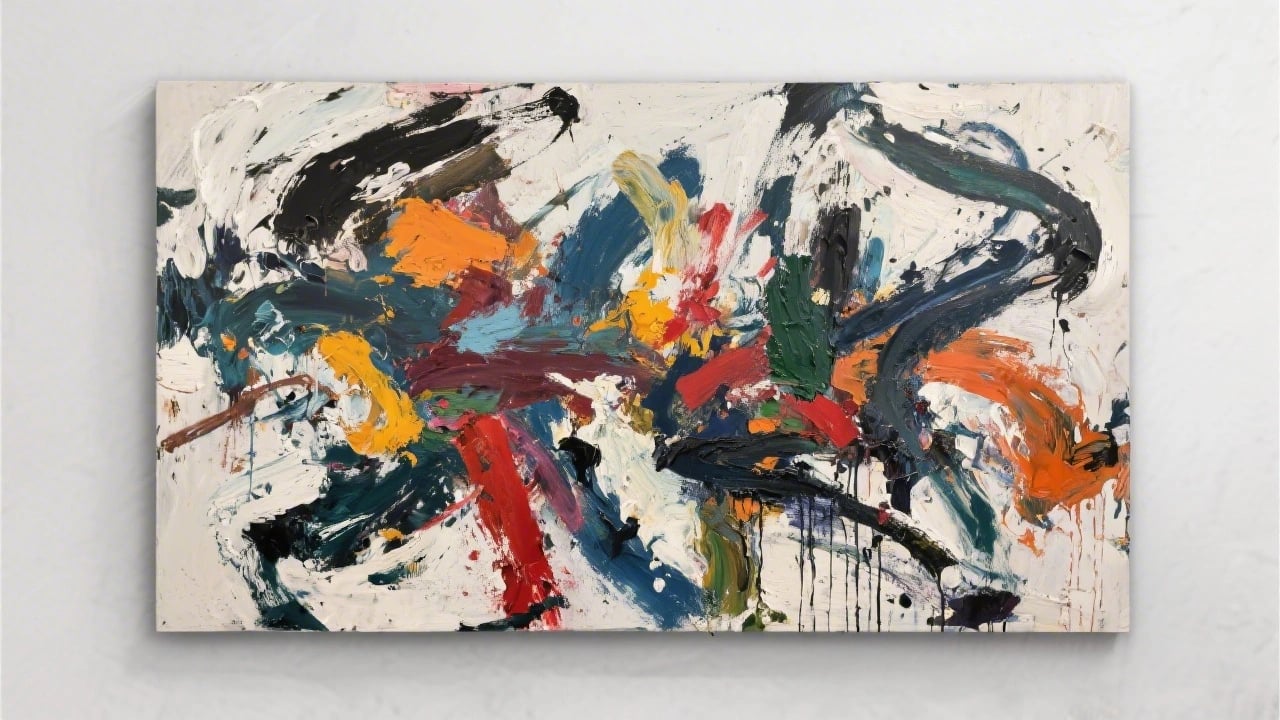
Abstract expressionism injects dynamic energy into interior spaces through bold brushstrokes, dramatic colour contrasts, and a sense of spontaneous creativity that captivates viewers. This art movement, which emerged in post-war America and continues to influence contemporary artists, emphasises emotional intensity over representational accuracy. For homeowners seeking to create spaces that feel alive and engaging, abstract expressionist pieces offer an unmatched ability to establish focal points and stimulate conversation.
The visual characteristics of abstract expressionism—gestural marks, layered colours, and apparent spontaneity—create depth and complexity that rewards repeated viewing. These works often feature vibrant colour palettes and energetic compositions that can dramatically transform neutral spaces, adding personality and visual interest without overwhelming the room. The “Busy Swimming Pool” exemplifies how abstract expressionist techniques can capture movement and vitality through layered blues and dynamic brushwork, making it perfect for modern Australian homes that embrace coastal aesthetics.


Furthermore, abstract expressionist works pair beautifully with mid-century modern furniture and minimalist décor schemes, creating an intentional contrast between clean lines and expressive artwork. This juxtaposition prevents spaces from feeling too sterile whilst maintaining overall design coherence. When incorporating abstract expressionism into your home, consider the emotional tone of the piece—some works convey energetic excitement whilst others express contemplative introspection. Match this emotional quality to the room’s function, placing more energetic pieces in social spaces and calmer compositions in private areas. To explore more about this movement’s impact on contemporary design, visit our guide on why contemporary artists embrace abstraction.
3. Geometric Abstracts: Structured Sophistication
Geometric abstract art brings order and visual harmony to interior spaces through carefully composed shapes, patterns, and mathematical precision. This medium appeals to homeowners who appreciate clean aesthetics and structured design, offering a sophisticated alternative to more chaotic or organic art forms. Geometric abstracts work exceptionally well in modern, Scandinavian, and mid-century interiors where symmetry and balance play crucial roles in the overall design philosophy.
The beauty of geometric abstracts lies in their versatility—they can be bold and colourful or subtle and monochromatic, depending on your design needs. These works often feature circles, triangles, rectangles, and other fundamental shapes arranged in compositions that create visual rhythm and movement despite their structured nature. The “Mediterranean Origami” demonstrates how geometric forms can evoke coastal serenity through carefully balanced shapes and soothing blue tones, making it an excellent choice for creating tranquil spaces. Similarly, the “Circles of Civilisation 2” showcases how repeating geometric patterns can add both colour and structure to modern interiors.
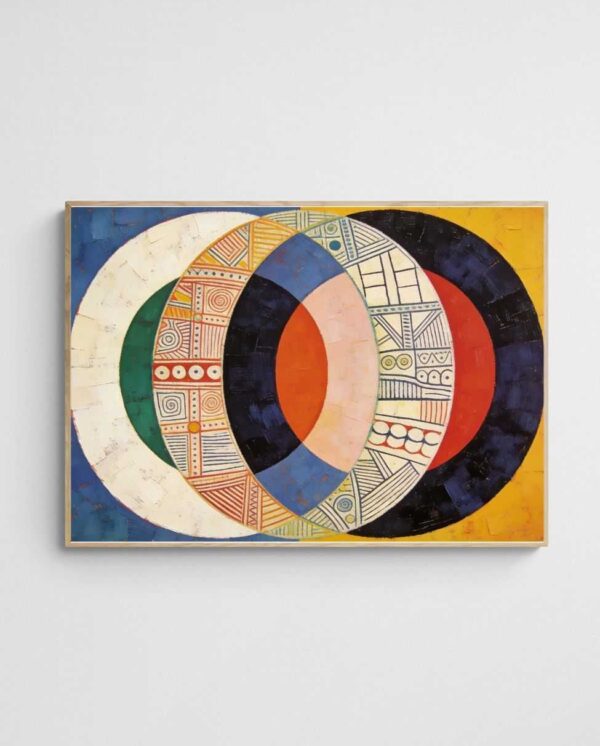
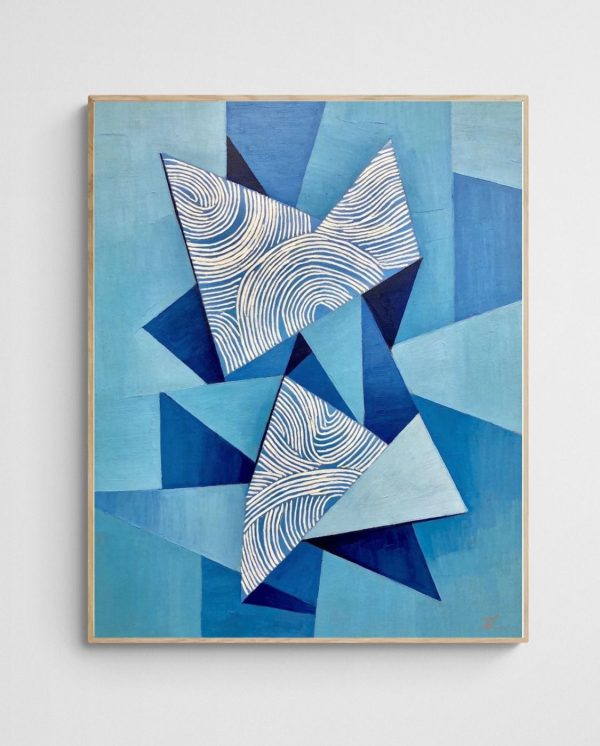
Geometric abstracts excel at creating visual interest without overwhelming spaces, making them particularly suitable for smaller rooms or areas where you want art to complement rather than dominate. They also pair beautifully with patterned textiles and furnishings when carefully coordinated—choose geometric art with colours that echo your soft furnishings to create a cohesive design scheme. Additionally, these works photograph exceptionally well, making them popular choices for design-conscious homeowners who enjoy sharing their interiors on social media. For inspiration on integrating geometric pieces into various room settings, explore our comprehensive guide on when to use geometric art.
Choosing the Right Geometric Style
Consider whether you prefer hard-edge geometric art with crisp, clean lines or softer geometric compositions that incorporate organic elements. Hard-edge works create more dramatic impact and work well in minimalist settings, whilst softer geometric pieces offer greater versatility across different interior styles. The scale of geometric elements also matters—larger shapes create bold statements suitable for spacious walls, whereas smaller, intricate patterns work better in compact spaces or as part of gallery wall arrangements.
4. Watercolour-Style Art: Soft and Fluid
Watercolour-inspired art mediums introduce an ethereal, romantic quality to interiors through translucent layers, soft edges, and delicate colour transitions. This medium evokes feelings of tranquillity and natural beauty, making it particularly appropriate for bedrooms, bathrooms, and other spaces designed for relaxation and rejuvenation. The characteristic fluidity of watercolour-style pieces creates visual movement that feels gentle rather than jarring, offering a soothing counterpoint to the hard edges and solid surfaces found throughout modern homes.
The appeal of watercolour-style art extends beyond its aesthetic softness to encompass the emotional associations many people have with traditional watercolour painting—memories of art classes, impressions of natural landscapes, and a sense of handcrafted authenticity. Contemporary artists often combine watercolour effects with digital techniques or other mediums to create works that maintain the beloved characteristics of traditional watercolours whilst offering improved durability and colour consistency. These hybrid approaches allow homeowners to enjoy the watercolour aesthetic without concerns about fading or moisture damage that can affect genuine watercolour paintings.
When incorporating watercolour-style pieces into your décor scheme, consider their ability to soften hard architectural elements and complement natural materials like timber and linen. These works pair exceptionally well with Hamptons, coastal, and boho interior styles, where their organic qualities reinforce the overall design aesthetic. Pay attention to the dominant colours within watercolour-style pieces, selecting works that harmonise with your existing palette whilst introducing subtle variation. The translucent quality of watercolour-inspired art also makes these pieces excellent choices for spaces with abundant natural light, where the artwork can appear to glow and change throughout the day.
5. Digital Art: Contemporary and Bold

Digital art mediums represent the cutting edge of contemporary artistic expression, offering virtually unlimited colour possibilities, precision, and the ability to create effects impossible through traditional techniques. This medium particularly appeals to homeowners with modern or eclectic interior styles who want artwork that reflects current cultural trends and technological advancement. Digital art encompasses everything from digitally enhanced photography to completely computer-generated compositions, providing enormous variety within a single medium category.
One significant advantage of digital art lies in its reproducibility without quality loss—unlike traditional paintings where reproductions inevitably differ from originals, digital artworks can be printed multiple times with identical results. This makes digital art particularly cost-effective for homeowners wanting high-impact pieces without gallery prices. Additionally, digital techniques allow artists to experiment freely, often resulting in bold colour combinations and innovative compositions that push creative boundaries. The “Indigo Protea on Gold” exemplifies how digital art can create striking contrasts and precise details that capture attention in any space.
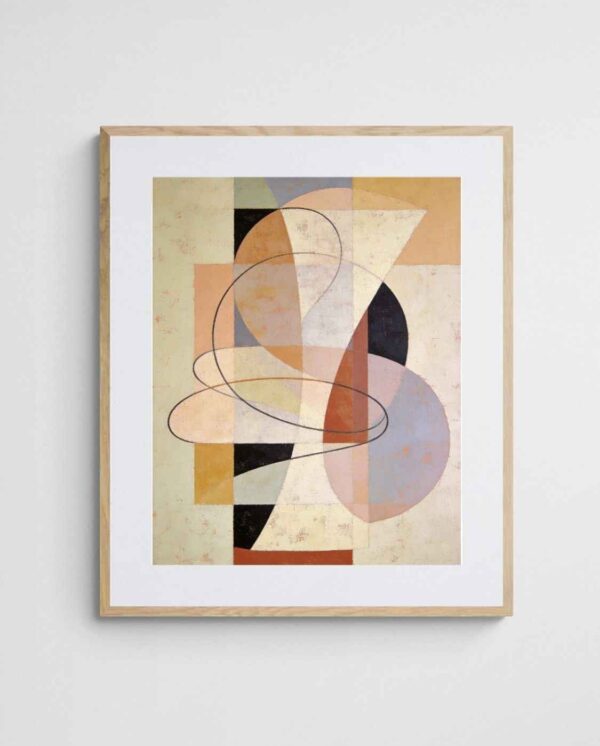
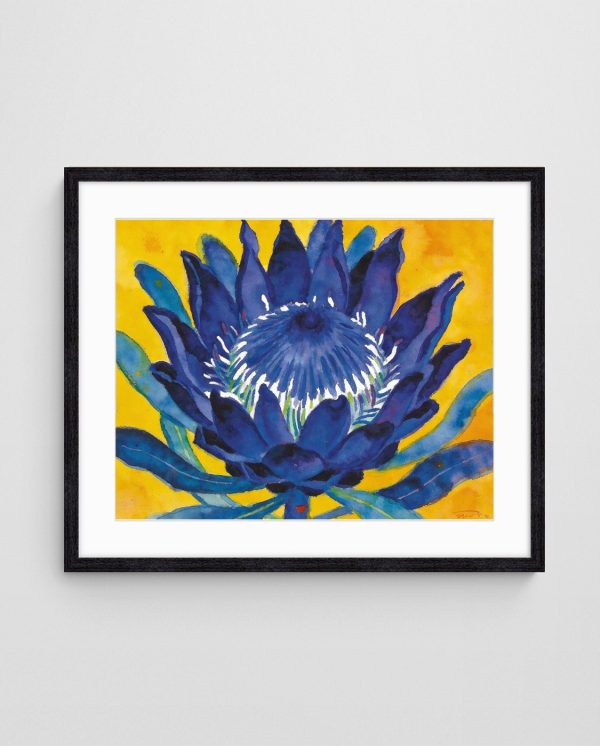
Digital art works exceptionally well in urban apartments, contemporary homes, and spaces with strong architectural features where the artwork needs to hold its own against bold design elements. These pieces often feature saturated colours and sharp details that create powerful visual impact, making them ideal for reception areas and entrance spaces where you want to make immediate impressions. When selecting digital art, consider how the colours and composition interact with your lighting scheme—LED lighting in particular can enhance the vibrant colours typical of digital pieces. For a broader understanding of how contemporary artists work across different mediums, explore the evolution of digital art and its increasing acceptance in fine art circles.
Digital Art and Print Quality
When purchasing digital art prints, prioritise quality over bargain prices. Look for archival-quality printing on premium substrates using pigment-based inks rather than dye-based alternatives. Reputable sellers should provide information about their printing processes and materials. Additionally, consider whether you prefer digital art printed on canvas for a more traditional gallery feel or fine art paper for crisp, detailed reproduction. Both substrates have their merits depending on the specific artwork and your interior design goals.
6. Mixed Media: Textural Dimension
Mixed media artworks combine multiple techniques and materials to create layered, textural pieces that offer visual complexity and tactile appeal. This approach to art-making might incorporate painting, collage, printmaking, drawing, and even three-dimensional elements within a single composition. For homeowners seeking truly unique pieces that stand out from mass-produced décor, mixed media art provides an authenticity and depth that other mediums struggle to match.
The primary appeal of mixed media lies in its dimensional quality—these works often feature actual texture that creates shadows and captures light in ways that flat prints cannot replicate. This physicality adds an engaging element to your walls, inviting closer inspection and creating conversation starters when guests visit your home. Mixed media pieces work particularly well in eclectic, bohemian, or transitional interiors where the combination of styles and materials complements the room’s overall aesthetic philosophy. The “Eye of the Garden” demonstrates how mixed media approaches can blend various techniques to create vibrant, nature-inspired compositions with remarkable depth.


When incorporating mixed media art into your space, consider the surrounding elements carefully. These textural pieces need adequate lighting to fully showcase their dimensional qualities—wall-washing fixtures or picture lights can dramatically enhance the viewing experience. Additionally, mixed media works often benefit from simpler frames or even frameless presentation to avoid competing with the artwork’s inherent complexity. These pieces excel in rooms with varied textures and materials, where the artwork’s multifaceted nature harmonises with diverse design elements. If you’re interested in exploring how texture plays a role in abstract compositions, review our guide on abstract composition principles.
7. Line Art: Minimalist Impact
Line art represents perhaps the most distilled form of artistic expression, using nothing but lines—whether continuous, broken, thick, or thin—to create compelling compositions that capture the essence of subjects with remarkable economy. This medium has experienced tremendous popularity in contemporary interiors, particularly within Scandinavian and minimalist design schemes where restraint and simplicity reign supreme. The power of line art lies in its ability to create significant visual impact whilst maintaining an airy, uncluttered aesthetic that doesn’t overwhelm smaller spaces.
The versatility of line art makes it suitable for virtually any room in your home, from formal dining areas to casual family spaces. These pieces work equally well individually as statement pieces or grouped together to create sophisticated gallery walls. The “Floral Minimalism Abstract” showcases how simple line work can convey natural beauty with elegant restraint, making it perfect for spaces where you want artistic presence without visual heaviness. Similarly, the “Tangled Hourglass” demonstrates how geometric line art can add structure and interest to neutral colour schemes.
Line art pieces particularly excel in spaces with busy patterns or multiple textures, where their visual simplicity provides necessary breathing room and prevents the overall design from feeling chaotic. These works also photograph beautifully, making them popular choices for design enthusiasts who enjoy documenting their interiors. When selecting line art, pay attention to line weight and density—heavier, more numerous lines create bolder impact suitable for larger walls, whilst delicate, sparse lines work better in intimate spaces or as part of layered arrangements. For additional guidance on incorporating minimalist pieces into various interior styles, explore our Scandinavian art prints guide.
Pairing Line Art with Colour
Whilst many line art pieces feature simple black lines on white backgrounds, don’t overlook coloured line art that can add personality whilst maintaining minimalist principles. Consider how the line colour relates to your broader colour scheme—metallics like gold or copper add warmth and luxury, whilst coloured lines can echo accent colours throughout your space. Additionally, think about background colour or allowing the wall colour to show through if mounting line art without matting.
Selecting the Right Medium for Your Space
Choosing the appropriate art medium for specific rooms requires thoughtful consideration of multiple factors beyond personal aesthetic preferences. Lighting conditions play a crucial role—naturally lit spaces can accommodate more subtle, nuanced pieces, whilst dimly lit areas benefit from bolder works with strong contrast. Room function also matters considerably; energetic abstract expressionist pieces suit social spaces where conversation and activity occur, whereas calming watercolour-style works better serve bedrooms and meditation areas designed for rest and relaxation.
Consider your existing décor’s colour palette and style when selecting art mediums. Geometric abstracts complement modern furniture and clean-lined architecture, whilst mixed media pieces enhance eclectic or transitional interiors that already incorporate diverse materials and textures. The scale of your wall space matters too—large, empty walls can accommodate bold, complex pieces or multiple works arranged as gallery walls, whereas smaller spaces benefit from single statement pieces with simpler compositions. Don’t forget practical considerations like humidity levels in bathrooms and kitchens, which favour properly sealed prints over more delicate mediums.
Finally, think about longevity and adaptability. If you redecorate frequently, choosing versatile pieces in neutral palettes or with universal appeal ensures your art investment remains relevant across multiple design iterations. Alternatively, if you’ve found your signature style and plan to maintain it long-term, you can select more specific pieces that perfectly complement your established aesthetic. The key lies in understanding both your current needs and future intentions, allowing your art selections to grow with your evolving tastes whilst providing immediate satisfaction and visual impact. For comprehensive guidance on coordinating artwork with your broader interior design, visit our detailed coordination guide.
Transforming Your Space Through Thoughtful Medium Selection
The journey to transforming your interior spaces through carefully selected art mediums combines practical knowledge with personal intuition. Each of the seven mediums explored—giclée prints, abstract expressionism, geometric abstracts, watercolour-style art, digital art, mixed media, and line art—offers distinct advantages that can dramatically reshape how your rooms look and feel. By understanding the unique characteristics of each medium and how they interact with architectural features, lighting conditions, and existing décor, you can make informed decisions that elevate your home’s aesthetic appeal.
Remember that selecting art mediums isn’t about following rigid rules but rather about understanding principles that guide successful integration. Your personal response to artwork matters most—choose pieces that resonate emotionally and reflect your values, experiences, and aspirations. Whether you’re drawn to the structured sophistication of geometric abstracts or the fluid beauty of watercolour-style pieces, trust your instincts whilst applying the practical considerations outlined throughout this guide. Visit our extensive collection of art prints to discover pieces across all these transformative mediums, and don’t hesitate to utilise our free room design service for personalised guidance in selecting the perfect artwork for your unique space.