
Picture a living room with a beautiful sofa, a considered rug and a wall that still feels empty. The usual culprit is scale. Decorating with oversized art prints fixes that quickly, because one large piece can anchor an entire room and give it a clear point of view.
The short answer is this: choose a print that covers roughly two-thirds of the width of the furniture beneath it, hang it with its centre about 145 cm from the floor, and let it be the dominant element in the room. Pick bold colour or strong shape, keep surrounding accessories restrained, and the wall will do the work for you.
Why Oversized Art Works
A single large print creates a focal point, and a focal point gives the eye somewhere to rest. Several small frames scattered across a wall often read as clutter. One generous piece reads as intent.
Large work also makes a room feel taller and more expansive. In practice, a big vertical print on a standard 2.4 m wall draws the eye upward and lifts the ceiling visually. If you are new to the movement behind many of these pieces, our ultimate guide to abstract art for beginners is a helpful starting point.
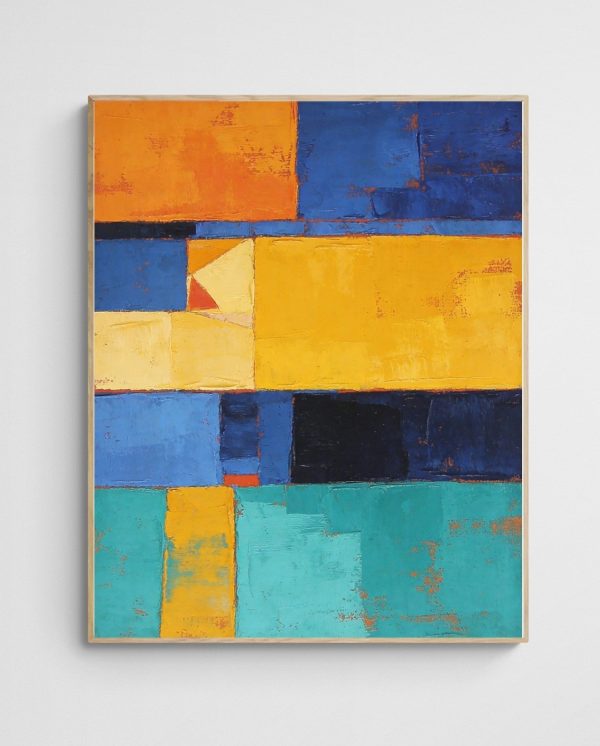
The “Colour Band Break – Bold Geometric Abstract Wall Art Print” is a good example. Its strong bands of colour work at scale, because the geometry stays crisp even from across the room.
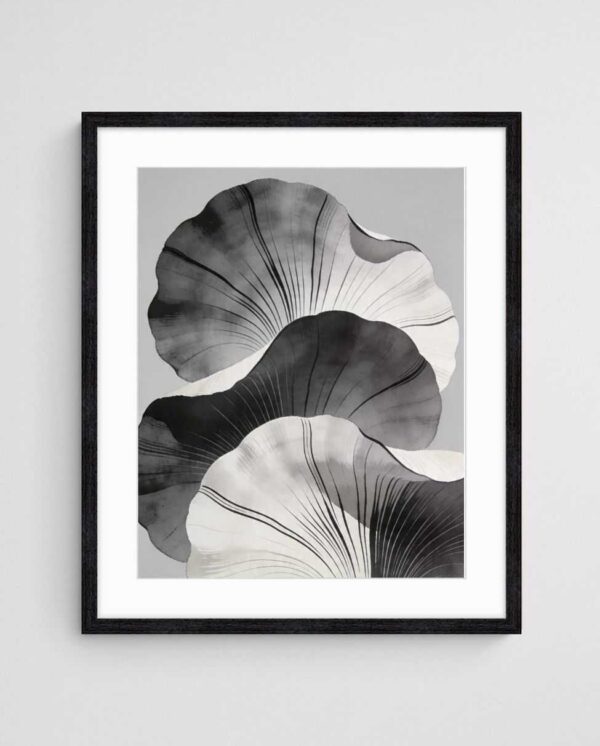
Sizing and Placement Basics
The two-thirds rule
A common mistake is buying art that is too small for the furniture below it. Aim for a print that spans about 60 to 75 per cent of the sofa, bed or sideboard width. Our guide to large art prints that actually fit your walls explores this in more detail.
Hanging height
Museums hang work with its centre at about 145 cm. Follow the same rule at home. Above a sofa, leave 15 to 25 cm between the furniture and the bottom edge of the frame.
Oversized prints also need solid fixings. Use wall anchors rated for the frame’s weight, and ask a second person to help with levelling. For framing advice, see our guide to framing and hanging Giclée prints.


| Furniture | Typical width | Ideal art width |
|---|---|---|
| Three-seater sofa | 210 cm | 130 to 160 cm |
| Queen bed | 160 cm | 100 to 120 cm |
| Sideboard | 150 cm | 90 to 110 cm |
Choosing a Style and Palette
Pull colour from the room
Start with what you already own. Pick one or two accent colours from cushions, rugs or timber tones, then choose a print that echoes them. Our guide to artwork and room colour matching walks through the process step by step.
Bold shapes versus soft washes
At large scale, bold geometry and strong contrast hold their impact. Soft, layered washes suit calmer rooms. If you are unsure which direction suits you, read bold or balanced: which art speaks louder.
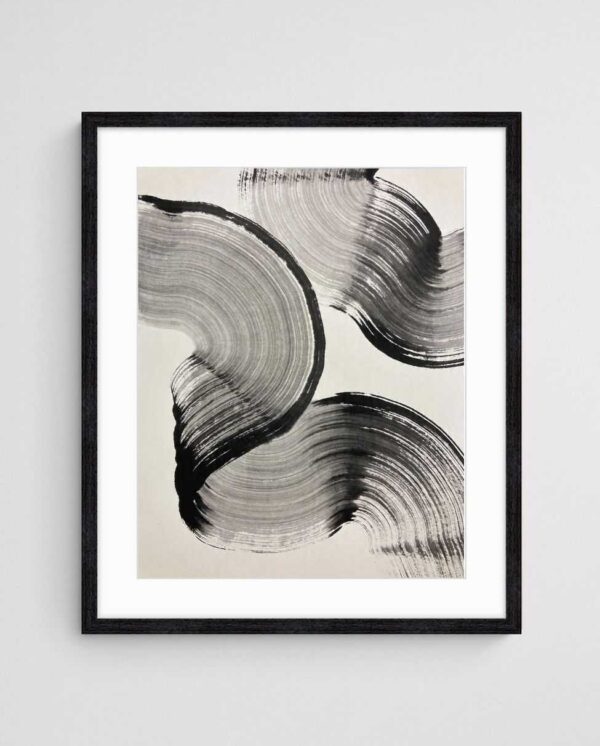
Monochrome is a reliable option for neutral interiors. “Ink Ribbons 2 – Minimalist Abstract Art Print in Monochrome” delivers drama through form alone, which keeps a large wall sophisticated rather than busy. Browse more in our monochrome abstract art range.
Room-by-Room Ideas
Living room
The wall behind the sofa is the obvious choice. Choose one landscape-format print and keep the other wall décor minimal. For more direction, see how to transform your living room with statement art prints or browse our wall art for living room decor.


Bedroom and hallway
Above the bed, a large calm piece sets the mood. Coastal and soft colourfield work suits this space well. Hallways, meanwhile, benefit from a single tall print at the far end, which draws visitors through the space.


Dining and open-plan spaces
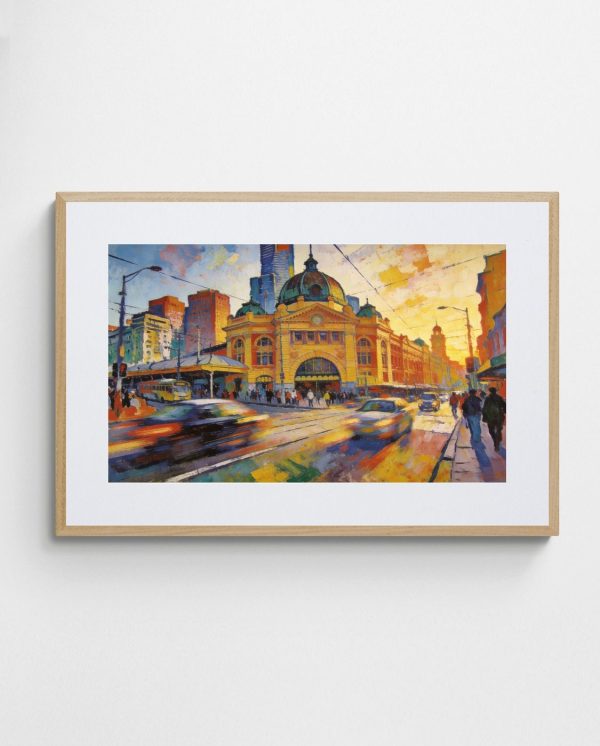
Large art can define zones in an open-plan home. A strong print on the dining wall separates it visually from the lounge without any structural changes. Australian landscape work also suits these spaces, and you can browse abstract landscape prints for ideas.

Common Mistakes to Avoid
Most disappointments with big art come down to a handful of avoidable errors. Check this list before you order.
- Hanging too high: art floating near the ceiling disconnects from the furniture.
- Ignoring the frame: a heavy frame can overwhelm a delicate print, so match its weight to the image.
- Crowding the wall: an oversized piece needs breathing space on each side.
- Skipping a paper template: cut kraft paper to size and tape it up for a few days first.
Colour can also work against you. Strong furniture needs a counterbalance, and our article on art that balances bold colourful furniture covers this well. For background on how large-scale abstraction developed, see abstract art (Wikipedia).


Large work is an investment in impact, not necessarily in cost. Our tips on decorating with wall art on a budget show how to scale up without overspending.


Frequently Asked Questions
What size is considered oversized art?
Generally, any print over 90 cm on its longest side feels oversized in a standard home. Prints beyond 120 cm make a true statement.
Can I use oversized art in a small room?
Yes. One large print on a single wall often makes a small room feel more considered than several small frames would.
Your next step
Measure your feature wall, tape up a paper template, and live with it for a few days. Then explore our abstract art prints, or request our free room design service if you would like a second opinion.


 | Joseph Russell Joseph is an Australian abstract artists and curator of the Inomaly art collection. |