
Stepping into the world of abstract art can feel like opening a door to endless creative possibilities. Unlike traditional art forms that depict recognisable subjects, abstract art speaks through colour, shape, texture, and emotion, inviting viewers to interpret meaning through their own experiences. For beginners, this freedom can be both exhilarating and overwhelming, but understanding the fundamentals makes the journey far more rewarding.
Abstract art for beginners is about learning to see beyond literal representation and embracing the expressive power of visual elements. Whether you’re looking to appreciate abstract works in galleries, start your own collection, or even create abstract pieces yourself, grasping the core principles of colour theory, composition, and artistic movements will transform how you engage with this dynamic art form. The key is to approach abstract art without preconceived notions and allow yourself to respond emotionally and intellectually to what you see.
Understanding Abstract Art: The Foundation
Abstract art emerged in the early 20th century as artists began questioning the necessity of realistic representation. Rather than copying nature, abstract artists sought to capture inner experiences, emotions, and ideas through visual language. This revolutionary shift meant that a painting’s success no longer depended on how accurately it depicted reality, but on how effectively it communicated feeling and concept through pure form.
For beginners, it’s helpful to think of abstract art on a spectrum. On one end, you have completely non-representational works with no discernible subject matter—pure colour, line, and shape. On the other end, you find semi-abstract or abstracted works that start with recognisable forms but simplify, distort, or fragment them. Understanding this spectrum helps you navigate the vast landscape of abstract art with greater confidence.
The beauty of abstract art lies in its democratic nature. There’s no single “correct” interpretation, which means your response is as valid as anyone else’s. This subjective quality is what makes abstract art so personal and powerful. However, learning about the artist’s intent, the historical context, and the formal elements at play can deepen your appreciation significantly. Consider exploring how to identify different abstract styles to build your visual literacy.
| Abstract Art Type | Key Characteristics | Best For Beginners |
|---|---|---|
| Geometric Abstract | Clean lines, shapes, mathematical precision | Yes—easier to “read” visually |
| Gestural/Action Abstract | Energetic brushstrokes, visible movement | Moderate—requires emotional openness |
| Colour Field | Large areas of flat colour, meditative | Yes—calming and accessible |
| Minimalist Abstract | Simplified forms, restrained palette | Yes—perfect for modern spaces |
Major Abstract Art Movements Every Beginner Should Know
Abstract Expressionism dominated the mid-20th century, particularly in America, with artists like Jackson Pollock and Mark Rothko leading the charge. This movement emphasised spontaneous, automatic, or subconscious creation, resulting in works that ranged from aggressive gestural paintings to contemplative colour field pieces. The movement’s influence remains profound in contemporary abstract art today.
Cubism, pioneered by Pablo Picasso and Georges Braque, fractured objects into geometric facets shown from multiple viewpoints simultaneously. While not purely abstract, Cubism’s deconstruction of form paved the way for complete abstraction. Understanding the cubist revolution provides essential context for how abstraction evolved throughout the 20th century.
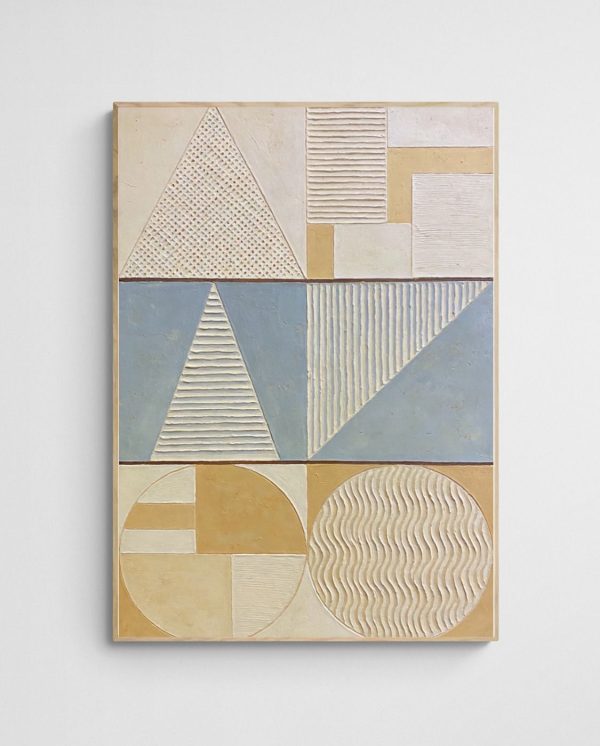

Minimalism stripped art down to its essential elements, rejecting the emotional intensity of Abstract Expressionism in favour of simplicity, order, and clarity. Minimalist abstract artists focused on pure form, often using industrial materials and precise execution. This movement particularly appeals to beginners because its restrained aesthetic translates beautifully into contemporary interior spaces. For those drawn to this style, minimalist art styles offer practical ways to enhance modern homes.
Neo-Plasticism and Constructivism
Neo-Plasticism, developed by Piet Mondrian, reduced painting to vertical and horizontal lines with primary colours plus black and white. This rigorous approach sought universal harmony through geometric abstraction. Meanwhile, Constructivism emerged in Russia, emphasising art’s social purpose and utilising industrial materials to create abstract works that served the collective good.
Both movements demonstrate how abstract art can embody philosophical and political ideals, not merely aesthetic ones. Exploring neo-plasticism in depth reveals how radical simplification can create powerful visual impact. These movements continue influencing contemporary geometric abstract art, making them essential knowledge for anyone building foundational understanding.
The Essential Elements of Abstract Art
Colour serves as perhaps the most immediate and emotionally resonant element in abstract art. Warm colours like reds, oranges, and yellows typically evoke energy, passion, and warmth, while cool colours such as blues, greens, and purples suggest calm, distance, and contemplation. However, colour theory goes far deeper than these basic associations. The relationships between colours—complementary, analogous, or triadic—create visual tension, harmony, or discord that communicates meaning without words.
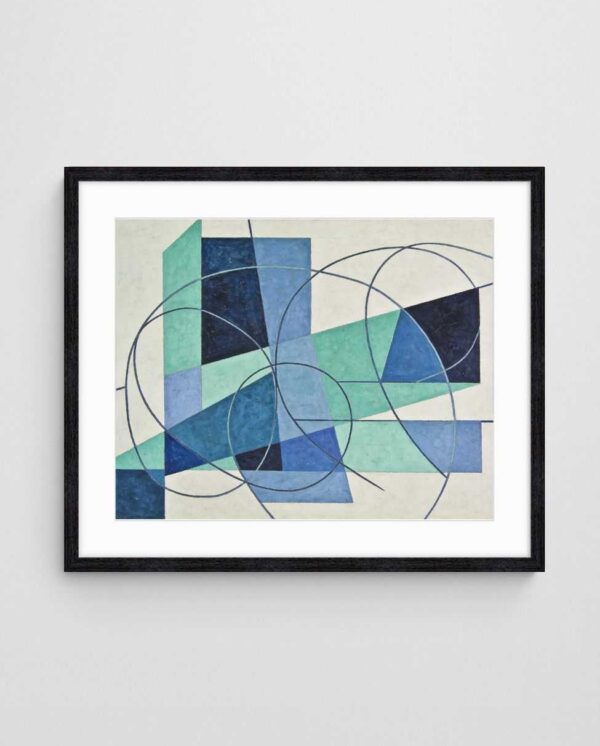
Line and shape provide structure and movement within abstract compositions. Lines can be bold or delicate, straight or curved, chaotic or ordered. They guide the viewer’s eye through the artwork and create rhythm and flow. Shapes, whether geometric or organic, serve as the building blocks of abstract composition. Understanding how artists balance positive and negative space—the relationship between shapes and the empty areas around them—is crucial for appreciating abstract art’s visual logic.
Texture adds tactile dimension to abstract works, whether actual (physical surface variation) or implied (visual suggestion of texture). Thick impasto paint creates dramatic shadows and catches light differently than smooth surfaces. Even in prints, the suggestion of texture through technique contributes significantly to a work’s emotional impact and visual interest. The interplay of these elements creates compositional mastery that separates memorable abstract art from forgettable attempts.
Composition and Balance
Composition in abstract art follows many of the same principles as representational art—balance, contrast, emphasis, and unity. However, without recognisable subjects to anchor the composition, abstract artists must rely entirely on formal elements to create visual interest and coherence. Asymmetrical balance often feels more dynamic than symmetrical arrangements, creating tension that keeps the eye moving.
The rule of thirds, focal points, and visual weight all apply to abstract art, though artists frequently subvert these conventions intentionally. Learning to recognise when an artist follows or breaks compositional rules helps you understand their intent and evaluate the work’s effectiveness. This awareness transforms passive viewing into active engagement.
Starting Your Abstract Art Collection
Beginning an abstract art collection doesn’t require vast wealth or expert knowledge—it requires thoughtful consideration of what resonates with you personally. Start by identifying colours, styles, and moods that attract you consistently. Visit galleries, browse online collections, and pay attention to which works you return to mentally. Your initial purchases should reflect genuine connection rather than investment potential or perceived prestige.
Quality art prints offer an accessible entry point for new collectors. Modern giclée printing technology reproduces artwork with remarkable fidelity, making museum-quality pieces available at reasonable prices. When selecting abstract art prints, consider the scale appropriate for your space and the framing options that complement both the artwork and your interior design.


Consider starting with versatile pieces that work across multiple spaces. Geometric abstracts and minimalist works often adapt well to various room styles and colour schemes. Pieces like “Wolf in the Sun – Fauvist Abstract Art Landscape Print” demonstrate how abstracted landscapes bridge the gap between pure abstraction and familiar subjects, making them particularly approachable for beginners. Similarly, portrait-based abstracts such as “Abstract Art Portrait – A Beautiful Dream” offer recognisable elements within abstract styling, easing the transition from traditional to abstract aesthetics.
Budget-Conscious Collecting
Building a meaningful collection needn’t strain your finances. Set a realistic budget and stick to it, remembering that artistic value and monetary value don’t always align, particularly for emerging artists. Limited edition prints often provide excellent quality at moderate prices, while original works from lesser-known artists can be surprisingly affordable.
Consider purchasing smaller pieces initially, creating a gallery wall that evolves over time. This approach allows you to experiment with different styles and artists without major financial commitment. Moreover, refreshing your walls affordably becomes easier when you’ve invested in versatile, interchangeable pieces that can move between rooms as your tastes and spaces evolve.
How to Interpret and Appreciate Abstract Art
Approaching abstract art with an open mind is paramount. Resist the urge to search for hidden pictures or literal meanings. Instead, allow yourself to respond viscerally—how does the work make you feel? What memories, associations, or emotions does it evoke? Your initial, instinctive response is valuable data about how the artwork communicates, even if you can’t immediately articulate why you respond as you do.
After your initial emotional response, examine the formal elements systematically. Observe how colours interact, how lines create movement, how shapes relate to each other and the edges of the composition. Notice where your eye naturally travels and what elements create focal points. This analytical approach complements your emotional response, creating fuller appreciation.
Context enriches understanding significantly. Learning about the artist’s life, the historical period, and the artistic movements influencing the work adds layers of meaning. However, context should enhance rather than override your personal interpretation. The history of abstract art reveals how revolutionary this approach was when it emerged, helping you appreciate the courage required to abandon representation entirely.
Developing Your Critical Eye
Visual literacy develops through consistent exposure and conscious practice. Visit galleries regularly, even if you can’t afford to purchase. Many institutions offer excellent educational programmes specifically designed for abstract art appreciation. Online resources, including virtual museum tours and artist lectures, make world-class education accessible regardless of location.
Practice articulating your responses to abstract art, even if only to yourself. Developing vocabulary for discussing formal elements, emotional impact, and conceptual content strengthens your ability to evaluate and appreciate abstract works. Reading artist statements and critical reviews exposes you to different interpretative approaches, expanding your own analytical toolkit. Understanding the distinction between abstract and figurative art provides essential framework for these discussions.
Displaying Abstract Art in Your Home
Placement dramatically affects how abstract art functions within your space. Large-scale abstract works create powerful focal points, anchoring rooms and establishing mood immediately. These statement pieces work particularly well above sofas, beds, or dining tables, where they command attention without overwhelming the space. Consider sight lines carefully—you want the artwork visible from main seating areas and entry points.
Lighting transforms abstract art’s appearance and impact. Natural light reveals colours most accurately but changes throughout the day, creating dynamic interactions between artwork and space. Artificial lighting requires careful consideration—warm bulbs enhance reds and oranges but can muddy blues, while cool LED lighting preserves colour accuracy but may feel harsh. Adjustable picture lights or track lighting offer flexibility for optimising presentation. Learning proper display techniques ensures your collection shines.
Gallery walls allow you to display multiple smaller pieces cohesively. When creating abstract art gallery walls, you can either maintain stylistic consistency for unified impact or deliberately mix styles for eclectic energy. Maintain consistent spacing between frames—typically 5-8 centimetres—and plan your arrangement on the floor before hammering nails. The bottom of the lowest frame should sit approximately 150-160 centimetres from the floor for optimal viewing height.
Coordinating with Interior Design
Abstract art should complement rather than compete with your interior design. In minimalist spaces, bold abstract works provide necessary visual interest without cluttering. Conversely, in maximalist interiors, abstract art can either amplify the eclectic energy or provide calming visual respite through simplified forms and restricted colour palettes.
Colour coordination matters, but perfect matching often feels forced and uninspired. Instead, pull one or two accent colours from your artwork to echo in textiles, accessories, or painted surfaces. This creates cohesion while allowing the artwork to maintain its distinctiveness. Understanding coordination principles helps you create spaces where art and design enhance each other organically. The free room design service can provide personalised guidance for integrating abstract art into your specific space.
 | Joseph Russell Joseph is an Australian abstract artists and curator of the Inomaly art collection. |