
The interior design landscape is witnessing a remarkable transformation as contemporary artists push boundaries and challenge traditional definitions of what art can be. Fresh creative movements are emerging from studios worldwide, bringing innovative approaches to colour, form and spatial relationships that translate beautifully into residential and commercial environments. These aren’t simply aesthetic trends—they represent fundamental shifts in how we interact with visual art within our living spaces.
Right now, seven distinct art movements are fundamentally changing how interior designers and homeowners approach wall decoration. These emerging styles—ranging from Neo-Geometric Abstraction to Biomorphic Minimalism—offer sophisticated alternatives to conventional artwork, each bringing unique visual languages that can dramatically alter a room’s atmosphere. Unlike fleeting décor fads, these movements are grounded in serious artistic practice, combining traditional techniques with contemporary sensibilities to create pieces that resonate emotionally whilst anchoring modern interiors.
Neo-Geometric Abstraction: Precision Meets Playfulness
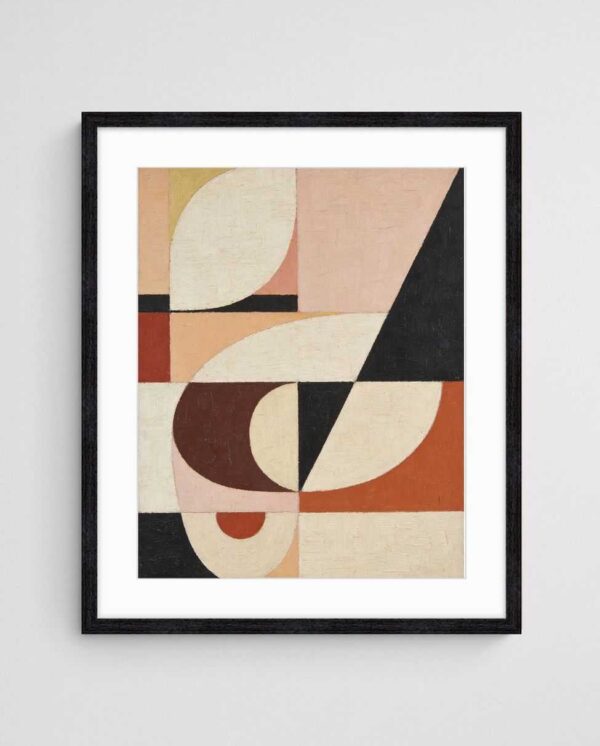
This contemporary movement revitalises mid-century geometric principles with unexpected colour combinations and irregular compositional arrangements. Unlike rigid traditional geometric art, Neo-Geometric Abstraction embraces asymmetry and tonal experimentation, creating dynamic tension that energises interiors without overwhelming them. Artists working in this style layer shapes with deliberate imperfection, acknowledging the hand-crafted quality that digital precision often lacks.
In practice, these works excel in spaces requiring visual interest without dramatic boldness. The controlled geometry provides structure, whilst soft colour palettes—dusty pinks, muted teals, warm ochres—maintain approachability. Designers frequently specify Neo-Geometric pieces for professional environments where creativity needs tempering with professionalism, or in residential settings where coordinating abstract art with existing furniture requires balanced visual weight.
The “Geometric Harmony – Mid Century Pastel Geometric Abstract Art Print” exemplifies this movement’s refined approach, balancing mathematical precision with organic colour transitions that soften stark architectural lines. Meanwhile, “Circles of Civilisation 2” demonstrates how repetitive geometric elements can create meditative focal points in contemporary spaces.
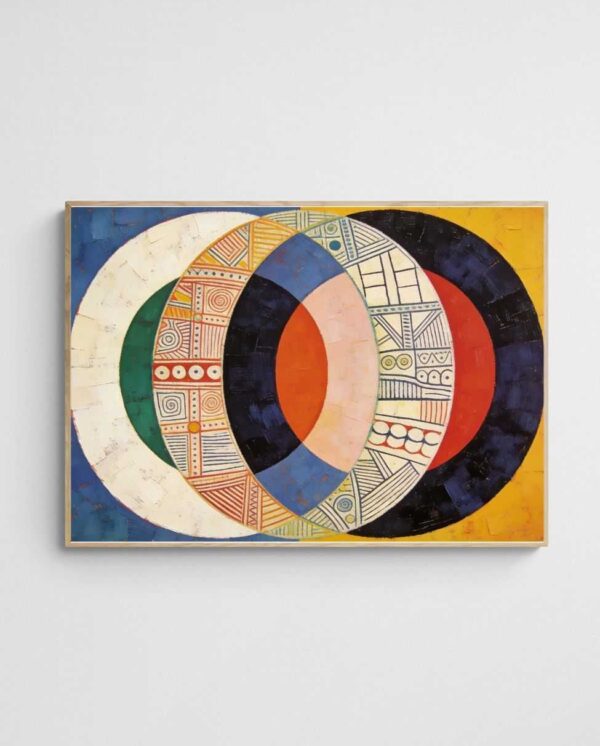
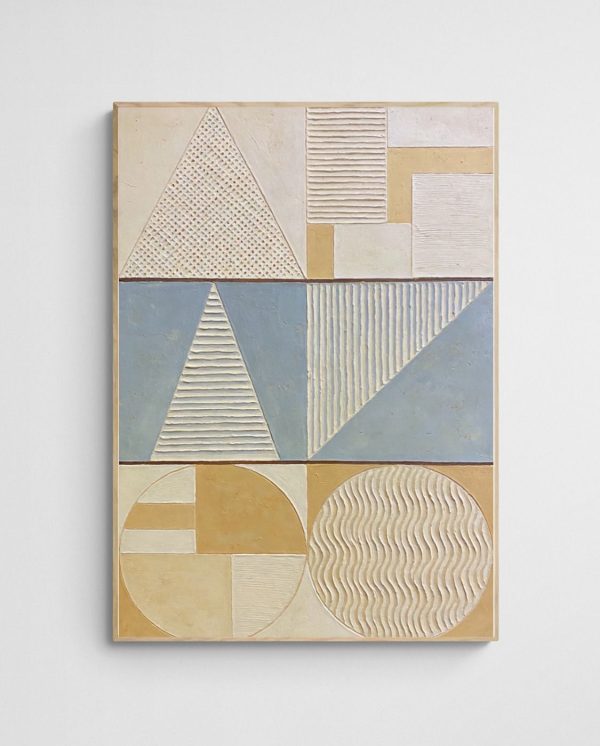
What distinguishes Neo-Geometric Abstraction from its historical predecessors is its willingness to embrace imperfection. Hand-drawn edges replace ruler-straight lines, and colour fields bleed subtly into adjacent shapes. This human quality makes these works particularly effective in home office environments where productivity meets personal expression, creating atmosphere without distraction.
Coastal Constructivism: Architecture Inspired by Nature
Emerging from Australia’s unique relationship with oceanic landscapes, Coastal Constructivism synthesises hard-edged geometric forms with marine colour palettes and coastal light qualities. This movement responds to increasing urbanisation by bringing abstracted natural elements into built environments, translating the structural beauty of coastlines—cliffs, horizons, wave patterns—into organised visual compositions.
The aesthetic achieves remarkable versatility through its dual nature: geometric enough for modern minimalist interiors, yet connected to nature in ways that prevent clinical coldness. Colour selections mirror specific coastal environments—the chalk-white cliffs against cerulean waters, the warm sand tones meeting cool ocean blues. These works function exceptionally well in spaces seeking abstract colours that promote relaxation whilst maintaining contemporary sophistication.
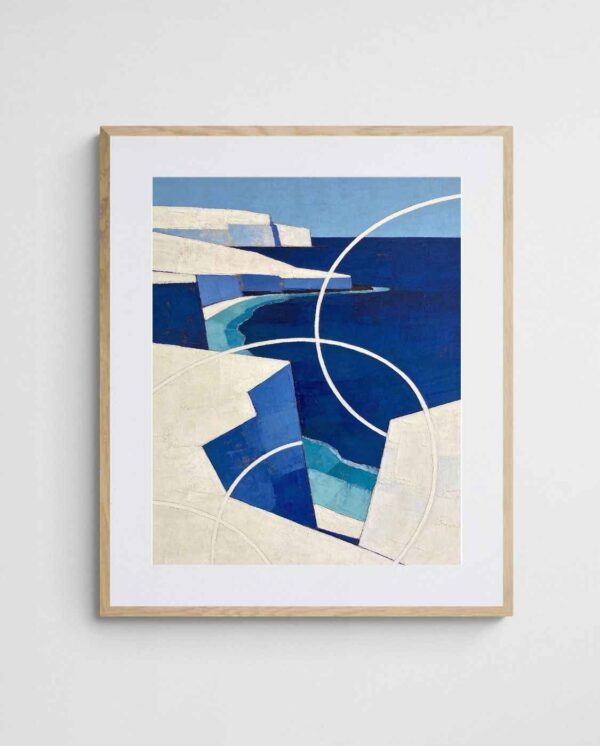

Interior designers value Coastal Constructivism for its ability to anchor colour schemes without dictating them. A piece featuring geometric ocean abstractions can complement both cool grey palettes and warmer timber-based schemes, providing flexibility as décor evolves. The movement also addresses the growing desire for coastal wall art that transcends literal beach scenes, offering sophisticated alternatives to predictable seascape photography.
Technically, artists in this movement employ layering techniques that suggest depth and atmospheric perspective whilst maintaining flat, graphic clarity. This creates intriguing visual contradictions—works that read as simple from distance but reveal complexity upon closer inspection, rewarding sustained viewing in residential settings.
Regional Variations in Coastal Constructivism
Australian practitioners tend towards warmer palettes reflecting sun-bleached coastlines, whilst Scandinavian interpretations favour cooler, more restrained colour relationships. These regional differences allow homeowners to select pieces that align with specific geographical aesthetics or personal temperature preferences within their interiors.
Expressive Portraiture: Human Forms Reimagined
Contemporary Expressive Portraiture dismantles traditional figurative representation, reconstructing human presence through abstracted forms, fragmented features and bold colour applications. This movement reflects broader cultural conversations about identity, representation and the inadequacy of photographic realism to capture psychological complexity. Rather than depicting subjects, these works evoke emotional states and internal experiences.
In interior contexts, Expressive Portraiture introduces human scale and psychological engagement to spaces that geometric or purely abstract works cannot achieve. The suggested presence of a figure—even highly abstracted—creates different viewing dynamics than landscape or non-objective art. Spaces feel inhabited, narrative, connected to human experience rather than purely aesthetic.
The “Many Hands” print demonstrates this movement’s power to combine bold graphic sensibility with profound thematic depth, creating conversation pieces that anchor social spaces like dining areas or reception zones. Similarly, “A Beautiful Dream” shows how abstracted portraiture can introduce warmth and personality without the specificity that representational portraits require.


What makes this movement particularly relevant for contemporary interiors is its rejection of conventional beauty standards. Distorted proportions, unexpected colour choices and fragmented compositions challenge viewers whilst remaining accessible. This quality proves especially valuable in creative professional environments or agency offices where abstract art reinforces brand identity around innovation and progressive thinking.
Rhythmic Linearity: Movement Through Minimalism
Rhythmic Linearity represents minimalism’s evolution beyond static composition into implied motion and temporal progression. Artists in this movement employ repeated linear elements—whether gestural marks, precise ruled lines or organic flowing forms—to create visual rhythms that guide eye movement across the picture plane. The work feels kinetic despite being static, introducing energy to spaces through suggestion rather than overt dynamism.
This approach proves particularly effective in transitional spaces like hallways and corridors where guiding movement feels natural, or in compact office environments requiring visual interest within restrained parameters. The minimal colour palettes—often monochromatic or limited to two or three tones—prevent visual overwhelm whilst the linear rhythms maintain engagement.


The technical restraint inherent to Rhythmic Linearity makes these works surprisingly versatile across diverse interior styles. The same piece that complements a Scandinavian-inspired minimalist space can equally anchor a more eclectic environment, serving as visual respite amongst busier elements. This chameleon quality explains the movement’s growing popularity among interior designers working across multiple aesthetic directions.
Practical Placement Considerations
Because Rhythmic Linearity works often feature strong directional elements, orientation matters significantly. Horizontal line-based pieces visually widen narrow spaces, whilst vertical compositions add perceived height to rooms with lower ceilings. This functional aspect makes the movement particularly useful for addressing architectural challenges through art selection.
Textural Expressionism: Tactile Visual Experience
Textural Expressionism prioritises surface quality and mark-making intensity over traditional compositional harmony, creating works that demand physical proximity for full appreciation. This movement emerged partly in response to digital saturation—offering visual experiences that photography and screens cannot adequately reproduce. Heavy impasto applications, layered scraping techniques and varied mark densities create literal dimensional variations across the picture surface.
In residential and commercial settings, these works introduce crucial tactile suggestion to environments dominated by smooth, manufactured surfaces. The visual texture provides organic counterpoint to glass, polished metals and uniform paint finishes. Moreover, the works change dramatically under varying light conditions—morning light raking across heavy texture creates different shadows than evening illumination, making the artwork subtly dynamic throughout the day.
The “Ink Ribbons” print captures this movement’s essential quality through high-contrast mark-making that suggests three-dimensional relief despite being printed on flat substrate. This accessible entry point allows homeowners to explore textural aesthetics without the price points or conservation requirements of heavily impastoed original paintings.
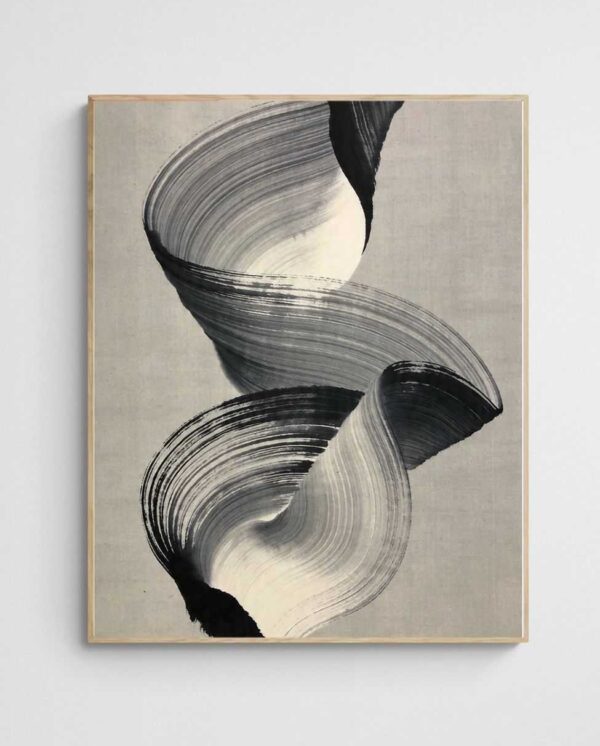

Interior designers specify Textural Expressionist works when spaces require focal points that reward sustained attention rather than immediate comprehension. The complexity inherent to layered mark-making prevents visual exhaustion—there’s always something new to discover. This quality proves especially valuable in private spaces like bedrooms or personal offices where individuals spend extended time with artwork.
Chromatic Field Theory: Colour as Architecture
Building upon mid-century colour field painting, contemporary Chromatic Field Theory treats colour relationships as structural elements rather than decorative choices. Artists working in this mode create spatial illusions through colour temperature contrasts, tonal progressions and deliberate edge relationships. The goal isn’t simply beautiful colour but colour that actively shapes spatial perception within the room it inhabits.
This movement addresses a fundamental challenge in interior design: how to introduce bold colour without permanent commitment. Unlike painting entire walls, strategically placed Chromatic Field works allow homeowners to experiment with saturated hues or unconventional colour combinations whilst maintaining flexibility. The colour functions architecturally—advancing or receding, creating visual weight or lightness—without requiring actual structural change.
Works like “Colour Band Break” demonstrate how geometric colour organisation can energise neutral interiors whilst maintaining sophistication. The movement’s emphasis on colour relationships over imagery makes these pieces remarkably adaptable—what matters is how the artwork’s colours interact with existing interior palettes rather than whether specific motifs coordinate.
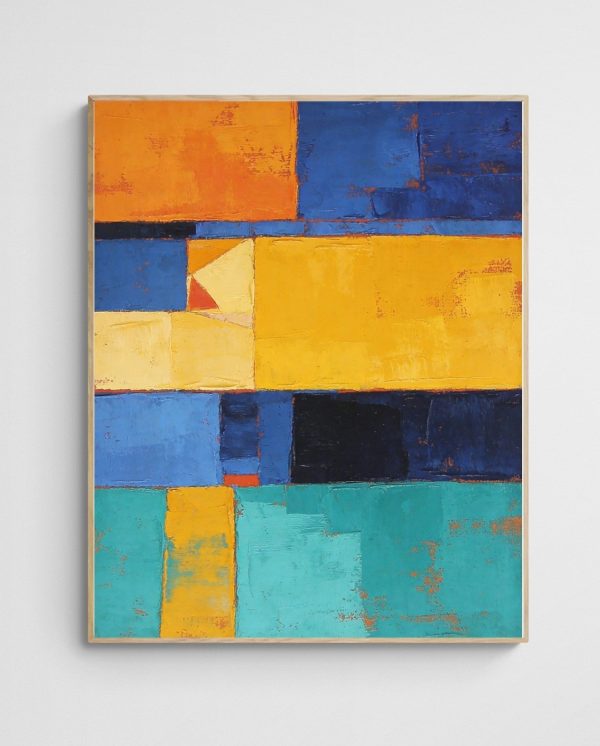

Professional designers value Chromatic Field Theory for its ability to establish colour authority in spaces where clients want impact but fear commitment. A large-format field painting can introduce six or seven distinct hues in controlled relationships, essentially providing a sophisticated colour palette that can inform subsequent décor decisions. This approach proves particularly effective when developing cohesive colour combinations across modern homes.
Colour Psychology in Practice
Beyond aesthetic considerations, Chromatic Field Theory engages seriously with colour psychology research. Cool blue-dominant fields create perceptible temperature drops in spaces, whilst warm orange-red compositions generate psychological warmth. These effects, whilst subtle, meaningfully contribute to spatial atmosphere—something astute designers leverage when addressing specific environmental goals.
Biomorphic Minimalism: Organic Forms Meet Restraint
Biomorphic Minimalism synthesises two seemingly contradictory impulses: the organic, flowing forms inspired by natural processes and the disciplined restraint characteristic of minimalist philosophy. Rather than the hard edges dominating geometric minimalism, this movement embraces curves, asymmetries and growth-suggestive shapes whilst maintaining minimal colour palettes and uncluttered compositions. The result feels simultaneously natural and refined.
This aesthetic resonates strongly with current design movements emphasising biophilic principles—the human need for nature connection within built environments. Biomorphic Minimalist works provide abstracted nature references without literal botanical or landscape imagery, making them suitable for sophisticated interiors where direct nature imagery might feel incongruous. The organic forms trigger subconscious associations with natural patterns—cell structures, water movement, growth patterns—without explicit representation.
The “Malt Swirl” print exemplifies how subtle tonal variations within neutral palettes can create compelling organic movement, proving that biomorphic forms needn’t rely on colour intensity for impact. This restrained approach allows the works to integrate seamlessly into minimalist interiors where conventional art might compete with architectural simplicity.
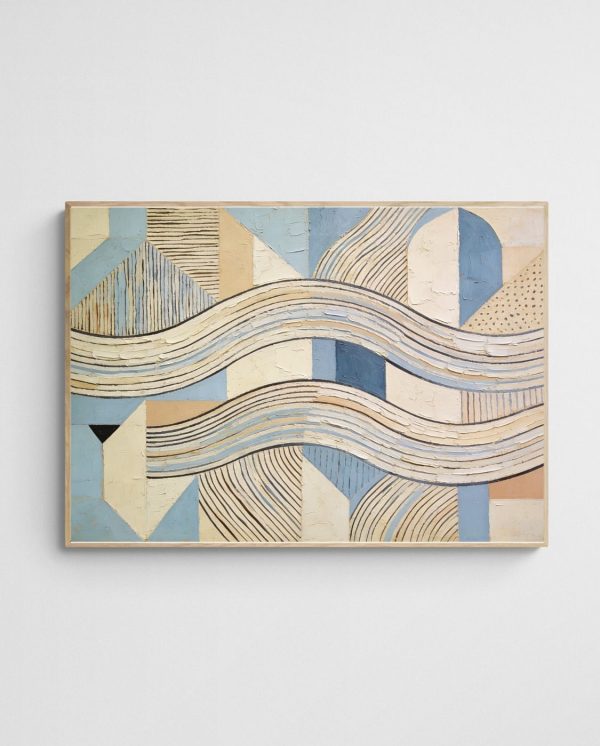
Practically speaking, Biomorphic Minimalism addresses a common design challenge: introducing visual interest to minimal spaces without compromising their essential character. The organic forms provide just enough irregularity to prevent sterility, whilst the restrained execution respects minimalist principles. This balance makes the movement especially relevant for residential minimalists who want warmth without clutter, or commercial environments seeking approachability within professional restraint.
Integrating Emerging Movements into Your Space
Successfully incorporating these emerging movements requires understanding both the artwork’s inherent qualities and your space’s existing character. Start by identifying your environment’s dominant attributes—colour temperature, light quality, architectural style, functional purpose. Neo-Geometric Abstraction and Rhythmic Linearity suit spaces with clean lines and contemporary architecture, whilst Textural Expressionism can soften overly minimal environments.
Consider scale relationships carefully. Emerging movements often work at larger formats than traditional art, as many developed specifically for contemporary architectural scales. A 1.2-metre wide Chromatic Field piece might seem oversized initially but often proves appropriately scaled for modern open-plan living areas. When uncertain, use professional room visualisation services to preview scale relationships before committing.
Lighting Considerations
Each movement responds differently to lighting conditions. Textural Expressionism requires angled lighting to emphasise surface variations, whilst Chromatic Field Theory depends on accurate colour rendering from high-CRI light sources. Neo-Geometric Abstraction and Rhythmic Linearity prove more lighting-flexible, performing well under various conditions. Assess your space’s natural and artificial light before selecting movements.
Mixing Movements Strategically
Whilst focusing on a single movement creates cohesive aesthetic statements, thoughtfully mixing movements across different rooms or even within large spaces can work beautifully. The key lies in identifying connecting elements—perhaps similar colour palettes across different stylistic approaches, or consistent tonal ranges despite varied compositional strategies. This approach particularly suits larger homes where visual variety prevents monotony.
Additionally, consider functional appropriateness when selecting movements for specific spaces. Expressive Portraiture’s psychological engagement suits social areas and private retreats but might prove distracting in focused work environments. Conversely, Rhythmic Linearity’s subtle engagement supports concentration, making it ideal for office environments where art should enhance rather than dominate.
Movement Comparison Overview
| Movement | Best For | Colour Approach | Interior Style Match |
|---|---|---|---|
| Neo-Geometric Abstraction | Professional spaces, living areas | Pastel to mid-tone, unexpected combinations | Mid-century modern, contemporary |
| Coastal Constructivism | Relaxation spaces, coastal homes | Marine blues, warm neutrals, whites | Coastal, minimalist, Hamptons |
| Expressive Portraiture | Social areas, creative studios | Bold, unconventional, psychological | Eclectic, contemporary, artistic |
| Rhythmic Linearity | Offices, hallways, compact spaces | Monochromatic, highly restrained | Minimalist, Scandinavian, modern |
| Textural Expressionism | Bedrooms, intimate spaces | Varied, often dramatic contrasts | Industrial, contemporary, eclectic |
| Chromatic Field Theory | Large open spaces, statement walls | Bold, saturated, structural | Modern, colour-focused, artistic |
| Biomorphic Minimalism | Wellness spaces, bedrooms | Neutral, organic, subtle | Minimalist, biophilic, Japandi |
The Future of Art in Interior Spaces
These seven emerging movements represent more than aesthetic evolution—they reflect fundamental shifts in how we conceive relationships between art, architecture and daily experience. As digital saturation increases, the desire for tactile, considered, physically present art intensifies. Movements like Textural Expressionism and Biomorphic Minimalism respond directly to this cultural moment, offering visual experiences that screens cannot replicate.
Moreover, these movements demonstrate art’s increasing integration with interior design rather than existing as separate considerations. Contemporary artists create with spatial contexts explicitly in mind, understanding that most work will live in residential or commercial environments rather than traditional gallery settings. This pragmatic acknowledgement doesn’t diminish artistic integrity but rather expands relevant considerations—how does this work function at domestic scale? How do these colours interact with common interior palettes? How does this composition engage viewers encountering it daily rather than in singular museum visits?
For homeowners and designers, engaging with emerging movements offers opportunities to create genuinely distinctive interiors that reflect current cultural conversations rather than recycling established formulas. Whether selecting a single statement piece or building comprehensive collections, understanding what these movements offer—both aesthetically and conceptually—enables more intentional, satisfying art integration. The result transforms walls from neutral backdrops into active participants in spatial experience, demonstrating art’s enduring capacity to shape how we inhabit and experience our environments.
 | Joseph Russell Joseph is an Australian abstract artists and curator of the Inomaly art collection. |