
Choosing large art prints for your home can feel overwhelming. You measure your wall, browse endless options online, and still wonder whether that stunning piece will look too big, too small, or just right once it arrives. The truth is, most Australians underestimate the size of art their walls can handle, leaving rooms feeling incomplete and walls looking bare. Understanding how to select and position large-scale artwork transforms empty spaces into purposeful, personality-filled environments that feel both balanced and bold.
Large art prints—typically those measuring 80cm or more in width—offer immediate visual impact and can anchor entire rooms when chosen thoughtfully. The key isn’t just selecting a beautiful image; it’s understanding your wall dimensions, furniture placement, ceiling height, and the proportional relationship between your print and its surroundings. This beginner’s guide walks you through the fundamentals of working with large-scale artwork, from measuring your space accurately to selecting styles that complement your existing décor, ensuring your investment enhances rather than overwhelms your home.
Understanding Scale and Proportion
Scale refers to the size relationship between your artwork and the wall space it occupies, while proportion addresses how the print relates to nearby furniture and architectural features. In practice, a common mistake is selecting art that’s proportionally correct for the wall but clashes with the furniture beneath it. For instance, a 120cm wide print above a 180cm sofa creates visual tension because the artwork feels too small relative to the furniture piece anchoring that wall section.
Professional interior designers typically recommend that artwork spanning above furniture should measure between two-thirds and three-quarters the width of that furniture. This creates visual harmony without making the art feel cramped or lost. Additionally, consider your ceiling height when evaluating scale. Standard 2.4-metre ceilings accommodate prints up to 100cm in height comfortably, whereas higher ceilings—common in renovated period homes and new builds—can handle vertical pieces stretching 120cm or more without overwhelming the space.


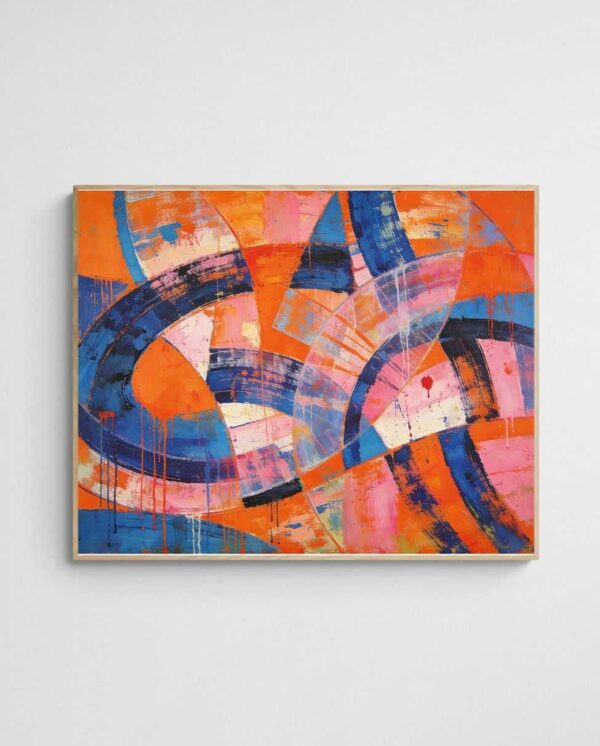
The visual weight of your chosen print also affects perceived scale. A densely detailed, vibrant abstract painting occupies more visual space than a minimalist line drawing of identical dimensions. Consequently, you might select a slightly smaller physical size for bold, colourful abstracts compared to monochromatic or simple compositions. Understanding this relationship prevents rooms from feeling visually cluttered, even when displaying appropriately sized large-scale abstract art prints.
Reading Your Room’s Architectural Cues
Your room provides built-in guidelines for art sizing through its architectural features. Crown moulding, picture rails, window frames, and door headers all create horizontal and vertical lines that suggest natural boundaries for artwork placement. Aligning your print’s top edge with door header heights, for example, creates visual continuity across the room. Moreover, observing where natural sightlines fall when you enter a room helps identify focal point walls that benefit most from large statement pieces.
Open-plan living areas present unique challenges because multiple functional zones share visual space. Here, large artwork serves as spatial definition—a substantial print behind the dining table visually separates eating areas from adjacent lounges without requiring physical dividers. The scale of your art literally shapes how occupants perceive and navigate these multi-purpose environments.

Measuring Your Walls Properly
Accurate measurement prevents costly mistakes and returns. Start by measuring the total wall width and height, then identify any obstacles: light switches, air conditioning vents, wall sconces, or power points that constrain usable space. Photograph your wall from multiple angles, including straight-on shots and perspective views showing adjacent furniture. These reference images prove invaluable when shopping online, allowing you to mentally position potential prints within their actual context.
Use painter’s tape to outline your intended print dimensions directly on the wall. This simple technique reveals whether your planned size feels appropriate before committing to a purchase. Leave the tape up for several days, viewing it from different positions throughout the room and at various times of day as natural light changes. What seems perfectly sized in afternoon sun might feel oversized under evening artificial lighting, and this preview method catches sizing issues early.
| Wall Length | Recommended Print Width | Best For |
|---|---|---|
| 2.0-2.5m | 80-100cm | Bedrooms, compact living areas |
| 2.5-3.5m | 100-140cm | Standard living rooms, dining areas |
| 3.5-4.5m | 140-180cm | Open-plan spaces, feature walls |
| 4.5m+ | 180cm+ or diptych/triptych | Large living areas, commercial spaces |
Furthermore, factor in the visual breathing room around your artwork. Experts recommend leaving at least 15-20cm of wall space visible on each side of large prints to prevent a cramped, gallery-packed appearance. This negative space allows eyes to rest and prevents individual pieces from competing for attention, particularly important when displaying vibrant colourful abstracts that naturally draw focus.


Accounting for Furniture Heights
Measure from the floor to the top of your furniture, then add 15-25cm to determine the ideal bottom edge placement for artwork hanging above. This gap prevents artwork from feeling like it’s “sitting” on furniture while maintaining visual connection between the two elements. For example, if your sofa back measures 85cm high, position your print’s lower edge around 100-110cm from the floor, ensuring the artwork feels deliberately placed rather than accidentally hovering.
Console tables, buffets, and credenzas follow similar principles but allow slightly smaller gaps due to their narrower depths. A 75cm high sideboard pairs well with prints beginning around 85-95cm from floor level. These measurements create professional-looking installations that demonstrate intentional design choices rather than arbitrary placement decisions.
Choosing the Right Placement
Not every wall deserves a large print. Identify your room’s natural focal point—typically the wall first visible when entering, or the wall behind key furniture like beds or sofas. These prime locations benefit most from substantial artwork that draws eyes and establishes the room’s aesthetic tone. Secondary walls can accommodate smaller pieces or groupings, but your largest, most impactful print should claim the primary focal position.
Consider sightlines from adjacent rooms in open-plan homes. A large landscape print visible from both the kitchen and living area becomes a visual anchor connecting multiple spaces, creating design continuity throughout your home. The “Surreal Coastal Landscape Art Print – Swell Beach 01” exemplifies this approach, with its horizontal format and calming coastal palette working beautifully as a connecting element between family zones.
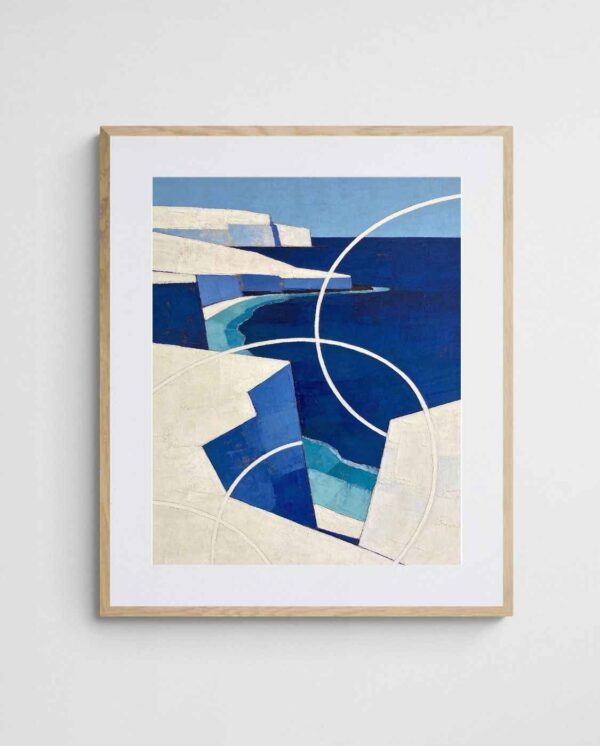

Hallways and corridors, often neglected in decorating plans, actually provide excellent opportunities for large vertical prints. These narrow spaces benefit from height-emphasizing artwork that draws eyes upward, making the passage feel less tunnel-like and more gallery-esque. However, ensure adequate viewing distance exists—at least 1.5 times the print’s width—so viewers can appreciate the full composition without backing into opposite walls. For more ideas on maximising corridor spaces, explore our guide on transforming hallways into gallery walls.
Lighting Considerations
Natural and artificial lighting dramatically affect how large prints appear. North-facing walls in Australian homes receive consistent, indirect natural light ideal for showcasing colour-sensitive artwork without fading concerns. Conversely, west-facing walls experience intense afternoon sun that can wash out subtle details and accelerate deterioration of cheaper prints not produced with archival inks.
Therefore, invest in proper picture lighting for large prints on poorly lit walls. Track lighting systems or dedicated picture lights ensure your artwork remains visible and impactful during evening hours when Australian families spend most time in living areas. Adjustable fixtures allow you to highlight specific compositional elements, adding drama and dimensionality to flat printed surfaces.


Selecting Styles That Work
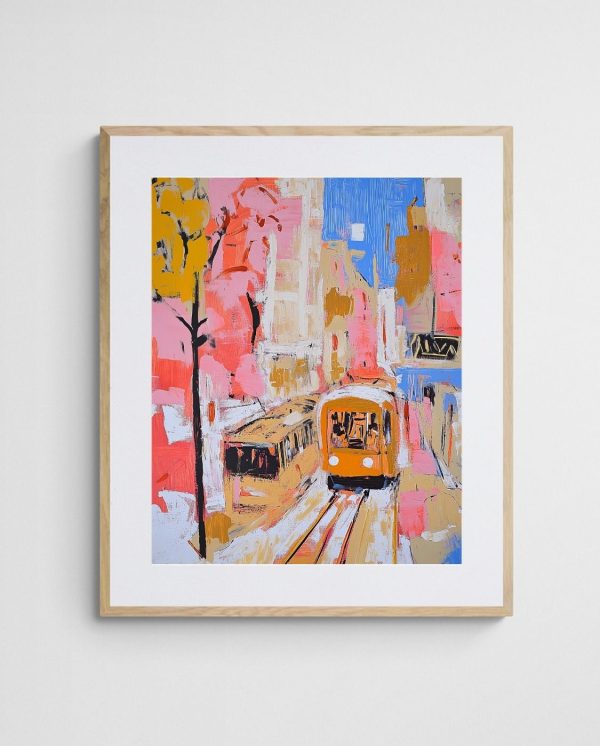
Large prints demand compositional strength to justify their scale. Abstract works excel in this format because their non-representational nature allows viewers to interpret imagery at multiple distances. Standing close reveals brushwork details and colour transitions, while stepping back showcases overall composition and movement. This multi-layered engagement prevents large abstracts from becoming visual wallpaper that occupants eventually ignore.
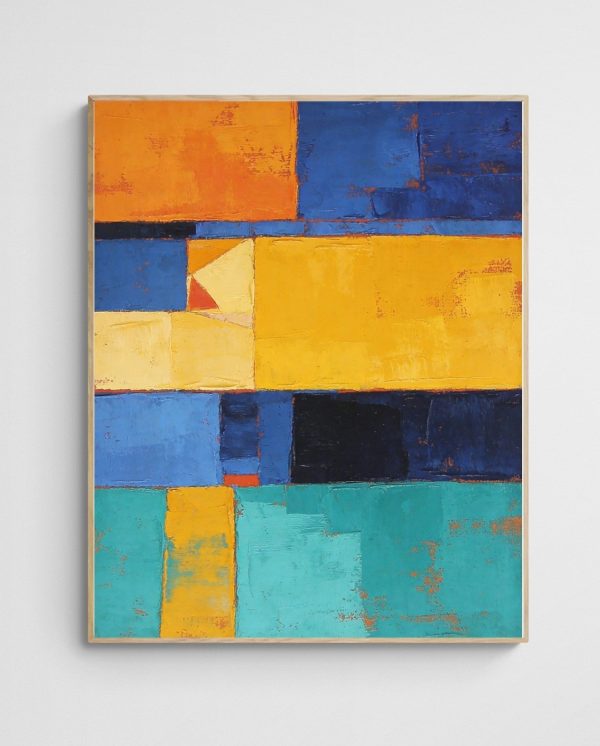
Geometric abstracts bring structured sophistication to modern Australian homes. Their clean lines and repeating patterns create visual interest without overwhelming minimalist interiors popular in contemporary design. Meanwhile, abstract expressionist pieces—characterised by energetic brushwork and emotional colour use—inject personality into neutral schemes, transforming builder-grade interiors into distinctive personal spaces. Understanding different abstract styles helps match artwork to your existing décor language.
Landscape abstracts offer familiarity that eases traditional-leaning homeowners into contemporary art. These prints reference recognisable forms—coastlines, horizons, vegetation—through abstracted lenses that feel less confronting than pure non-representational work. The “Red and Gold Mountain Landscape Print – Hills of Gold 13” demonstrates how landscape abstraction bridges conventional and contemporary tastes, making it particularly suitable for homes in transitional design phases.

Matching Art to Architectural Styles
Your home’s architectural character provides style guidance. Mid-century modern homes with their clean lines and organic curves pair beautifully with geometric and biomorphic abstracts that echo period design principles. Queenslanders and Federation homes with ornate details and high ceilings can handle busier, more detailed large prints without visual conflict—the architectural embellishment balances compositional complexity.
Contemporary apartments with minimalist interiors benefit from large prints that introduce colour and texture otherwise absent from streamlined spaces. Here, a single substantial abstract piece often proves more effective than multiple smaller works, creating a decisive focal point that prevents the space from feeling sterile or hotel-like. As explored in our article on apartment art selection, scale matters enormously in compact urban dwellings.
Colour Considerations for Large Prints
Colour behaves differently at scale. A terracotta accent that appears warm and inviting in a small print can dominate entirely when expanded to 120cm wide. Consequently, approach bold hues strategically, ensuring your room’s existing palette can accommodate the colour mass your large print introduces. This doesn’t mean avoiding vibrant work—rather, it requires intentional colour planning.
The complementary colour approach works reliably: select prints containing accent colours already present in your soft furnishings, rugs, or cushions. This creates visual echoes that tie the room together cohesively. For instance, if your lounge features teal throw pillows, a large print with teal elements reinforces that colour story without requiring complete redecorating. Learning about how colour transforms rooms provides deeper insight into these relationships.


Neutral-dominant prints with selective colour pops offer maximum versatility. These pieces work across décor changes because their restrained palettes don’t commit you to specific colour schemes. A predominantly cream abstract with coral accents functions beautifully in both coastal and contemporary settings, adapting as your styling preferences evolve. This adaptability proves particularly valuable for renters or homeowners anticipating future renovations.
Understanding Colour Psychology
Colour psychology influences how rooms feel and function. Blues and greens promote calmness, making them excellent choices for bedrooms and relaxation spaces where large prints set the entire room’s emotional tone. Conversely, reds, oranges, and yellows energise, suiting social areas like dining rooms and family spaces where you want to encourage interaction and activity.
However, temperature matters alongside hue. Cool greys and blue-toned neutrals make rooms feel more spacious—beneficial when working with large prints in smaller rooms where you want artwork presence without oppression. Warm neutrals like beiges and creams create cosiness, ideal for large living areas that might otherwise feel cavernous. The right colour temperature in your large print subtly manipulates spatial perception to your advantage.


Framing and Presentation Options
Framing decisions significantly impact how large prints integrate into rooms. Traditional timber frames add weight and formality, suiting heritage homes and classic interiors. Oak frames with visible grain patterns complement Australian coastal aesthetics particularly well, echoing natural materials common in beach house design. Meanwhile, sleek black or white frames maintain contemporary minimalism without competing with the artwork itself.
Float framing—where the print appears to hover within the frame with visible borders—creates modern sophistication perfect for gallery-style presentations. This technique works especially well with premium wall art prints featuring clean edges and professional finishes worth showcasing. The visible border also provides visual breathing room, preventing busy abstracts from overwhelming their frames.
Frameless mounting offers the most contemporary presentation. Canvas prints stretched over timber frames or prints mounted on rigid boards deliver seamless, edge-to-edge imagery that maximises visual impact. This approach suits loft-style apartments and ultra-modern interiors where traditional framing would feel incongruous. Additionally, frameless options often cost less—a practical consideration given that framing large pieces can exceed the print cost itself.


Glazing and Protection
Glass or acrylic glazing protects prints from dust, moisture, and UV damage but adds expense and weight to large pieces. Museum-quality acrylic offers superior UV protection and weighs significantly less than glass, making it the preferred choice for pieces exceeding 100cm in any dimension. However, acrylic scratches more easily, requiring careful handling during installation and cleaning.
Standard glass suffices for moderate-sized prints in low-humidity environments away from direct sun. Anti-reflective glass eliminates glare from windows and artificial lighting but commands premium pricing. Weigh protection benefits against budget realities—a print positioned away from direct light in a climate-controlled home may not justify museum-grade glazing, whereas artwork in sun-exposed positions absolutely warrants the investment to prevent premature fading.
Common Mistakes to Avoid
The most prevalent error beginners make involves selecting prints that are too small rather than too large. Understandably, fear of overwhelming a space leads to conservative sizing that ultimately leaves walls looking unfinished. Trust the measurement guidelines provided earlier—they account for perceived size differences between online previews and physical installations. What seems enormous on screen often appears appropriately scaled on your actual wall.
Another common pitfall involves ignoring aspect ratios. Horizontal prints suit wide walls above sofas and buffets, while vertical pieces better complement tall, narrow wall sections. Forcing landscape-oriented artwork onto portrait-appropriate spaces creates awkward proportions that sophisticated viewers immediately notice. Match your print’s orientation to your wall’s natural proportions for harmonious results.
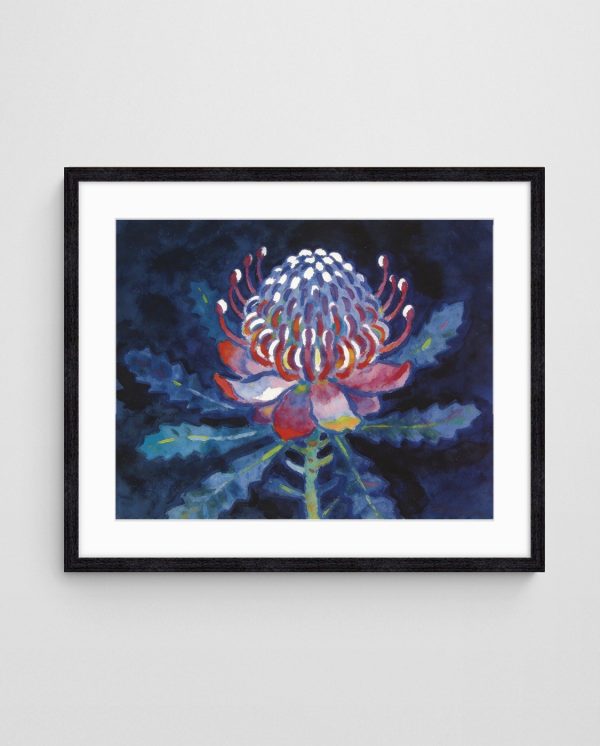
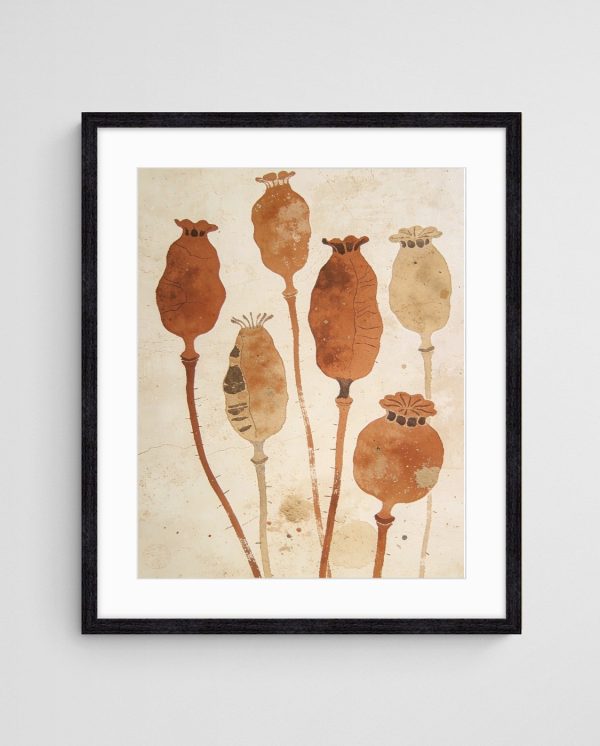
Additionally, hanging large prints too high ranks among the most frequent installation mistakes. The centre of your artwork should sit at average eye level—approximately 145-150cm from the floor for most Australian adults. This positioning ensures comfortable viewing without neck craning. When hanging above furniture, maintain the 15-25cm gap discussed earlier while keeping the overall composition within this eye-level guideline. Proper height placement makes even substantial pieces feel approachable rather than imposing.
Avoiding Overcrowding
Large prints work best as solo statements rather than parts of crowded gallery walls. Resist the temptation to surround your substantial piece with smaller satellite works—this diminishes the large print’s impact and creates visual clutter. If you must include additional pieces, maintain generous spacing (at least 10-15cm) and keep supplementary artwork significantly smaller to establish clear visual hierarchy.
Similarly, avoid competing focal points within single rooms. One large statement piece per space creates purposeful impact, whereas multiple large prints fighting for attention produce visual chaos. Distribute substantial artwork across different rooms rather than concentrating it in single spaces. This approach ensures each piece receives the attention it deserves while maintaining design coherence throughout your home. For additional guidance on creating cohesive displays, review our tips on displaying abstract paintings effectively.
Neglecting Professional Installation
Large, heavy prints require proper wall anchoring to prevent accidents and damage. Plasterboard walls need appropriate wall anchors rated for the combined weight of your framed print—often 5-10kg for substantial pieces with timber frames and glazing. Masonry walls offer more holding strength but require masonry bits and appropriate fixings.
Consequently, consider professional installation for valuable or particularly heavy pieces. Picture hanging services ensure secure mounting using appropriate hardware and techniques, plus they carry insurance covering potential installation damage. The modest service fee provides peace of mind, particularly for prints positioned above beds or seating areas where falling artwork could cause injury. This investment in proper installation protects both your artwork and your household.


Selecting large art prints that properly fit your walls transforms houses into personalised homes reflecting your aesthetic sensibilities. By understanding scale relationships, measuring accurately, choosing appropriate placement, and avoiding common pitfalls, you create professional-looking installations that enhance rather than overwhelm your living spaces. Remember that rules provide guidelines rather than restrictions—trust your instincts alongside these fundamentals. The most successful art choices balance technical correctness with personal connection, resulting in pieces you’ll love living with for years ahead. Start with these foundational principles, then experiment confidently, knowing you possess the knowledge to make informed, impactful decisions about large-scale artwork in your Australian home.
 | Joseph Russell Joseph is an Australian abstract artists and curator of the Inomaly art collection. |