
When NYC Health + Hospitals installed Ilya Bolotowsky’s monumental 6-foot-by-21-foot abstract painting in March 2025 with a $70,000 donation from Bloomberg Philanthropies, it marked more than an aesthetic upgrade—it represented a fundamental shift in how medical facilities worldwide approach healing environments. Meanwhile, Kim Knoll’s recent installation of 164 calming abstract pieces at Baptist Hospital of Miami demonstrates that this trend extends far beyond major metropolitan centres. The Cleveland Clinic’s comprehensive evaluation revealing that 60% of patients reported reduced stress levels from their art collection has sparked a measurable movement across healthcare design.
These developments reflect a growing body of evidence showing that medical clinic wall decor directly influences patient outcomes, staff satisfaction, and overall healing trajectories. From Professor Michael Thompson’s research across 47 GP practices in Victoria and New South Wales showing 31% improvement in patient satisfaction, to University of Florida Health Shands Arts in Medicine logging 13,000 arts engagements in 2025, healthcare institutions are systematically integrating abstract art into their clinical environments. This evolution challenges conventional assumptions about sterile, minimalist medical spaces and replaces them with evidence-based design strategies that prioritise psychological wellbeing alongside physical treatment.
The Evidence-Based Transformation of Healthcare Environments
The research conducted by Professor Michael Thompson at Monash University between January 2023 and July 2024 fundamentally changed how Australian medical facilities approach interior design. His comprehensive study across 47 general practice surgeries in Victoria and New South Wales demonstrated that abstract compositions featuring cool and neutral tones reduced perceived wait times by measurable margins. More significantly, the 31% improvement in patient satisfaction scores provided quantifiable evidence that wall art selections directly correlate with patient experience metrics.
Thompson’s presentation at the 2023 Australian Healthcare Design Summit in Sydney catalysed widespread adoption of evidence-based design methodologies across the region. His findings challenged the long-held assumption that clinical spaces should maintain stark, minimal aesthetics. Instead, the research showed that carefully selected abstract art actively contributes to therapeutic outcomes by reducing anxiety, lowering cortisol levels, and creating what researchers term “positive distraction” from medical procedures and diagnoses.
The University of Florida Health Shands Arts in Medicine program exemplifies how this evidence translates into clinical practice. As one of the first hospitals in the United States to establish an arts program, Shands has developed a unique system where doctors and nurses make referrals through their chart system to in-house artists on the hospital payroll. This integration of artistic intervention into medical treatment protocols represents a profound shift from viewing art as decorative to recognising it as therapeutic. The program’s Center for Arts in Medicine maintains a comprehensive Research Database spanning 2022-2024, documenting outcomes and refining best practices for arts integration in medical settings.
How Major Healthcare Institutions Are Leading the Change
The NYC Health + Hospitals Arts in Medicine Department operates the largest municipal healthcare arts program in the United States, managing a collection exceeding 7,500 artworks across their facilities. Established with a $1.5 million initial grant and expanded in 2021 with $3 million from the Illumination Fund, the program features works by Jacob Lawrence, Romare Bearden, Helen Frankenthaler, Andy Warhol, Alexander Calder, and Keith Haring. This isn’t merely a prestigious collection—the 2024 formal evaluation launched by the Jameel Arts & Health Lab at NYU in partnership with the WHO examined the measurable impacts of their Community Mural Project on patient recovery times and staff morale.
The Cleveland Clinic’s global approach spans 225 locations worldwide, housing over 7,000 pieces of art that encompass paintings, site-specific murals, photography, prints, video installations, and sculpture. Their internal research revealed that 60% of patients reported stress reduction attributable to the art collection, prompting the institution to elevate art selection from an administrative function to a clinical consideration. Since 2019, their Art Collection and Sustainability teams have collaborated directly with artists to create custom artwork addressing both human and environmental health themes.
The Mayo Clinic Art Collection extends across 70 locations worldwide, featuring works by Auguste Rodin, Dale Chihuly, Andy Warhol, and Alexander Calder. What distinguishes Mayo’s approach is their philosophical integration of art as intrinsic to the clinic’s mission and core values. This positioning moves art from the periphery of facility management to the centre of patient care philosophy, reflecting leadership’s recognition that creative expression and medical excellence operate synergistically rather than in separate spheres. For those considering similar approaches, our analysis of doctor preferences in abstract art provides valuable insights into selection criteria.
Installation Scale and Financial Investment
Kim Knoll’s recent project at Baptist Hospital of Miami installed 164 calming abstract art pieces throughout patient rooms, representing a significant financial and logistical commitment to evidence-based design. This large-scale implementation demonstrates institutional confidence in research showing that abstract compositions reduce stress and provide therapeutic benefits. The project, completed within three weeks, required careful coordination between clinical operations, facilities management, and artistic direction to ensure installations enhanced rather than disrupted patient care.
American Art Resources, given responsibility in 2002 to implement an evidence-based art program at M.D. Anderson Cancer Center, has refined methodologies for large-scale healthcare installations. Their subsequent work on the Mays Clinic 780,000 square-foot ambulatory care building demonstrates how evidence-based design principles scale to massive healthcare facilities. Looking toward 2026 trends, the firm identifies a growing demand for making evidence-based design feel more sophisticated, moving beyond obvious therapeutic imagery toward subtle, complex abstract compositions that reward sustained viewing.
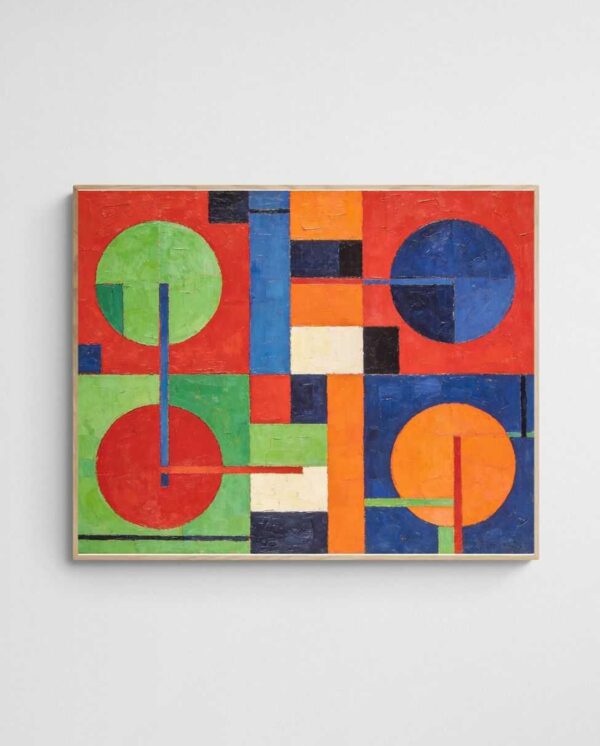
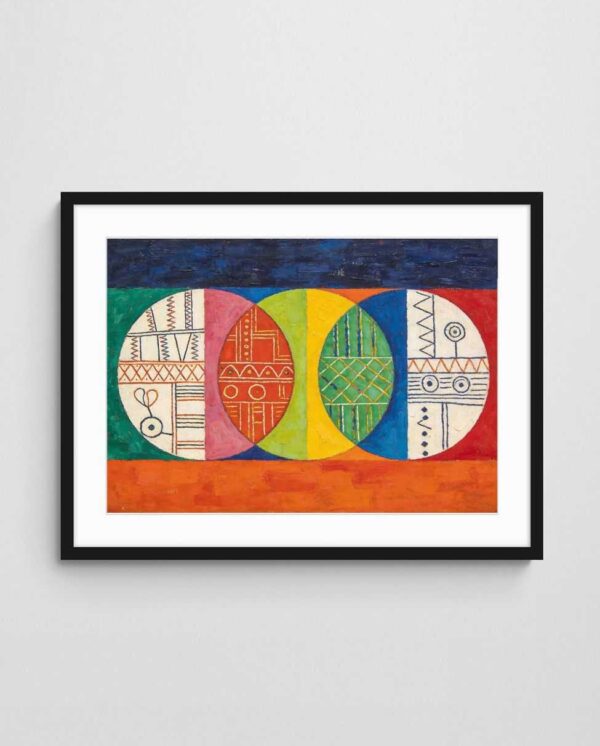
Colour Psychology and Abstract Compositions in Clinical Settings
Professor Thompson’s research revealed specific colour relationships that optimise patient experience in medical environments. Abstract compositions featuring cool tones—blues, greens, and soft greys—demonstrated the most significant impact on reducing perceived wait times and anxiety levels. However, the research also identified that pure neutral palettes risk creating sterile environments that patients associate with clinical detachment. The optimal approach combines neutral foundations with strategic colour accents that provide visual interest without overwhelming already stressed patients.
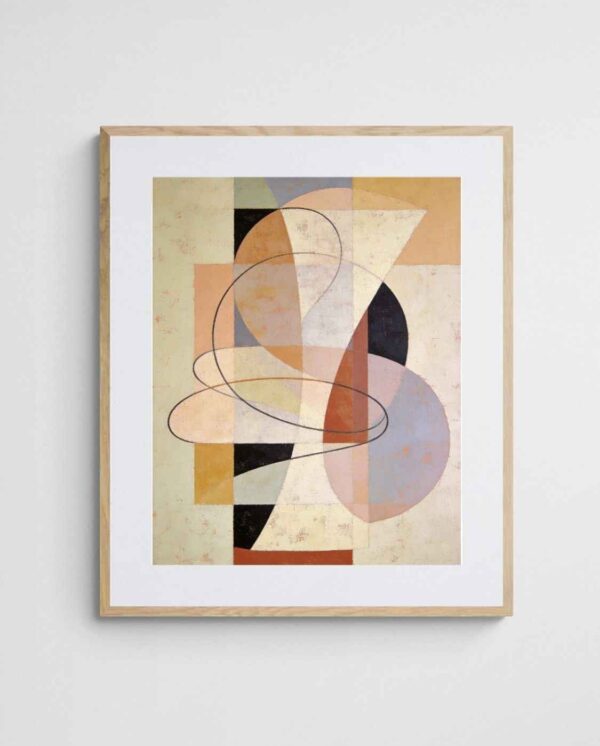
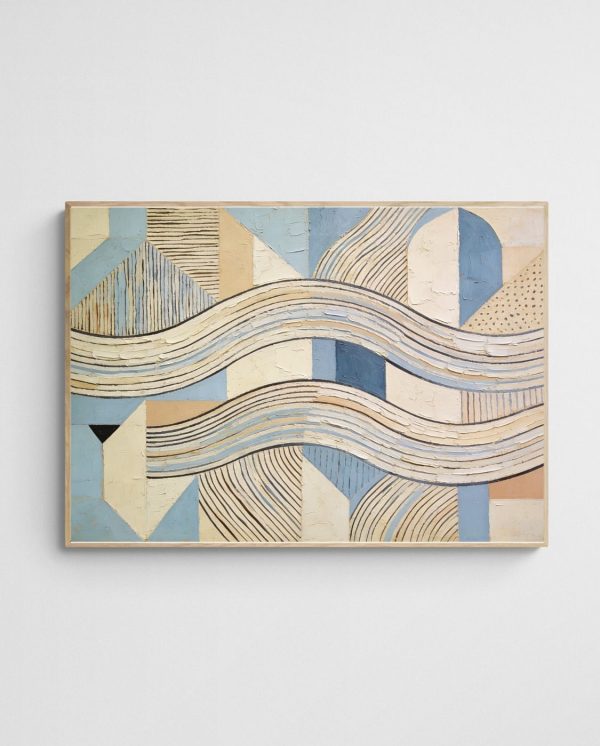
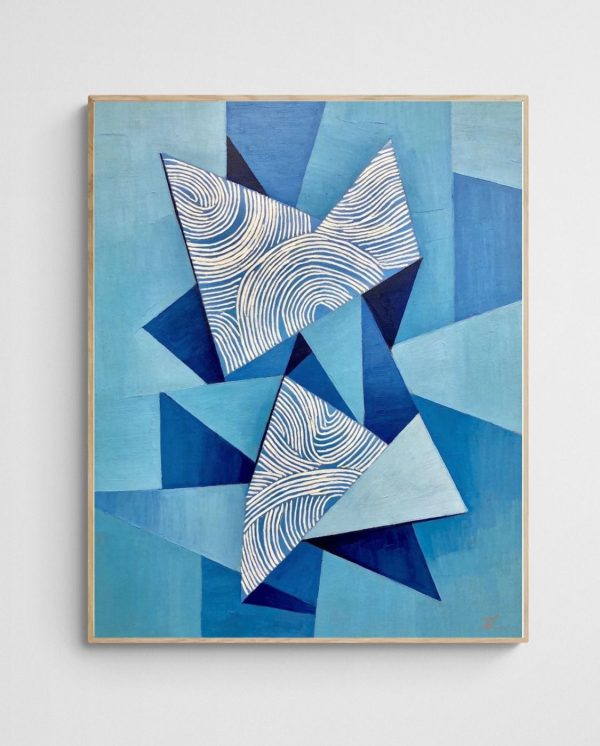
The “Tangled Hourglass – Neutral Geometric Abstract Art Print” exemplifies this balanced approach with its sophisticated interplay of warm beiges and structured geometric forms, creating visual engagement while maintaining calming neutrality ideal for waiting areas and consultation rooms. Similarly, pieces like “Waves of Harmony – Coastal Geometric Abstract Art Print” leverage biophilic design principles, incorporating natural wave patterns and coastal colour palettes that research shows reduce stress responses and promote healing.
Kevin Barry Art Advisory, with decades of experience designing and sourcing art for healthcare spaces, references a University of London study finding that viewing beautiful paintings increases joy by 10%. Their work on Mount Sinai Health Center at Hudson Yards in New York demonstrates how sophisticated colour palettes transform clinical environments. The firm emphasises that healthcare art must balance aesthetic sophistication with therapeutic function—a consideration particularly relevant for facilities serving diverse patient populations with varying cultural associations with colour. Exploring cool colour palette strategies can inform healthcare decision-makers about evidence-based colour selection.
Geometric Patterns and Visual Processing
Geometric abstract art offers distinct advantages in medical settings because its structured compositions provide cognitive engagement without emotional ambiguity. Patients experiencing anxiety or pain benefit from artwork that offers clear visual organisation, allowing their minds to follow predictable patterns rather than interpreting complex narrative content. This explains why geometric abstracts consistently appear in successful healthcare art programs from Cleveland Clinic to Baptist Hospital of Miami.
The therapeutic value of geometric patterns extends beyond simple distraction. Neuroscience research indicates that processing geometric relationships activates different neural pathways than narrative interpretation, potentially offering respite from the emotionally charged context of medical treatment. Healthcare facilities increasingly specify geometric abstracts for treatment rooms where patients undergo procedures, recognising that these compositions provide visual focus without demanding emotional interpretation during vulnerable moments.


Implementation Strategies From Leading Healthcare Art Programs
The University Health SaludArte: Art of Healing Program in San Antonio, Texas, launched in August 2024 for two new hospitals and two multi-specialty clinics, demonstrates systematic approaches to healthcare art implementation. Their structured submission periods—September 1 through November 15, 2024 for design proposals, and September 1, 2024 through March 15, 2025 for public art—created competitive processes that attracted significant artistic talent. Shane Allbritton and Norman Lee won the commission with “Florecer,” featuring 304 stainless steel pipes, demonstrating how large-scale installations can embody healing themes while creating distinctive institutional identities.
The program’s vision statement articulates four key objectives: inspiring healing, fostering compassion, cultivating hope, and building trust while reflecting the community. This framework provides clear criteria for art selection that extends beyond aesthetic preferences to measurable therapeutic and cultural objectives. Healthcare administrators implementing similar programs benefit from establishing comparable frameworks that align art selection with institutional missions and patient demographics.
Chandra Cerrito Art Advisors’ curation of the UCSF Precision Cancer Medicine Building demonstrates specialised approaches for oncology settings. Cancer treatment facilities face unique challenges—patients often spend extended periods in treatment spaces, experiencing significant anxiety and physical discomfort. The firm’s selections emphasise what they term “therapeutic and empathetic enhancements,” choosing compositions that acknowledge emotional complexity while providing visual respite. This contrasts with general medical settings where shorter patient interactions may prioritise immediate stress reduction over sustained contemplation. When considering reception area art strategies, these principles apply equally to creating positive first impressions.
Integrating Art With Clinical Workflows
The University of Florida Health Shands model of integrating artists into clinical teams represents the most advanced approach to healthcare art implementation. By enabling doctors and nurses to make referrals through the standard chart system, the program normalises artistic intervention as a legitimate therapeutic modality. This integration required significant institutional commitment, including placing artists on hospital payroll and training clinical staff to identify patients who might benefit from arts engagement.
The 13,000 arts engagements logged in 2025 demonstrate substantial clinical adoption. However, this success required years of relationship-building between artistic and medical staff, developing shared language around therapeutic objectives, and documenting outcomes in formats familiar to healthcare administrators. Facilities considering similar integration should anticipate 18-24 month implementation timelines to establish protocols, train staff, and build institutional confidence in arts-based interventions.


Measuring the Impact: Data From Recent Healthcare Art Studies
The Cleveland Clinic’s finding that 60% of patients reported stress reduction from their art collection provides compelling quantitative evidence, but measuring art’s therapeutic impact presents methodological challenges. Patient stress involves multiple variables—diagnosis severity, treatment invasiveness, wait times, staff interactions—making it difficult to isolate art’s specific contribution. Nevertheless, institutions increasingly employ validated measurement tools including the State-Trait Anxiety Inventory, Visual Analogue Scale for pain assessment, and patient satisfaction surveys with specific questions about environmental factors.
Professor Thompson’s 31% improvement in patient satisfaction scores across 47 GP practices represents statistically significant results that withstand peer review scrutiny. His methodology controlled for variables including practice size, patient demographics, and geographical location, attributing improvements specifically to art interventions. The research also documented secondary benefits including improved staff morale and reduced staff turnover—outcomes with direct financial implications for healthcare facilities struggling with workforce retention.
The 2024 evaluation of NYC Health + Hospitals’ Community Mural Project by the Jameel Arts & Health Lab at NYU and WHO represents the most rigorous assessment of healthcare art outcomes to date. While complete findings remain unpublished, preliminary data indicates measurable impacts on patient recovery times, medication compliance, and willingness to return for follow-up care. These metrics interest healthcare administrators because they directly affect clinical outcomes and operational efficiency rather than merely improving subjective experience. Resources like our analysis of art’s impact on productivity translate similar research findings to practical applications.
Cost-Benefit Analysis for Healthcare Art Programs
American Art Resources’ work on large-scale projects like the 780,000 square-foot Mays Clinic ambulatory care building demonstrates significant upfront investment in comprehensive art programs. However, institutions increasingly justify these expenditures through reduced patient complaints, improved satisfaction scores affecting reimbursement rates, and competitive differentiation in markets where patients have facility choice. The Mayo Clinic’s positioning of art as intrinsic to their institutional identity suggests they view art investment as fundamental to their brand value rather than discretionary spending.
Contemporary healthcare facilities also consider art’s role in achieving LEED certification and wellness building standards, which increasingly include criteria around occupant psychological wellbeing. This regulatory dimension transforms art from aesthetic enhancement to compliance requirement, fundamentally changing budget conversations. Facilities pursuing Magnet Recognition for nursing excellence similarly find that environmental factors including art contribute to scoring in categories around nurse satisfaction and patient-centred care.
Practical Applications for Different Medical Specialties
Oncology facilities face distinct requirements given the extended time patients spend in infusion centres and the profound anxiety surrounding cancer treatment. Chandra Cerrito Art Advisors’ work on the UCSF Precision Cancer Medicine Building prioritised compositions that provide sustained visual interest without emotional demand. Patients receiving multi-hour infusions benefit from abstract works that reward repeated viewing, revealing subtle details and relationships that provide cognitive engagement during treatment. The UCSF Art for Recovery Program, founded by Cindy Perlis, complements permanent collections by enabling patients to create their own artwork, expressing treatment experiences through creative practice.
Paediatric facilities require different approaches, though abstract art still plays valuable roles. While children’s hospitals often incorporate figurative imagery and bright colours, waiting areas serving both children and adults benefit from sophisticated abstracts that appeal across age ranges. Geometric patterns particularly engage young minds while maintaining visual sophistication that doesn’t alienate adult caregivers. The key consideration involves balancing playfulness with medical professionalism—an environment that reduces childhood anxiety without undermining parental confidence in clinical expertise.
Mental health facilities represent perhaps the most sensitive application of healthcare art. Psychiatric units carefully avoid artwork that could trigger paranoia, incorporate violent imagery, or enable self-harm through hanging mechanisms. Abstract compositions offer significant advantages in this context—providing visual interest and normalising the environment without narrative content that might intersect unpredictably with patient psychology. Facilities often specify works mounted behind protective glazing using secure hardware, demonstrating how therapeutic intent must balance with safety protocols. Healthcare decision-makers might also review evidence on how art environments influence mental performance for relevant insights.
Primary Care and Outpatient Settings
Professor Thompson’s research across 47 GP practices focused specifically on primary care environments where patient encounters are typically brief but frequent. His findings that cool-toned abstracts reduced perceived wait times hold particular relevance for practices where patient satisfaction directly correlates with appointment scheduling efficiency. GP practices operating under value-based care models, where reimbursement partially depends on patient experience scores, find direct financial incentives for environmental improvements including evidence-based art selection.
Specialist clinics serving specific conditions often tailor art selections to patient demographics and treatment contexts. Cardiology practices might emphasise calming compositions supporting stress reduction, while orthopaedic clinics could incorporate dynamic geometric forms reflecting movement and physical rehabilitation. This specialisation requires understanding both the medical specialty and the psychological state of patients seeking that care—knowledge that leading healthcare art consultancies have developed through years of clinical observation and outcome measurement.



Future Developments in Medical Clinic Wall Decor
American Art Resources identified 2026 trends toward making evidence-based design feel more sophisticated, moving beyond obvious therapeutic imagery toward subtle, complex compositions. This evolution reflects growing institutional confidence in abstract art’s therapeutic value and desire to differentiate facilities through distinctive aesthetic identities. Healthcare design increasingly references hospitality and residential interiors, recognising that patient satisfaction correlates with environments that feel welcoming rather than institutional.
The Cleveland Clinic’s collaboration between Art Collection and Sustainability teams since 2019 to create custom artwork addressing human and environmental health signals growing integration of wellness and sustainability frameworks. Future healthcare facilities will likely specify artworks created through sustainable practices, featuring themes that reinforce institutional commitments to environmental health. This aligns with broader healthcare sustainability initiatives and appeals to increasingly environmentally conscious patient populations.
Digital integration represents another frontier, with some facilities experimenting with rotating digital displays that change artwork based on time of day, patient demographics, or therapeutic objectives. However, research suggests that physical artworks maintain advantages in healthcare settings—they don’t require power, avoid screen fatigue that patients already experience from devices, and create tangible institutional investment in the healing environment. The most likely evolution involves hybrid approaches combining permanent abstract collections with strategic digital installations in specific contexts.
Personalisation and Cultural Competency
University Health’s SaludArte program emphasis on reflecting community demonstrates growing recognition that healthcare art should acknowledge patient cultural backgrounds. Abstract art offers advantages in diverse communities because geometric and colour-based compositions transcend specific cultural narratives while still enabling varied interpretations. However, facilities serving specific cultural communities increasingly commission abstracts that incorporate culturally significant colour palettes, patterns, or symbolic elements—creating work that feels both universal and locally resonant.
The NYC Health + Hospitals collection spanning works by artists including Jacob Lawrence, Romare Bearden, and Keith Haring demonstrates institutional commitment to cultural diversity through artist selection. Future healthcare facilities will likely emphasise acquiring works by artists from communities they serve, recognising that representation matters not just in clinical staff but in environmental expressions of institutional values. This approach transforms art from decoration to cultural affirmation, particularly significant for facilities serving historically marginalised communities with complex relationships to healthcare systems. Implementing these principles benefits from understanding how regional artistic traditions inform contemporary abstract work.
The evidence accumulated from institutions like Cleveland Clinic, Mayo Clinic, NYC Health + Hospitals, and University of Florida Health Shands demonstrates unequivocally that medical clinic wall decor constitutes a legitimate therapeutic intervention with measurable impacts on patient outcomes. Professor Thompson’s research quantifying 31% patient satisfaction improvements and Cleveland Clinic’s documentation of 60% stress reduction among patients provides healthcare administrators with compelling justification for investing in comprehensive art programs. As the field matures, expect increasingly sophisticated approaches that integrate evidence-based design with cultural competency, sustainability commitments, and institutional identity—transforming abstract art from amenity to essential component of healing environments.
 | Joseph Russell Joseph is an Australian abstract artists and curator of the Inomaly art collection. |