
Designing a small office doesn’t mean compromising on style or atmosphere. In fact, compact workspaces benefit enormously from thoughtful art selections that can transform cramped quarters into productive, inspiring environments. Whether you’re setting up a home office in a spare bedroom, managing a boutique commercial space, or carving out a corner for focused work, the right abstract art solutions can redefine how your space feels and functions. When square metreage is limited, every design choice carries extra weight—and your wall art becomes one of your most powerful tools for creating an environment that actually works for you.
The challenge with small office spaces isn’t just about making them look presentable; it’s about creating an atmosphere that supports concentration, reduces stress, and maintains professional credibility without overwhelming the limited visual field. Abstract art offers unique advantages here: it adds sophisticated visual interest without the narrative distraction of figurative work, introduces colour and energy in controlled doses, and can visually expand spaces when selected strategically. This comprehensive guide walks you through every consideration—from sizing and placement to colour psychology and budget—so you can make informed decisions that elevate your small office from functional to exceptional.
Understanding Your Small Office Space
Before selecting any artwork, you need a clear understanding of your space’s dimensions, lighting conditions, and functional requirements. Small offices typically range from 50 to 150 square feet, but the usable wall space is often significantly less once you account for windows, doors, storage units, and equipment. Take precise measurements of your available wall areas, noting which walls receive natural light, which remain in shadow, and which face your primary work position.
Lighting profoundly affects how abstract art appears throughout the day. North-facing walls receive cooler, more consistent light, making them ideal for warmer-toned artwork that can counterbalance the blue cast. South-facing walls get abundant warm light, allowing cooler blues and greens to shine without appearing cold. East and west exposures shift dramatically between morning and afternoon, requiring artwork that maintains visual interest under varying conditions. Consider investing in productivity-focused art selections that work with your specific lighting situation.
Furthermore, assess your office’s primary function and who will see it. A home office used exclusively by you has different requirements than a consulting space where clients visit regularly. Professional service providers—accountants, lawyers, therapists—need artwork that projects competence and calm, whilst creative professionals can afford bolder, more experimental choices. The psychological impact of your environment matters; environmental psychology research consistently demonstrates that workplace aesthetics directly influence performance, mood, and even decision-making quality.


Art Sizing Strategy for Compact Workspaces
The conventional wisdom suggests that smaller spaces require smaller art, but this oversimplification often leads to disappointing results. In practice, one appropriately sized statement piece typically outperforms several tiny artworks that create visual clutter. For a small office with a primary wall between 8 and 12 feet wide, a single piece measuring 60-90cm wide often provides the ideal focal point without overwhelming the space.
The two-thirds rule provides reliable guidance: your artwork should occupy approximately two-thirds the width of the furniture beneath it, or two-thirds the width of the wall section if hung independently. However, in very small offices where wall space is fragmented, slightly smaller proportions—around 50-60%—prevent the art from dominating. Consider the viewing distance as well; if you’ll primarily see the artwork from just 1.5-2 metres away, intricate details become appreciable, whilst bold, simple compositions work better when space doesn’t allow you to step back for perspective.
Vertical vs Horizontal Orientations
Orientation choices dramatically affect spatial perception. Vertical artworks draw the eye upward, creating an impression of height that counteracts the enclosed feeling of small spaces. This makes portrait-orientation pieces particularly valuable above desks, filing cabinets, or in narrow wall sections. Conversely, horizontal pieces expand perceived width, making them excellent choices for walls behind monitors or above low storage units where you want to emphasise breadth rather than height.
| Wall Dimension | Recommended Art Size | Orientation | Best Placement |
|---|---|---|---|
| 90-120cm wide | 50-70cm wide | Vertical preferred | Above desk or storage |
| 120-180cm wide | 70-90cm wide | Either works well | Feature wall or behind seating |
| 180-240cm wide | 90-120cm wide | Horizontal preferred | Primary focal wall |
| Narrow wall (<90cm) | 40-50cm wide | Vertical only | Between windows or doors |

Colour Psychology in Small Office Environments
Colour choices in confined spaces carry psychological weight that extends beyond mere aesthetics. Blues and greens consistently demonstrate calming, focus-enhancing properties, making them particularly valuable for small offices where spatial constraints can trigger subtle anxiety or restlessness. Cool tones also possess a perceptual quality of receding visually, which can make walls appear slightly more distant, subtly expanding the perceived room dimensions.
Warmer colours—reds, oranges, yellows—energise and stimulate, which can boost creativity and dynamism but may prove overwhelming in very small spaces where you spend extended periods. The key lies in proportion and intensity. A piece with warm accent colours against a neutral background provides energy without overstimulation, whilst an entirely saturated warm-toned piece might create tension in a compact environment. For example, the “Busy Cafe – Abstract Urban Art Print” introduces vibrant movement through layered colours that energise without overwhelming, making it ideal for creative professionals seeking inspiration.
Balancing Your Existing Colour Palette
Your office likely already has established colours through furniture, flooring, and walls. Abstract art can either harmonise with these elements or provide deliberate contrast. Harmonious approaches—selecting art that echoes existing hues—create cohesive, restful environments. This works especially well in small spaces where visual unity prevents the fragmented feeling that clashing colours can create. Alternatively, strategic contrast draws the eye and creates a focal point, which can actually make small spaces feel more intentional and designed rather than simply cramped.
Neutral office environments with white, grey, or beige dominance benefit enormously from colourful abstract art that injects personality and visual interest. However, if your office already features bold furniture colours or patterned elements, more subdued artwork prevents sensory overload. The principles of colour balance become particularly critical in small offices where every element remains constantly visible within your peripheral vision.


Strategic Placement Techniques That Work
In small offices, art placement requires more strategic thinking than simply hanging pieces at standard gallery height. The traditional 145-150cm centre-point guideline works well for general viewing, but when you’re seated at a desk for hours, the optimal viewing height shifts. For artwork positioned behind your monitor or on a wall you face whilst working, lowering the centre point to 135-140cm often provides better sightlines from a seated position.
Consider your movement patterns and sightlines throughout the day. The wall directly behind your monitor becomes a background element you see less frequently than the wall opposite your desk, which sits in your direct sightline during work. This opposite wall deserves your most engaging, inspiring piece—something that rewards repeated viewing without becoming distracting. Meanwhile, walls you see when entering or leaving benefit from welcoming, professional pieces that create positive transitions between work and personal time.
Creating Depth and Dimension
Small spaces can feel one-dimensional, but thoughtful art placement creates visual layering. Hanging artwork slightly away from corners—leaving 15-30cm of wall visible on either side—prevents the cramped, edge-to-edge feeling whilst creating shadow lines that add depth. Similarly, if you’re grouping smaller pieces, maintaining consistent 5-8cm spacing between frames creates organised visual rhythm without the cluttered appearance that tight spacing produces.
For those working in particularly small home offices, exploring small office design strategies can reveal placement techniques that maximise impact. Additionally, considering different abstract art styles and their visual weight helps you match placement strategies to specific artwork characteristics.
Selecting Abstract Styles for Professional Spaces
Abstract art encompasses a vast stylistic spectrum, from geometric precision to expressive gestural work. For small office environments, certain styles offer distinct advantages. Geometric abstracts with clean lines and organised compositions project professionalism and order—qualities particularly valuable for client-facing offices in industries like accounting, law, or financial services. These pieces communicate competence and methodical thinking without the stiffness of traditional corporate art.
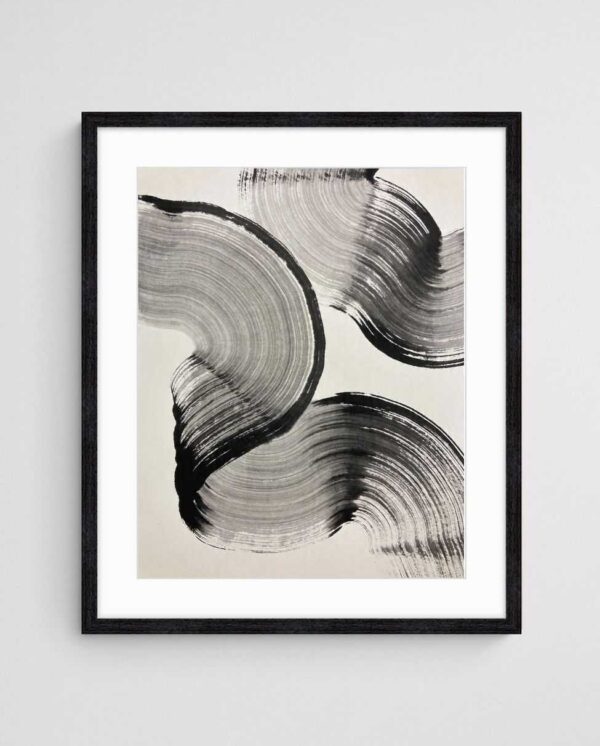
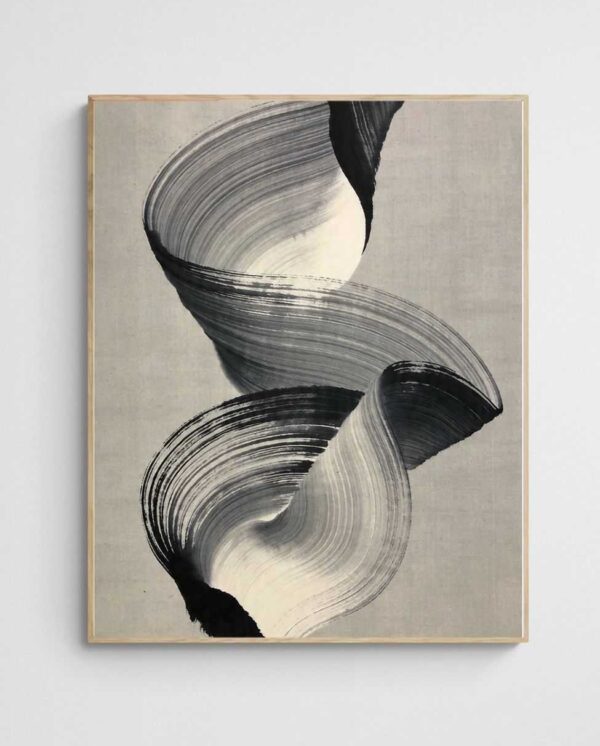
Minimalist abstracts work exceptionally well in small spaces because they provide visual interest without complexity that might feel overwhelming. Simple colour-field pieces, line drawings, or sparse compositions allow the eye to rest whilst still offering contemplative beauty. The “Ink Ribbons 2 – Minimalist Abstract Art Print in Monochrome” exemplifies this approach with flowing organic forms in black and white that add sophistication without visual noise, perfect for spaces where mental clarity matters most.
Matching Style to Industry and Personality
Different professional contexts call for different aesthetic approaches. Creative professionals—designers, architects, writers—can embrace more experimental abstract expressionism that sparks imagination and communicates innovative thinking. Technical professionals benefit from structured, balanced compositions that echo the precision of their work. Healthcare providers often gravitate towards softer, organic abstracts that promote calm and healing.
- Geometric abstracts: Project order, reliability, methodical thinking
- Minimalist compositions: Communicate clarity, focus, essential sophistication
- Organic/natural abstracts: Suggest growth, adaptability, holistic thinking
- Bold expressionist pieces: Signal creativity, innovation, confident risk-taking
- Neutral-toned abstracts: Provide versatility, professionalism, timeless appeal
Your art print selection should ultimately reflect both your professional identity and personal aesthetic preferences, creating an environment where you genuinely want to spend time.


Budget-Conscious Art Solutions
Quality abstract art for small offices doesn’t require substantial investment, particularly when you focus on prints rather than originals. High-quality giclée prints on archival paper deliver museum-grade reproduction at accessible price points, typically ranging from $55-75 for pieces sized appropriately for small offices. This investment delivers professional presentation without the four-figure costs associated with original artworks.
Framing represents another significant consideration. Ready-made frames in standard sizes (A3, A2, A1) cost substantially less than custom framing whilst still providing professional presentation. Many Australian suppliers offer affordable timber and metal frame options specifically designed for art prints. Alternatively, unframed prints under acrylic or glass in minimalist clip frames create contemporary presentation at minimal cost. For those wanting to refresh their space without major expense, rotating affordable prints seasonally keeps the environment dynamic.
Building Your Collection Gradually
Rather than filling every wall immediately, consider starting with one statement piece for your primary focal wall, then adding complementary works over time as budget allows. This approach lets you live with pieces before committing to a complete scheme, ensuring your selections genuinely enhance your daily experience. It also allows you to respond to how your space actually functions—you might discover that certain walls receive less attention than anticipated, or that specific colour needs emerge once you’re working in the space regularly.
Many abstract art collections offer coordinated series where pieces share palette or style whilst remaining distinct, allowing you to build cohesive gallery walls incrementally. This proves particularly valuable for small offices where visual coherence prevents the scattered feeling that mismatched pieces can create in limited space.
Practical Considerations and Installation
Small offices often feature challenging wall types—plasterboard in home offices, heritage plaster in older commercial buildings, or temporary solutions in rental spaces. Understanding your wall construction determines appropriate hanging methods. Standard plasterboard requires wall anchors for anything heavier than 2-3kg, whilst brick or concrete needs masonry anchors. For rental spaces where permanent fixtures aren’t permitted, adhesive hanging systems or picture rail installations provide damage-free alternatives.
Weight becomes particularly important when selecting framed prints. Glass adds significant mass—a large framed piece under glass can exceed 8kg—whilst acrylic glazing offers lighter alternatives with similar protective properties. For small offices where you might want flexibility to rearrange, lighter pieces simplify repositioning without requiring additional wall repair and reinforcement.
Environmental Factors
Small offices sometimes suffer from environmental challenges that affect artwork longevity. Excessive humidity from adjacent bathrooms, direct sunlight through windows, or heat from nearby equipment can damage prints over time. Position artwork away from direct sun exposure, which causes fading, and avoid placement directly above heat sources. If your small office has humidity concerns, consider prints under acrylic rather than paper-only presentations, as the protective layer guards against moisture damage.
Additionally, ensure adequate clearance around artwork—at least 10cm from air vents or heating/cooling sources. This prevents both direct heat damage and dust accumulation from air circulation patterns. For offices that require regular cleaning, wipeable acrylic or glass glazing proves more practical than unprotected canvas or paper prints.


Maximising Visual Impact in Limited Space
Small office art succeeds when it creates meaningful impact without overwhelming limited visual real estate. One highly effective approach involves selecting pieces with varied visual depth—artworks that reveal different details depending on your viewing distance and attention level. When you’re focused on work, they provide pleasing background presence; when you pause to rest your eyes, they offer engaging details worth contemplating.
Layered abstract compositions achieve this particularly well. Pieces with subtle background elements, mid-ground colour interactions, and foreground focal points reward both passive and active viewing. This quality proves invaluable in small offices where you see the same artwork repeatedly—simplistic pieces that reveal everything immediately can become visually stale, whilst complex works maintain interest over months and years.
Coordinating with Office Function
Your office’s primary activities should inform art selection. If you conduct video calls regularly, consider how artwork appears in your camera frame—neutral or sophisticated pieces behind you project professionalism, whilst overly bold or distracting artwork can undermine your presentation. For offices requiring deep concentration, avoid extremely busy compositions that compete for attention; instead, choose calming, structured pieces that support focus.
Similarly, if your small office serves clients or customers, artwork becomes part of your professional identity. The “Esplanade 048 – Abstract Beach Art Print” offers coastal sophistication with layered textures that communicate both creativity and professionalism, whilst remaining visually accessible to diverse viewers. Such pieces facilitate conversation without dominating interactions, providing ambient enhancement rather than demanding attention.
For those managing commercial office environments or startup spaces, these principles scale effectively across different contexts and team sizes.
Seasonal and Rotational Strategies
Small offices benefit from occasional visual refreshment without requiring complete redesign. Maintaining a small collection of prints that you rotate quarterly prevents visual stagnation whilst maximising the value of modest art investments. This approach also lets you shift aesthetic tones seasonally—lighter, airier pieces for summer; richer, warmer tones for winter—keeping your environment responsive to natural cycles.
Digital inventory management helps track which pieces work best in different seasons or for various professional contexts. A simple photo log documenting how different artworks look in your space under various lighting conditions guides future rotation decisions and informs additional purchases. This systematic approach ensures your small office consistently benefits from optimal art selections rather than settling for pieces that no longer serve your evolving needs.
Creating an exceptional small office environment requires thoughtful integration of aesthetic appeal, psychological impact, and practical functionality. Abstract art serves all three requirements simultaneously: it beautifies limited space, influences mood and productivity, and communicates professional identity to others. By applying the sizing strategies, colour principles, placement techniques, and style guidance outlined throughout this guide, you can transform even the most modest workspace into an environment that genuinely supports your best work whilst reflecting your professional standards and personal taste. The investment in quality abstract art—whether substantial statement pieces or carefully curated collections—consistently delivers returns through enhanced daily experience, improved focus, and the subtle confidence that comes from working in a space you’ve designed intentionally rather than settled for circumstantially.
 | Joseph Russell Joseph is an Australian abstract artists and curator of the Inomaly art collection. |