
The modern open plan workplace has fundamentally transformed how we approach office design, breaking down walls and fostering collaboration in ways that cubicle farms and closed offices never could. Yet this architectural revolution has created an unexpected challenge: vast expanses of blank walls that cry out for visual interest while simultaneously demanding solutions that don’t disrupt the collaborative flow. As someone who has observed countless open plan offices struggle with this balance, I firmly believe that abstract wall art isn’t just a decorative afterthought—it’s an essential design element that can make or break the functionality and atmosphere of these spaces.
Open plan offices desperately need abstract wall art because these environments lack the natural visual boundaries that traditional offices provide. Without thoughtful art integration, open plan spaces become sterile echo chambers that drain creativity and morale. Abstract art serves multiple critical functions: it defines zones without physical barriers, reduces visual monotony across large spaces, dampens acoustic issues through strategic placement, and provides psychological relief points where employees’ eyes can rest between tasks. Moreover, the right abstract pieces inject personality and brand identity into otherwise homogeneous environments, helping companies attract talent while boosting employee engagement and wellbeing.
The Visual Chaos Problem Nobody Talks About
Walk into any open plan office and you’ll immediately notice the visual competition happening at every sight line. Dozens of computer screens flicker, people move constantly across your peripheral vision, and fluorescent lighting creates a relentless, flat illumination that flattens everything into visual sameness. This constant sensory assault isn’t just annoying—it actively impairs cognitive function and decision-making abilities.
The human eye naturally seeks rest points and focal areas where it can pause and reset between tasks. In traditional office environments, these occurred naturally through architectural features: doorways, windows, varied ceiling heights, and yes, walls adorned with art. Strip away these elements, and you create what environmental psychologists call “visual poverty”—a condition where the eye has nowhere meaningful to land, leading to increased fatigue and decreased concentration.
Abstract art addresses this crisis by providing intentional focal points that don’t demand narrative interpretation. Unlike representational art that tells a story and can become distracting, abstract art prints offer visual complexity without cognitive burden. Employees glancing up from their screens find momentary relief in colour fields, geometric patterns, or organic forms that allow their visual cortex to reset without pulling them into extended contemplation.
Furthermore, the scale of open plan spaces demands artistic interventions that match their ambition. A few small prints scattered on distant walls simply disappear into the visual noise. Bold, confident abstract pieces command attention appropriately, creating visual anchors that help employees mentally map and navigate what would otherwise feel like an undifferentiated sea of desks and monitors.
Abstract Art as the Invisible Zoning Solution
One of the greatest ironies of open plan design is that it simultaneously removes physical barriers while creating an urgent need for psychological ones. Employees need to understand which spaces serve which functions—where quiet focus happens versus where spontaneous collaboration is encouraged—but traditional signage feels corporate and heavy-handed. This is where abstract art becomes unexpectedly strategic.
Colour psychology offers immediate zoning capabilities when applied through abstract art. Warm, energetic pieces featuring reds, oranges, and yellows naturally signal active collaboration zones, while cooler blues, greens, and neutrals communicate spaces intended for concentration. This isn’t subliminal manipulation; it’s design that works with rather than against human psychology and our hardwired responses to visual stimuli.
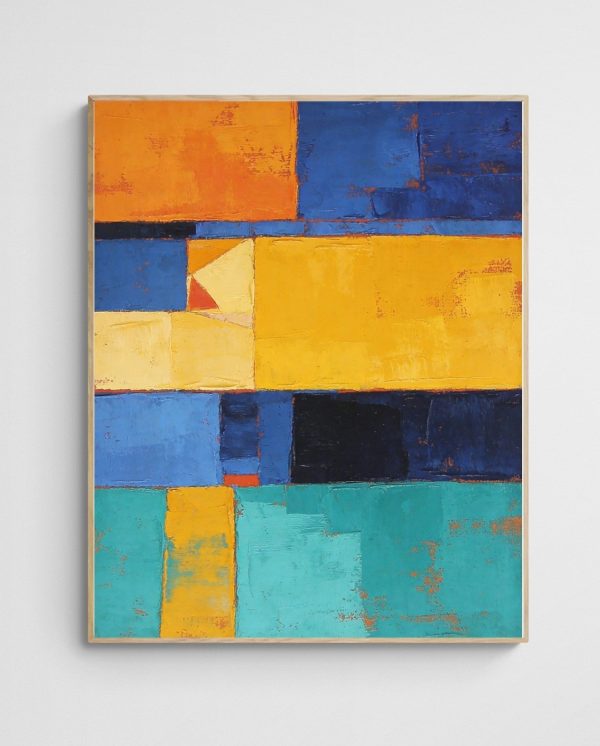
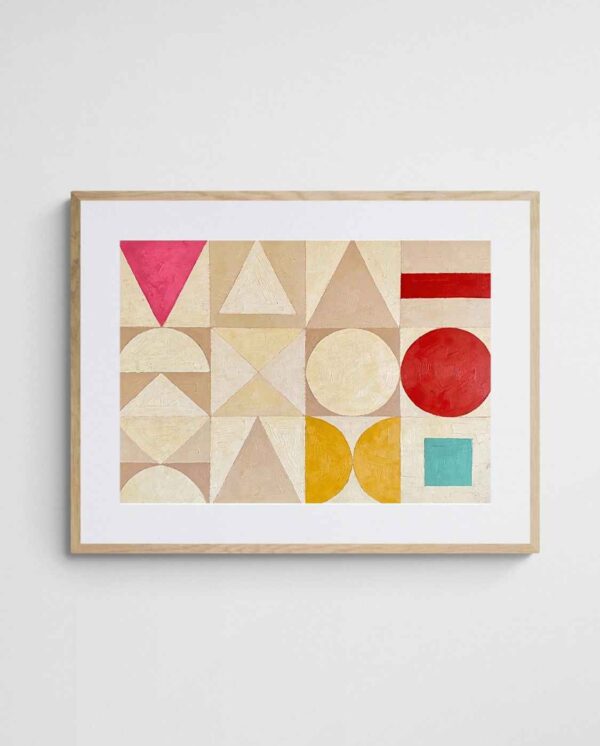
The “Colour Band Break – Bold Geometric Abstract Wall Art Print” exemplifies this zoning potential perfectly. Its strong geometric divisions and saturated colour blocks create clear visual punctuation in open spaces, naturally drawing teams toward collaborative areas while providing the visual weight needed to anchor meeting zones.


Art-based zoning offers significant advantages over physical partitions. It maintains the sight lines and light flow that justify open plan design in the first place, while still providing the psychological boundaries humans need to feel comfortable and oriented. Moreover, art can be rotated seasonally or adjusted as team functions evolve—try doing that with built-in walls or expensive modular furniture systems.
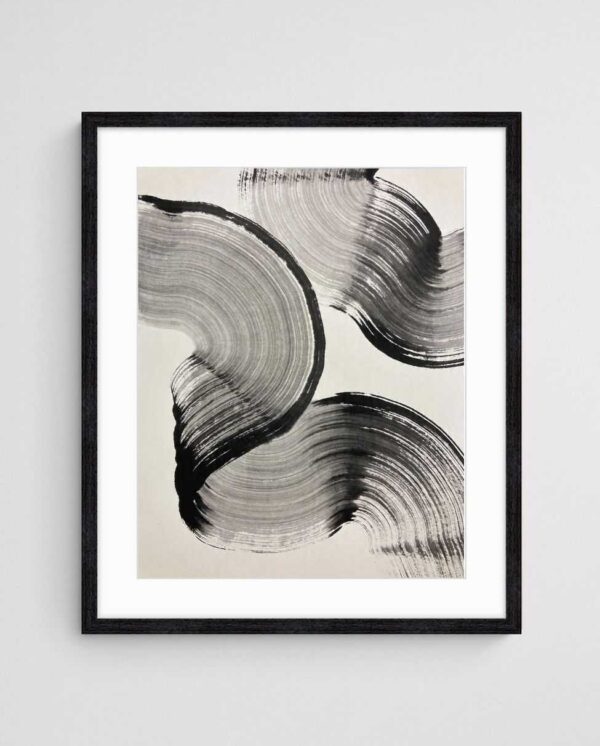
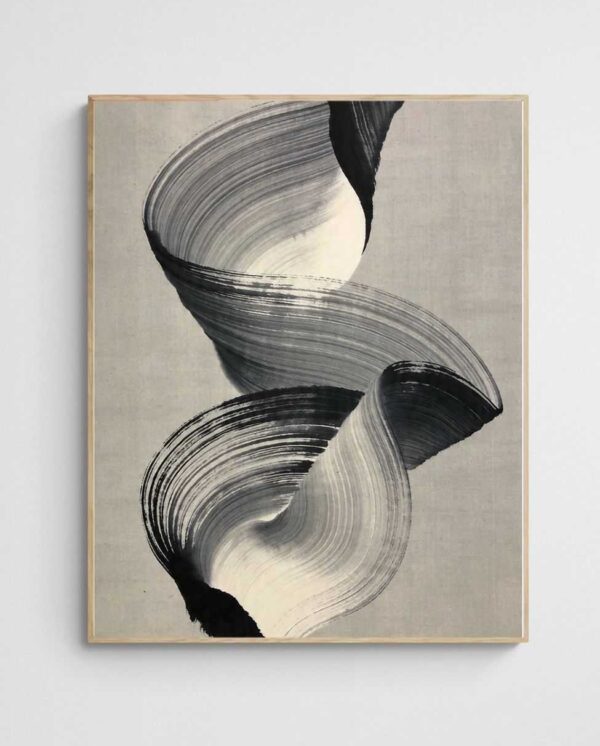
Consider how different abstract styles can signal different purposes. Minimalist geometric pieces suggest order and focused work, making them ideal for areas where detailed analysis or quiet concentration occurs. Meanwhile, dynamic, gestural abstracts with visible brushstrokes and energetic compositions signal creative zones where brainstorming and experimentation are encouraged. This visual language operates below conscious awareness but shapes behaviour patterns remarkably effectively.
The Sightline Strategy
Strategic placement matters enormously in open environments. Position bold abstract pieces at key sightlines—the views employees see when they first enter the space or lift their eyes from their desks. These become mental landmarks that help people orient themselves and navigate the space intuitively. However, a common mistake is clustering all art in reception areas while leaving vast working zones visually barren. Distribution matters more than density.
The most effective open plan art strategies create visual rhythms across the space, with larger statement pieces anchoring major zones and smaller complementary works maintaining visual interest throughout. This approach mirrors how office art trends are increasingly focusing on productivity enhancement rather than mere decoration.
The Acoustic Nightmare and Art’s Role
Perhaps the most frequently cited complaint about open plan offices centres on noise and acoustic distraction. While art cannot replace proper acoustic engineering, its strategic deployment contributes meaningfully to sound management in ways that often go unrecognised by designers focused solely on aesthetic considerations.
Large-scale canvas prints, particularly when mounted with appropriate spacing from walls, introduce additional surfaces that disrupt direct sound pathways. While the absorption coefficient of canvas-mounted art isn’t comparable to dedicated acoustic panels, any surface variation in an otherwise flat, hard environment helps scatter sound waves and reduce the echo chamber effect that plagues poorly designed open spaces.
Abstract art in open offices does double duty: what appears to be purely aesthetic choice simultaneously serves functional acoustic and psychological purposes that justify every dollar of investment.
The placement of art on shared walls between functional zones creates subtle visual and acoustic barriers without the heaviness of floor-to-ceiling installations. A substantial abstract piece marking the transition between quiet work areas and collaborative spaces signals the boundary visually while its physical mass provides marginal but meaningful acoustic separation. These incremental improvements accumulate across a large space to create noticeable comfort improvements.
Perceived noise levels decrease when visual boundaries exist, even when actual decibel measurements remain constant. Abstract art positioned to define zones helps employees mentally filter and compartmentalise ambient noise, improving their subjective experience of acoustic comfort regardless of objective sound levels.
The Psychological Impact of Visual Poverty
The term “sick building syndrome” emerged in the 1980s to describe various health complaints associated with time spent in certain buildings, particularly modern offices. While air quality and lighting typically receive the blame, research into sick building syndrome increasingly recognises visual environment deficits as contributing factors to employee malaise and dissatisfaction.
Humans evolved in visually complex environments filled with irregular patterns, varied colours, and organic forms. Modern open plan offices, with their commitment to minimalism and clean lines, often create visual environments that are actually hostile to human cognitive preferences. This disconnect between evolutionary expectations and contemporary reality manifests as vague discomfort, difficulty concentrating, and reduced job satisfaction.
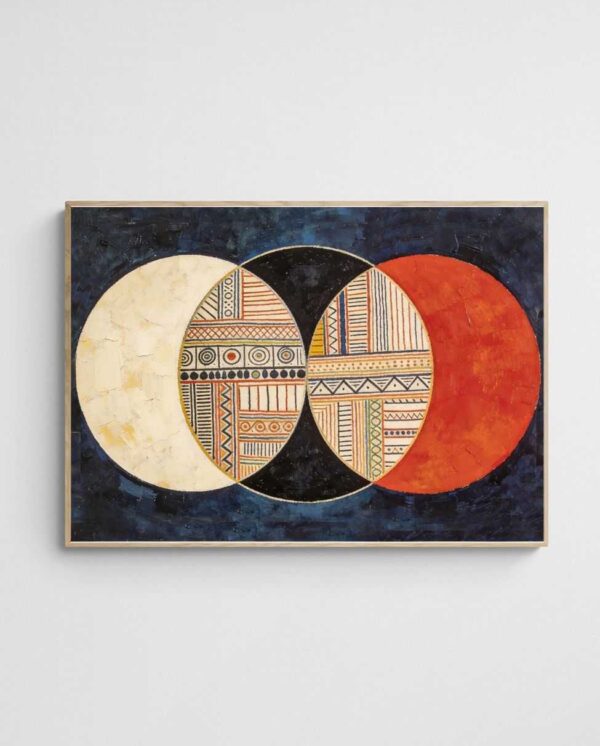
Abstract art serves as a visual vitamin supplement in these sterile environments. The complexity and variety inherent in quality abstract work provides the visual nutrition our brains crave without introducing the clutter and chaos that undermines open plan office functionality. Pieces like “Asleep in the Lightning Garden – Fauvist Abstract Art Print” bring organic colour relationships and visual complexity that satisfy our need for environmental richness.


The psychological benefits extend beyond mere preference into measurable outcomes. Employees in visually enriched environments report higher job satisfaction, stronger connection to their employer’s brand, and increased willingness to spend time in the office rather than working remotely. In the post-pandemic workplace where attracting employees back to physical offices remains challenging, these factors carry substantial economic weight.
The Creativity Connection
Exposure to abstract art specifically has been linked to enhanced creative problem-solving and divergent thinking. Unlike representational art that channels thinking along narrative lines, abstract work encourages pattern recognition, association-making, and the mental flexibility that characterises innovative thinking. For companies investing in open plan designs precisely to foster collaboration and innovation, neglecting abstract art represents a missed opportunity to reinforce their stated goals through environmental design.
The presence of art also signals organisational values to employees and visitors alike. Offices that invest in quality abstract pieces communicate that they value creativity, aesthetics, and employee wellbeing—not just productivity metrics and cost efficiency. This symbolic function shouldn’t be dismissed as superficial; particularly for startups and creative industries, art choices become part of the employer brand that attracts and retains talent.
Brand Identity in the Age of Glass and White Walls
Corporate branding once relied heavily on architectural distinctiveness and spatial design to communicate company identity. However, modern open plan offices tend toward remarkable homogeneity—exposed concrete, glass partitions, standing desks, and pendant lighting appear in tech startups and accounting firms alike. In this context, art selection becomes one of the few remaining tools for expressing distinctive organisational personality.
Abstract art offers extraordinary flexibility for brand expression without the literal obviousness of corporate photography or logo walls. A law firm might select restrained geometric abstracts that communicate precision and order, while a creative agency opts for bold gestural pieces that signal innovation and risk-taking. Both use abstract art, yet the specific style, colour palette, and scale communicate entirely different brand values to clients and employees.
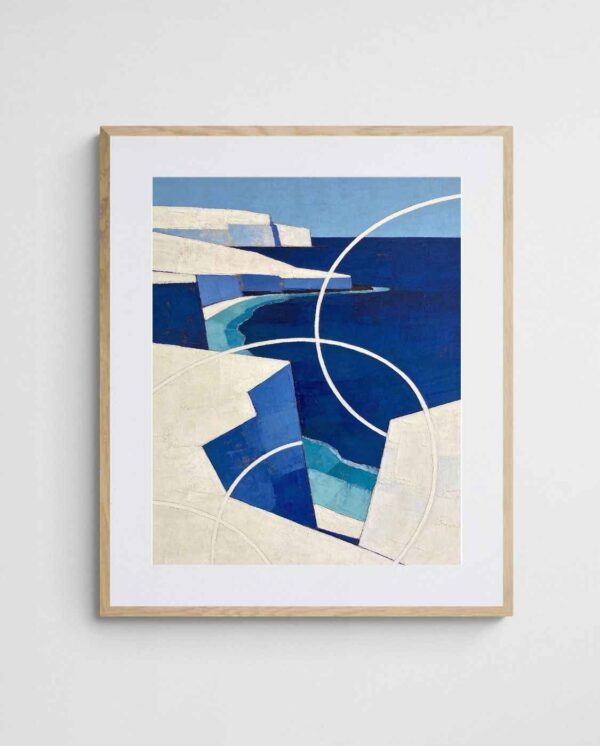
The Australian coastal aesthetic represented in pieces like “Four Shores – Modern Coastal Abstract Art Print” offers particular resonance for businesses wanting to communicate connection to place and local identity. Rather than generic corporate art that could exist anywhere, region-specific abstract work roots a company in its geographic and cultural context—increasingly valuable as remote work makes physical location feel less relevant.


Art rotation strategies further leverage this branding opportunity. Unlike permanent architectural features, art can evolve with company growth, seasonal campaigns, or cultural moments. A business might feature Australian-focused abstracts during certain periods, then rotate to geometric minimalism for product launch seasons, maintaining visual interest while reinforcing current organisational priorities through environmental design. This approach offers far more flexibility than traditional office art installations while maintaining professional polish.
Client Perception and Space Value
For businesses that host clients in their offices, art selection carries additional weight. The visual impression created during the crucial first moments after stepping off the lift shapes client perceptions of competence, stability, and cultural fit. Bare walls communicate budget constraints or lack of attention to detail; poorly selected art suggests questionable judgment; but thoughtfully curated abstract pieces signal sophistication, confidence, and cultural awareness.
Quality art appreciates rather than depreciates, making it one of the few office expenditures that functions as investment rather than pure cost. While office furniture loses value immediately and technology becomes obsolete within years, limited edition prints from emerging Australian artists can increase in value while simultaneously enhancing workplace quality daily. This dual function deserves greater recognition in facilities budget discussions, particularly as companies seek to maximise value from their office investments.
Practical Considerations for Open Plan Art Selection
Having established why open plan offices need abstract art, the implementation details determine success or failure. Scale represents the most common miscalculation—pieces appropriately sized for residential rooms disappear entirely when hung in commercial spaces with high ceilings and long sight lines. As a general guideline, art in open plan offices should be at least 50% larger than you initially think necessary.
Durability and maintenance requirements also shift in commercial contexts. High-traffic areas demand robust framing and glazing that can withstand the occasional bump from furniture being moved or enthusiastic gesticulation during impromptu hallway meetings. Canvas prints offer advantages here, as they’re lightweight, less fragile than glass-fronted frames, and easier to relocate when office configurations inevitably change.
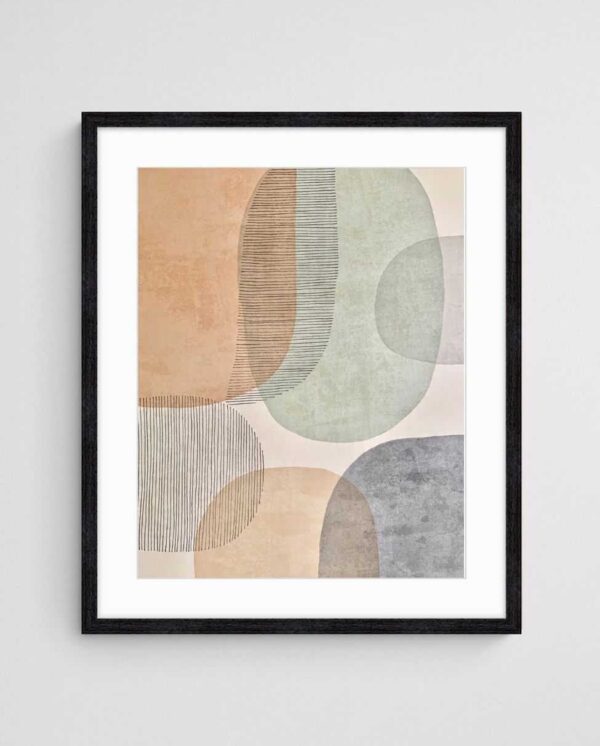
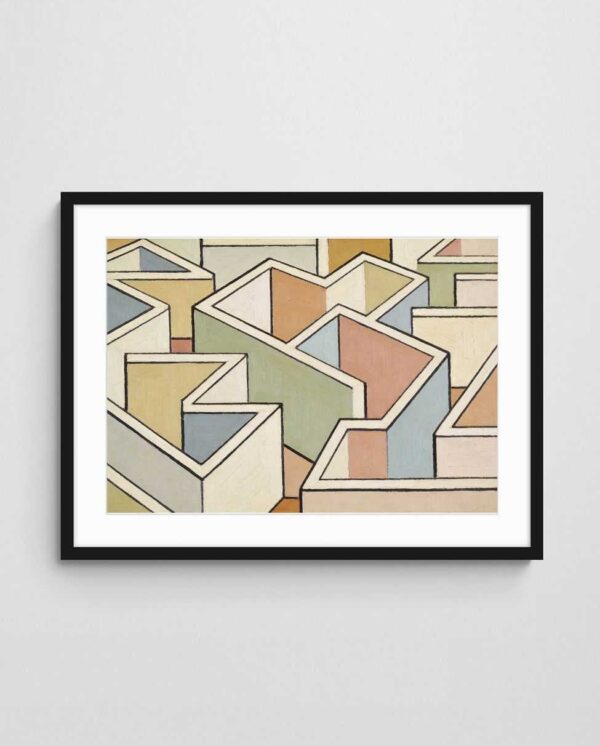
Colour palette selection requires careful consideration of both existing interior finishes and lighting conditions. Many open plan offices feature predominantly neutral palettes—greys, whites, and natural woods—which provide an excellent backdrop for bolder abstract pieces. However, in spaces with already saturated colour schemes, neutral abstract work in blacks, whites, and earth tones provides sophisticated visual relief rather than competing for attention. The “Pastel Maze – Geometric Abstract Art Print with Neutral Tones” demonstrates how sophisticated neutral work can anchor a space without overwhelming it.
Installation logistics in occupied offices present unique challenges compared to residential settings. Work must often occur outside business hours, and the disruption should be minimised. This practical reality favours lightweight solutions like canvas or foam-mounted prints over heavy framed works requiring extensive wall preparation. Additionally, modular arrangements that can be installed progressively across multiple nights prove more feasible than single large installations requiring extended access.
Budget Allocation and ROI
Finance teams understandably scrutinise art budgets, often viewing them as discretionary luxuries rather than essential infrastructure. However, the cost comparison favours art when evaluated properly. A single abstract print might cost $300–800, occupying 1.5 square metres of wall space and providing visual impact for years without maintenance. Compare this to commercial paint ($50/square metre including labour, requiring refresh every 3–5 years) or living plant walls ($1000+ per square metre plus ongoing maintenance), and suddenly art represents remarkable value.
Moreover, the employee satisfaction and recruitment benefits carry tangible economic value. If quality abstract art throughout an office contributes even marginally to retaining one valuable employee who might otherwise leave, it pays for itself many times over when measured against recruitment and training costs. Yet these benefits rarely appear in facilities budgets, creating systematic underinvestment in workplace visual quality.
For businesses uncertain about committing to permanent installations, starting with quality art prints offers a low-risk entry point. Prints provide the visual impact needed in open environments at price points that don’t require executive approval, allowing facilities managers to demonstrate value before requesting larger budgets for expanded programmes. Success builds momentum for more ambitious curation over time.
The Style Selection Framework
Choosing appropriate abstract styles requires balancing multiple factors: company brand, employee preferences, existing interior design, and functional requirements of different zones. Rather than selecting a single aesthetic for the entire office, successful programmes typically incorporate 2–3 complementary styles that create visual variety while maintaining overall coherence.
A practical framework involves selecting one dominant style that appears in high-visibility areas and reflects core brand values, then using 1–2 secondary styles in supporting areas to maintain interest without creating visual chaos. For instance, bold geometric abstracts might anchor reception and main corridors, while softer organic abstracts appear in quiet zones, and energetic gestural work enlivens collaboration areas. This approach provides the visual diversity humans crave while avoiding the incoherent art-fair-booth aesthetic that results from random acquisition.
Understanding different abstract approaches helps inform these selections. Resources like guides to identifying abstract styles prove invaluable for developing visual literacy and making confident curatorial decisions. Similarly, exploring how colour balance principles apply to modern interiors helps avoid common mistakes where well-intentioned art selections clash with existing colour schemes rather than enhancing them.
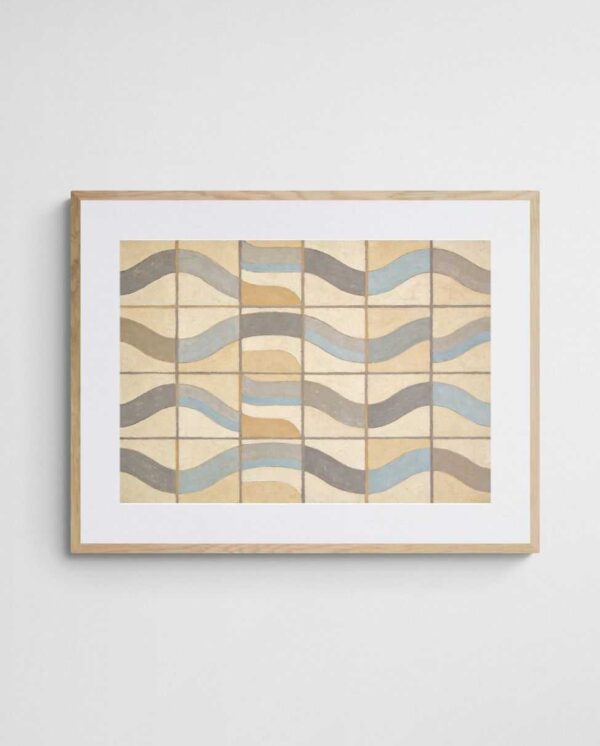
The “Gridwave – Neutral Coastal Geometric Abstract Print” represents the kind of sophisticated neutral work that functions brilliantly in challenging spaces where bolder pieces might clash with existing design elements or corporate colour palettes. These pieces prove their worth precisely when other options create problems.


The best abstract art for open plan offices solves problems while creating beauty—it’s engineering disguised as aesthetics, and that dual function justifies investment that pure decoration never could.
Open plan offices aren’t disappearing, despite ongoing debate about their merits and shortcomings. The economic advantages of space efficiency and the genuine benefits of reduced hierarchical barriers ensure their continued prevalence in contemporary workplace design. However, the early enthusiasm that stripped offices down to pure functionality has given way to recognition that humans need visual richness, psychological boundaries, and aesthetic experiences to thrive in these environments.
Abstract wall art isn’t a band-aid for poorly designed open plan offices, but it’s an essential component of making them work as intended. The visual focal points, zone definition, acoustic contribution, psychological benefits, and brand expression that thoughtful abstract art provides simply cannot be replicated through other design interventions at comparable cost and with equal flexibility. If your organisation still treats workplace art as optional decoration rather than essential infrastructure, you’re making a costly mistake that manifests in reduced employee satisfaction, impaired productivity, and diminished employer brand appeal.
Start small: identify one high-visibility wall in your office, select a piece that reflects your brand values at a scale appropriate for the space, and observe how employees respond. One bold abstract installation often prompts immediate requests for more, building the case for expanded investment. Your office’s blank walls won’t curate themselves.
 | Joseph Russell Joseph is an Australian abstract artists and curator of the Inomaly art collection. |