
Blank office walls represent untapped potential in any workspace. Whether you’re managing a bustling commercial enterprise or perfecting your home office sanctuary, understanding how to transform these empty canvases into inspiring visual spaces can dramatically impact productivity, mood, and professional image. The journey from stark white walls to a thoughtfully curated environment doesn’t require an interior design degree—just a strategic approach and an appreciation for the transformative power of abstract art.
The most effective approach to styling blank office walls involves assessing your space dimensions, identifying your professional aesthetic, selecting complementary abstract art pieces, planning strategic placement heights and groupings, and implementing proper hanging techniques. This systematic method ensures your walls evolve from forgettable backgrounds into dynamic features that enhance concentration, spark creativity, and reinforce your brand identity. Moreover, abstract art specifically offers versatility that figurative works cannot match—adapting seamlessly to various professional contexts whilst providing visual interest without distraction.
Assess Your Office Space and Lighting Conditions
Before purchasing a single print, thoroughly evaluate the physical characteristics of your office environment. Measure wall dimensions precisely, noting any architectural features such as windows, doorways, electrical outlets, or built-in shelving that will influence artwork placement. Document the ceiling height, as this dramatically affects the scale of art you should consider—standard 2.4-metre ceilings accommodate different proportions than expansive 3-metre+ heights found in heritage buildings or modern commercial spaces.
Lighting conditions represent perhaps the most overlooked factor when styling office walls. Natural light behaves differently throughout the day, potentially creating glare on glazed prints or washing out colours during peak afternoon hours. Observe how sunlight moves across your walls during typical working hours, identifying zones that receive direct versus indirect illumination. Artificial lighting equally matters—cool fluorescent tubes emphasise blues and greens, whilst warm LED downlights enhance reds and yellows, fundamentally altering how abstract art appears in your specific environment.
Consider the functional zones within your office space as well. Reception areas demand different visual approaches than private offices, meeting rooms, or open-plan collaborative zones. High-traffic areas benefit from larger statement pieces that remain visible to moving viewers, whereas intimate spaces allow for detailed works that reward closer contemplation. This functional assessment ensures your wall styling serves both aesthetic and practical business objectives, as explored in office art trends that actually boost productivity.
Define Your Professional Aesthetic
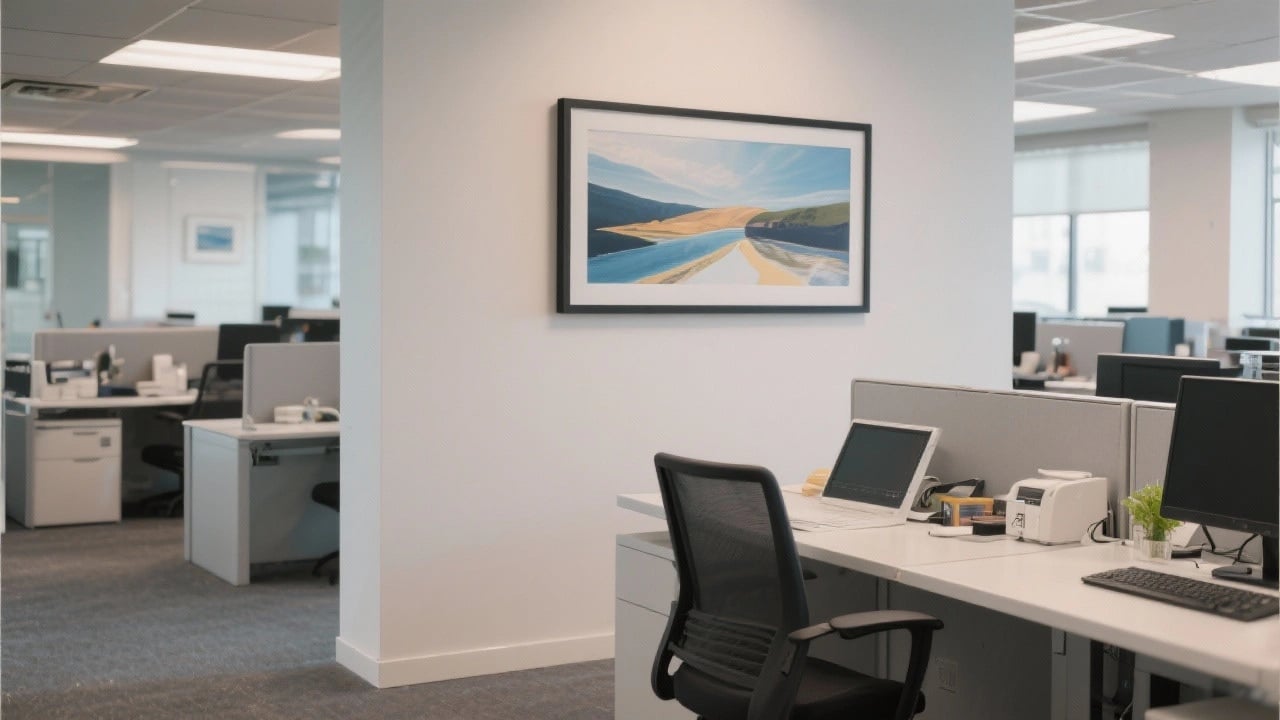
Your office walls should communicate something meaningful about your business values, industry positioning, and company culture. Corporate law firms typically gravitate towards sophisticated minimalism with neutral palettes, whilst creative agencies might embrace bold geometric abstracts or vibrant colour statements. Technology companies frequently favour clean-lined contemporary pieces that suggest innovation without overwhelming concentration. Therefore, articulating your professional aesthetic serves as the foundation for all subsequent styling decisions.
Colour psychology plays a significant role in workplace environments. Blues and greens promote calmness and focus, making them ideal for accounting firms, medical practices, or any environment requiring sustained concentration. Warmer tones like oranges and yellows stimulate creativity and conversation, perfectly suited for brainstorming spaces or client meeting rooms. Neutral palettes with strategic colour accents offer maximum flexibility whilst maintaining professional gravitas—particularly valuable for businesses hosting diverse clientele.


Furthermore, consider whether you’re cultivating a traditional, contemporary, or eclectic aesthetic. Traditional spaces benefit from classic abstract expressionism or muted colour fields that convey established authority. Contemporary offices embrace geometric precision, minimalist compositions, and experimental techniques. Eclectic approaches thoughtfully combine diverse styles, creating visual interest through intentional contrast rather than chaotic randomness. Each direction requires different curatorial strategies, as discussed in how to create visual interest with abstract art.
Aligning Art Choices With Industry Expectations
Different industries carry distinct visual expectations that influence client perceptions. Financial services professionals might select restrained abstracts suggesting stability and trustworthiness, whilst architectural firms could showcase bold structural compositions reflecting their design expertise. Medical practices often prefer calming naturalistic abstracts, and hospitality businesses typically choose welcoming, uplifting pieces. Understanding these subtle industry conventions helps you make styling decisions that reinforce rather than contradict your professional positioning.
Select Abstract Art That Serves Your Purpose
Abstract art excels in professional environments precisely because it avoids literal representation that might alienate diverse viewers. Unlike landscape photography or figurative paintings that evoke specific associations, quality abstract works offer visual interest without prescriptive meaning—allowing each viewer to project their own interpretations. This universality makes abstract prints particularly valuable in offices serving multicultural clientele or hosting varied business functions.
When selecting pieces, prioritise works that balance visual impact with professional restraint. Overly aggressive compositions or controversial colour combinations risk distracting from business objectives, whilst excessively safe choices render walls forgettable. Seek that productive middle ground where art enhances the environment without dominating it. Geometric abstracts often achieve this balance beautifully, providing structure and sophistication without emotional overwhelm.
Scale represents another critical selection criterion. A common mistake involves choosing prints that are far too small for the available wall space, creating a tentative, unfinished appearance. As a general guideline, artwork should occupy roughly 60-75% of the available wall width when hung above furniture, or 50-60% when displayed on open walls. Multiple smaller pieces arranged as a gallery wall can collectively achieve appropriate visual weight, though this approach requires more sophisticated planning than single statement pieces.


Additionally, consider the longevity of your selections. Trendy pieces might feel dated within months, whilst timeless abstract compositions retain visual appeal for years. Investment in quality prints from established or emerging artists offers better value than disposable décor, particularly in professional settings where frequent changes disrupt brand consistency. Explore abstract art prints that demonstrate both contemporary relevance and enduring aesthetic appeal.
Understanding Print Quality and Framing Options
Not all prints deliver equivalent quality. Giclée printing on archival papers or canvas produces gallery-worthy results with accurate colour reproduction and exceptional detail, justifying premium pricing for professional installations. Standard digital prints might suffice for temporary displays but often appear flat and lack the depth that elevates office environments. Similarly, framing quality matters tremendously—cheap plastic frames undermine even excellent artwork, whilst professional framing in timber or metal enhances perceived value.
Consider whether framed prints, canvas wraps, or acrylic-mounted pieces best suit your aesthetic and budget. Framed prints offer traditional sophistication and protective glazing, canvas provides contemporary edge-to-edge impact, and acrylic mounting delivers striking depth with modern flair. Each option carries different installation requirements and visual effects, influencing your overall styling strategy. According to industry standards for fine art reproduction, giclée printing remains the gold standard for professional installations.
Plan Your Wall Layout Strategy
Strategic layout planning separates amateur wall styling from professional results. Begin by creating a scaled floor plan of your wall space, either digitally or on graph paper, marking all architectural features and furniture positioning. This visual planning tool prevents costly mistakes and allows experimentation without wall damage. You might also photograph your walls and use editing software to digitally position artwork, providing realistic previews of various arrangements.
The single large statement piece represents the simplest and often most impactful approach. Position one substantial artwork as the focal point, typically centred on the wall or aligned with key furniture pieces like reception desks or conference tables. This strategy works brilliantly in formal spaces requiring immediate visual authority. Ensure the piece hangs at appropriate eye level—generally 145-150cm from floor to centre point—though this varies based on typical viewing positions (seated versus standing).
Gallery walls offer dynamic alternatives for larger spaces or collections of smaller works. However, this approach demands careful planning to avoid chaotic results. Successful gallery arrangements typically follow one of several proven templates: symmetrical grids, asymmetrical balanced compositions, or salon-style organic layouts. Maintain consistent spacing between pieces (typically 5-10cm), and establish a unifying element such as matching frames, complementary colour palettes, or thematic coherence.


For elongated walls such as corridors or behind long desks, consider horizontal sequences of two to four works arranged in a linear progression. This creates visual rhythm whilst maintaining clean, professional lines. Alternatively, vertical stacking works effectively in narrow spaces with good ceiling height, drawing the eye upward and creating an illusion of increased space. Understanding these compositional principles helps you make layout decisions that enhance rather than compromise your office architecture, as demonstrated in coordinating abstract art with furniture.
Creating Visual Balance Across Multiple Walls
When styling several walls within a single office or across connected spaces, maintain visual coherence through repeated elements. This might involve consistent framing materials, recurring colour themes, or stylistic continuity across different abstract pieces. However, avoid excessive matching that creates monotonous uniformity—introduce enough variation to maintain interest whilst preserving overall harmony. Think of your office walls as chapters in a single visual story rather than isolated displays.
Implement Proper Hanging Techniques

Even spectacular artwork appears amateurish when improperly installed. Invest in quality hanging hardware appropriate to your wall construction and artwork weight. Plasterboard walls require wall anchors or toggle bolts for anything exceeding trivial weight, brick or concrete demands masonry anchors, and timber studs offer the most secure fixing points. Never compromise on hanging security—falling artwork creates safety hazards, damages pieces, and destroys professional credibility.
Professional installers use laser levels to ensure perfect alignment, and you should too. Inexpensive laser levels or smartphone apps eliminate guesswork, particularly when hanging multiple pieces that must align horizontally or vertically. Mark hanging positions lightly with pencil before drilling, double-checking measurements against your layout plan. For valuable pieces or permanent installations, consider hiring professional art installers whose expertise prevents costly mistakes.
D-rings or wire hanging systems offer more flexibility than sawtooth hangers, allowing minor adjustments after installation. Position D-rings approximately one-third down from the artwork’s top edge for optimal balance. When using wire, ensure it’s rated for triple the artwork weight and install it taut but not excessively tight. Picture-hanging hooks come in various weight ratings—always select hardware rated for at least double your artwork weight to provide adequate safety margins.
Avoiding Common Installation Mistakes
Several installation errors plague even experienced office managers. Hanging artwork too high represents the most frequent problem—pieces floating near the ceiling disconnect from the space and appear awkward. Conversely, positioning art too low above furniture creates cramped, uncomfortable visual relationships. Maintain 15-25cm between furniture tops and artwork bottoms as a general guideline. Additionally, avoid placing valuable prints in direct sunlight, near heating vents, or in high-humidity areas where environmental conditions accelerate deterioration.


Coordinate Art With Existing Office Elements
Abstract wall art shouldn’t exist in isolation but rather integrate thoughtfully with your complete office environment. Consider how artwork colours relate to furniture upholstery, window treatments, flooring, and architectural finishes. Successful coordination doesn’t require exact matching—in fact, overly matched environments often appear staged and lifeless. Instead, seek complementary relationships where art either harmonises with existing colours or provides intentional contrast that energises the space.
Furniture style influences appropriate art selections as well. Mid-century modern furnishings pair beautifully with geometric abstracts and bold colour-field pieces, whilst traditional timber furniture often benefits from more subdued abstract expressionism or natural-toned compositions. Contemporary minimalist offices provide blank canvases for virtually any abstract style, though maintaining restraint prevents visual chaos. The “Yellow Figures” brings vibrant energy perfect for contemporary spaces seeking personality without overwhelming minimalist restraint.
Texture considerations extend beyond visual elements to tactile experiences. Matte-finished prints create sophisticated, glare-free surfaces ideal for offices with challenging lighting, whilst glossy finishes add dynamism and depth in controlled lighting environments. Canvas textures introduce organic warmth, particularly valuable in spaces dominated by glass, metal, and other hard surfaces. These textural decisions contribute substantially to overall environmental comfort and professional polish, as explored in art colours reshaping interiors.
Seasonal Adjustments and Flexible Display Systems
Progressive businesses increasingly adopt flexible art display strategies allowing seasonal rotations or periodic refreshes. Picture rail systems, gallery hanging wires, or magnetic mounting systems enable artwork changes without additional wall damage. This flexibility keeps environments dynamic, allows businesses to showcase different artists or themes, and provides opportunities to refresh spaces without major renovation investments. Consider implementing systems that facilitate future modifications whilst maintaining current professional standards.


Maintain and Refresh Your Display
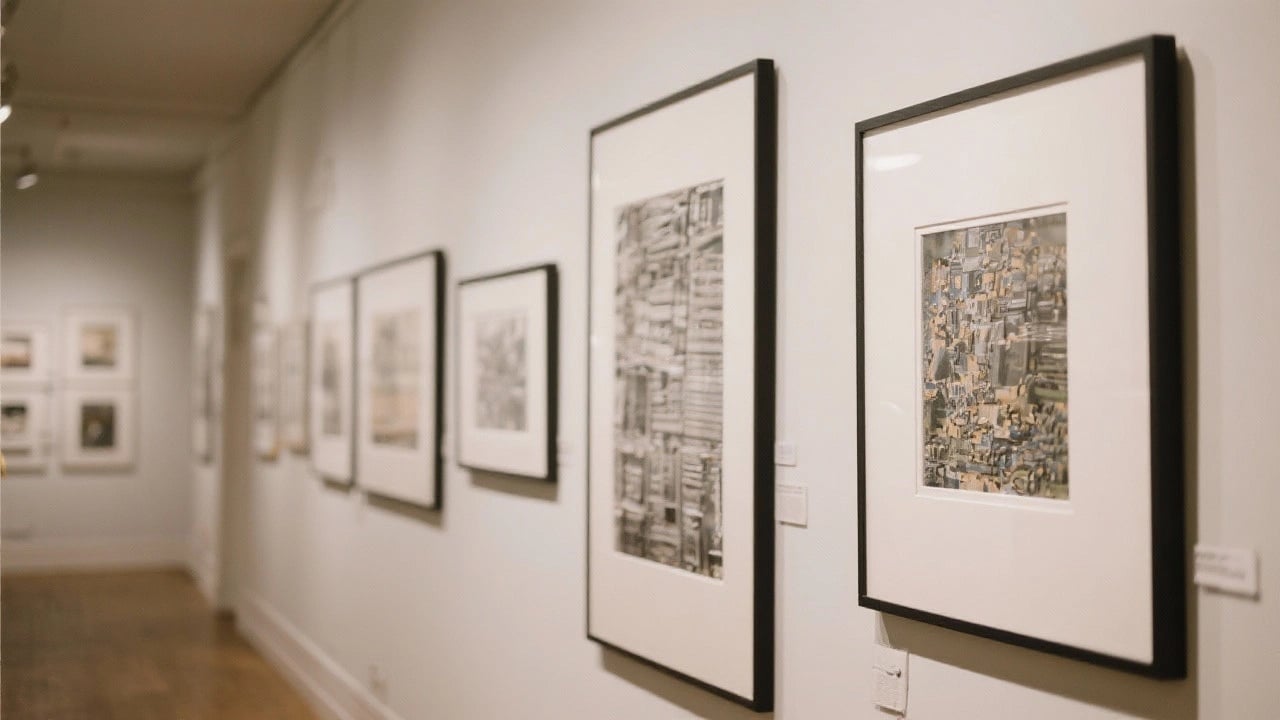
Ongoing maintenance preserves your investment and maintains professional appearances. Dust frames and glazing monthly using microfibre cloths—never spray cleaners directly onto artwork. Inspect hanging hardware quarterly, tightening any loosened screws or replacing compromised anchors before failures occur. Monitor environmental conditions, addressing any moisture problems, excessive heat, or direct sunlight exposure that threatens artwork longevity.
Furthermore, reassess your wall styling annually or whenever significant office changes occur. Businesses evolve, aesthetics shift, and what felt perfect eighteen months ago might no longer serve your current brand positioning or functional needs. This doesn’t necessarily require complete overhauls—sometimes repositioning existing pieces, introducing one or two new works, or updating framing refreshes an entire display. View your office walls as living environments requiring periodic curation rather than permanent installations.
Document your installations photographically, recording artwork details, placement decisions, and installation dates. This documentation proves invaluable when planning future changes, supports insurance claims if necessary, and helps communicate your aesthetic vision when adding new pieces. Professional offices benefit from maintaining visual consistency records that ensure cohesive styling across multiple locations or through staff changes. Explore abstract wall art collections that grow with your evolving needs.
Additionally, consider the psychological impact of workplace art rotation. Research consistently demonstrates that environmental novelty supports cognitive engagement and workplace satisfaction. Introducing new abstract pieces periodically provides subtle environmental enrichment without disruptive office reorganisations. Even rotating existing pieces to different walls creates renewed visual interest and prevents perceptual habituation where familiar environments become virtually invisible to regular occupants.
Building Art Collections Strategically
Rather than attempting comprehensive wall coverage immediately, develop your office art collection gradually through strategic acquisitions. This approach spreads costs, allows aesthetic refinement based on real-world experience, and creates opportunities to discover emerging artists whose work resonates with your evolving brand identity. Start with key anchor pieces for high-visibility areas, then expand systematically as budget permits and your curatorial vision clarifies. Many businesses find that thoughtfully curated collections assembled over time deliver far greater satisfaction than rushed installations completed under pressure.
Working with galleries or consultants can accelerate collection development whilst avoiding costly mistakes. These professionals understand spatial planning, lighting considerations, and art market dynamics that casual buyers might overlook. Some offer rental or lease-to-own programmes providing flexibility for businesses uncertain about permanent commitments. Such partnerships prove particularly valuable when styling multiple offices or managing corporate art programmes across various locations, as discussed in choosing abstract art for accounting offices.
Transforming Blank Walls Into Professional Assets
Blank office walls represent missed opportunities to shape workplace culture, enhance professional credibility, and create environments where people genuinely want to spend time. By systematically assessing your space, defining clear aesthetic objectives, selecting appropriate abstract art, planning strategic layouts, implementing professional installation techniques, and maintaining dynamic displays, you transform forgettable walls into valuable business assets. The process requires thoughtful attention but delivers returns far exceeding the investment through improved workplace satisfaction, enhanced brand perception, and environments that truly reflect your professional values.
Abstract art specifically offers unmatched versatility for professional spaces—providing visual interest without the potential complications of representational imagery. Whether you manage a boutique consultancy or a large corporate office, the principles outlined here establish frameworks for confident wall styling decisions. Remember that perfection isn’t the goal; rather, aim for considered choices that serve your specific business objectives whilst creating spaces where both employees and clients feel welcomed, inspired, and professionally assured. Discover more styling inspiration through abstract art modern décor approaches that balance contemporary aesthetics with timeless appeal.
 | Joseph Russell Joseph is an Australian abstract artists and curator of the Inomaly art collection. |