
The early 20th century art movement known as futurism challenged conventional artistic boundaries by celebrating speed, technology, and dynamic motion. Today, contemporary abstract artists are rediscovering and reinterpreting these foundational principles, breathing new life into this revolutionary approach. As modern society grapples with rapid technological advancement and cultural acceleration, futurism’s core tenets resonate more powerfully than ever, offering artists a rich framework for expressing the energy and complexity of contemporary experience.
Contemporary abstract art informed by futurism artistic principles combines the movement’s original fascination with velocity and progress with modern sensibilities around digital culture, urban environments, and visual dynamism. Artists today employ geometric fragmentation, overlapping planes, and bold colour contrasts to capture the perpetual motion of modern life. These works transcend mere decoration, serving as visual manifestations of energy, transformation, and forward momentum. Whether through minimalist line work that suggests movement or explosive colour fields that evoke kinetic energy, futurist-influenced abstracts offer collectors a powerful way to energize interior spaces while connecting to art history’s most revolutionary moments.
Understanding Futurism’s Core Artistic Principles
Futurism emerged in Italy in 1909 when poet Filippo Tommaso Marinetti published his revolutionary manifesto. The movement rejected traditional aesthetic values, instead embracing industrialization, speed, and mechanical power. Artists like Umberto Boccioni, Giacomo Balla, and Gino Severini developed visual techniques to capture motion, simultaneity, and the energy of modern life.
The fundamental principles that defined futurism artistic principles included the representation of movement through sequential imagery, the fragmentation of forms to suggest velocity, and the use of force lines to indicate directional energy. These artists sought to depict not static moments but rather the sensation of movement itself—a revolutionary concept that transformed how artists approached representation.
Contemporary abstract artists draw upon these foundational ideas while adapting them to current contexts. The original futurists celebrated machines, automobiles, and industrial progress. Today’s practitioners interpret these principles through the lens of digital acceleration, information overload, and the constant motion of contemporary urban life. This evolution demonstrates futurism’s enduring relevance as both historical movement and living artistic philosophy.
The philosophical underpinnings of futurism extended beyond mere aesthetic choices. The movement championed youth, innovation, and cultural transformation, rejecting museums and academic institutions as stagnant repositories of the past. This rebellious spirit continues to influence contemporary abstract artists who challenge conventions and push boundaries in their work.
Dynamic Movement and Speed in Contemporary Abstract Art
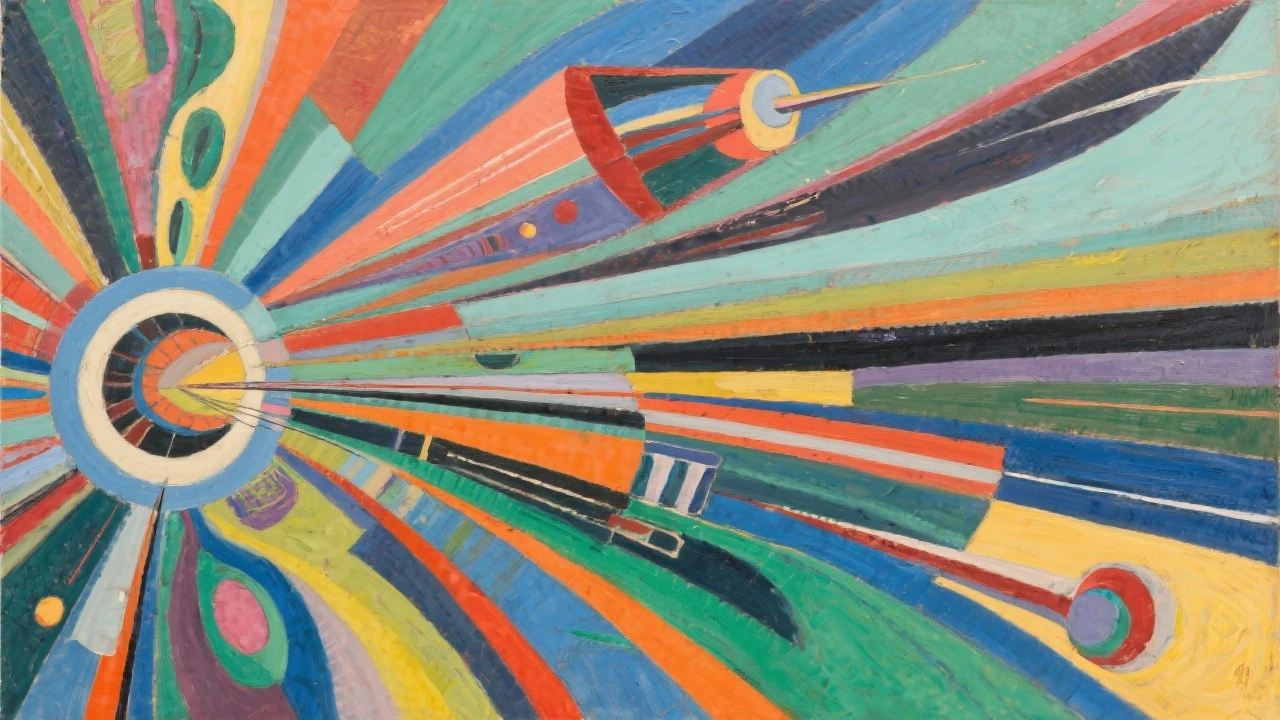
The futurist obsession with velocity finds powerful expression in contemporary abstract works that employ sweeping gestures, directional lines, and layered compositions. Modern artists utilize these techniques to evoke the perpetual motion that characterizes digital-age existence, where information, communication, and visual stimuli move at unprecedented speeds.
Abstract expressionist approaches particularly lend themselves to capturing futurist principles of dynamism. Bold brushstrokes, energetic mark-making, and compositional tension create visual experiences that suggest movement even within static two-dimensional formats. The viewer’s eye travels across these works, guided by rhythmic patterns and directional cues that mirror the constant flux of contemporary experience.
Works like “Mid Century Abstract Expressionist Art Print – Busywork 2” exemplify how contemporary artists translate futurist energy into accessible wall art. The piece captures frenetic motion through overlapping forms and vibrant colour interactions that evoke urban bustle and activity.


Kinetic energy in abstract art manifests through various visual strategies. Some artists employ diagonal compositions that create inherent instability and forward thrust. Others utilize repetitive elements that suggest sequential movement, similar to early futurist techniques but rendered with contemporary sensibilities. The result transforms walls into dynamic focal points that energize interior spaces.
Line quality plays a crucial role in conveying motion. Fluid, gestural lines suggest organic movement, while sharp, angular trajectories evoke mechanical precision and technological acceleration. Contemporary artists often combine these approaches, creating complex visual symphonies that reference both natural and artificial forms of motion, reflecting our hybrid contemporary reality.
Geometric Fragmentation as Visual Language
Geometric abstraction serves as one of futurism’s most enduring contributions to visual art. The movement’s artists fragmented forms into angular planes, creating compositions that suggested multiple viewpoints and temporal moments simultaneously. This approach revolutionized pictorial space, moving beyond single-point perspective toward more complex spatial representations.
Contemporary geometric abstraction builds upon these foundations while incorporating minimalist sensibilities and digital aesthetics. Sharp edges, overlapping shapes, and precise colour boundaries create compositions that feel both structured and dynamic. These works appeal to collectors seeking geometric art for modern interiors that balance visual interest with compositional clarity.
The principle of simultaneity—showing multiple perspectives or moments within a single composition—remains relevant in contemporary practice. Artists achieve this through layering transparent forms, juxtaposing contrasting geometric elements, and creating spatial ambiguity that challenges viewers’ perceptual expectations. This approach mirrors our fragmented digital experience, where multiple information streams compete for attention simultaneously.


Colour interactions within geometric compositions add another dimension of complexity. When angular forms in contrasting hues overlap, they create optical vibrations and spatial tensions that animate the entire composition. This technique amplifies the sense of energy and movement central to futurist principles, transforming static geometry into vibrant visual experiences.
The precision required in geometric abstraction also reflects futurism’s celebration of mechanical efficiency and technological advancement. Clean lines and calculated compositions suggest the ordered chaos of urban environments, where architectural forms, traffic patterns, and digital interfaces create complex visual ecosystems that contemporary artists translate into compelling abstract works.
Colour Theory and Emotional Intensity
Futurist artists employed bold, contrasting colours to heighten emotional impact and visual intensity. They rejected subtle tonal gradations in favour of vivid hues that clashed and vibrated against each other, creating optical energy that reinforced their themes of dynamism and modernity. This approach to colour remains influential in contemporary abstract practice.
Contemporary artists working within futurist traditions often utilize high-contrast colour schemes that create immediate visual impact. Complementary colours placed in close proximity generate optical tension that draws viewers in and sustains engagement. This strategy proves particularly effective in colourful abstract art intended to energize residential and commercial spaces.
The psychological effects of colour choices cannot be overstated. Warm colours like reds, oranges, and yellows convey energy, passion, and forward momentum—qualities central to futurist ideology. Cool blues and greens suggest technological precision and urban environments. Artists strategically combine these palettes to create works that resonate emotionally while referencing futurist themes of progress and transformation.
Colour field techniques offer another avenue for exploring futurist principles through abstraction. Large areas of saturated colour create immersive visual experiences that overwhelm the viewer’s perceptual field, suggesting the all-encompassing nature of modern technological environments. These works translate futurism’s celebration of totality and immersion into purely abstract visual language.


The interplay between colour and form amplifies compositional dynamism. When bold hues follow directional lines or fragment across geometric planes, they reinforce movement and energy. This synergy between colour and structure demonstrates how futurist artistic principles operate as integrated systems rather than isolated techniques, creating holistic visual experiences that capture contemporary complexity.
Urban Energy and Modern Life
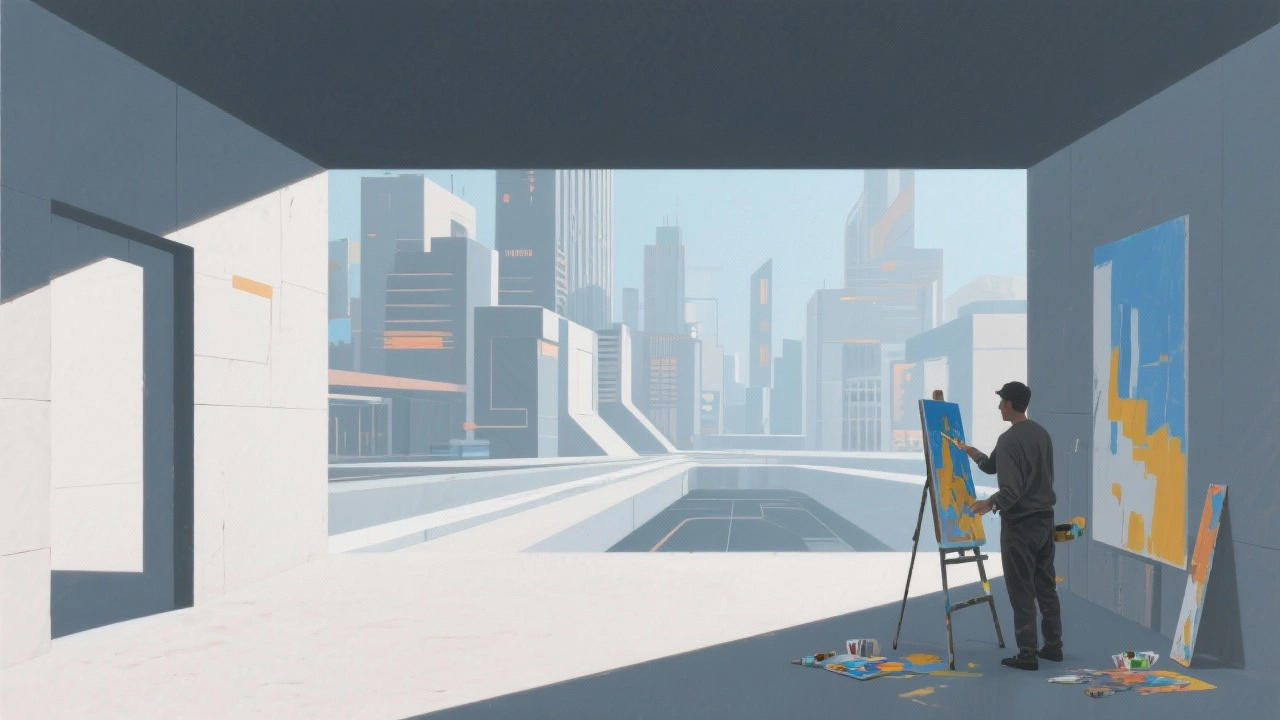
The original futurists drew inspiration from cities—their noise, crowds, traffic, and electric lighting. They saw urban environments as laboratories of modernity where traditional social structures dissolved into new forms of collective experience. Contemporary abstract artists continue this tradition, translating urban energy into visual compositions that capture metropolitan dynamism.
Modern cities present even more complex visual stimuli than their early 20th-century counterparts. Digital advertising, architectural diversity, transportation networks, and human density create overwhelming sensory experiences. Abstract artists distill these elements into compositions that evoke urban essence without literal representation, allowing viewers to connect emotionally with metropolitan energy.
Patterns and textures play significant roles in conveying urban complexity. Repetitive elements suggest architectural rhythms, crowd movements, or traffic patterns. Layered compositions mirror the visual density of city streets where multiple activities unfold simultaneously. These artistic strategies transform chaotic urban experiences into aesthetically compelling abstracts suitable for interior display.
The “Bold Abstract Landscape Print – Lunch in the Park 7” demonstrates how contemporary artists abstract urban leisure moments into geometric compositions. The work captures the energy of public spaces while maintaining visual accessibility through structured design elements.


Coastal urban environments offer particular opportunities for futurist interpretation. Beach cities combine natural elements with human-built structures, creating hybrid environments where organic and mechanical rhythms intersect. Artists working with these themes create abstracts that bridge natural and urban aesthetics, appealing to collectors seeking works that balance energy with tranquility.
The psychological impact of urban-inspired abstracts makes them particularly effective in contemporary interiors. They bring exterior energy into domestic and commercial spaces, creating visual connections between private environments and the broader metropolitan context. This dynamic proves especially valuable in office spaces where energizing artwork can enhance productivity and creative thinking.
Technology’s Influence on Contemporary Futurist Abstraction
Digital technology has transformed both how artists create work and what subjects they explore. The original futurists would have marveled at computers, smartphones, and the internet—technologies that accelerate communication and information exchange beyond their wildest imaginings. Contemporary artists working within futurist traditions naturally engage with these digital realities.
Digital tools enable precise geometric constructions and colour manipulations impossible through traditional means. Artists can experiment with countless compositional variations, testing different configurations before committing to final versions. This iterative process mirrors software development cycles and digital workflows, embedding technological processes within the artworks themselves.
However, many contemporary artists intentionally maintain traditional media despite digital possibilities. This choice creates productive tensions between historical techniques and contemporary subjects, generating works that comment on our relationship with technology rather than simply celebrating it. The original futurist movement embraced technology uncritically, but contemporary practitioners often adopt more nuanced perspectives.
Visual aesthetics borrowed from digital interfaces increasingly appear in abstract works. Pixel-like grids, glitch effects, and screen-inspired colour palettes reference our mediated visual experiences. These elements translate digital ephemerality into tangible physical objects, creating bridges between virtual and material realities that define contemporary existence.
The democratization of art through digital reproduction and online galleries represents another technological influence. High-quality prints make artist-designed works accessible to broader audiences, extending futurism’s democratic impulses into contemporary contexts. Collectors can now access sophisticated abstract works without prohibitive costs, transforming how people engage with art in their daily environments.
Integrating Futurist Abstract Art into Modern Interiors
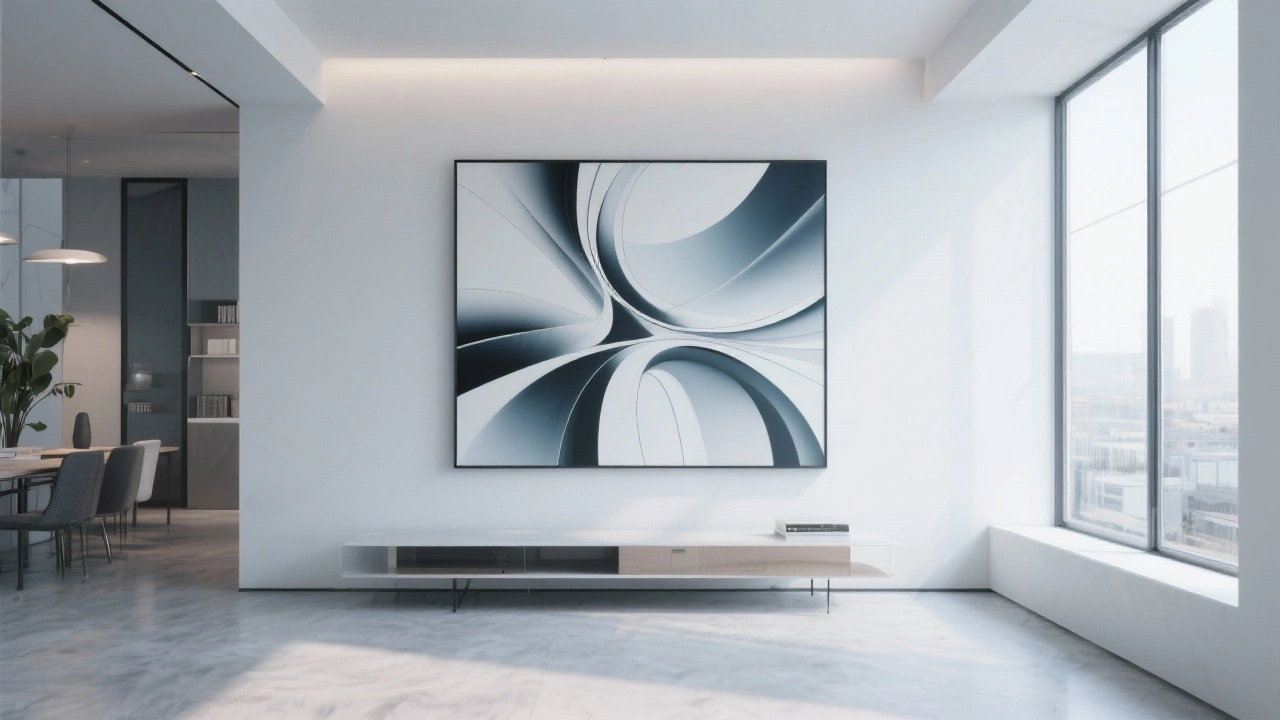
Selecting abstract art informed by futurist principles requires understanding how dynamic compositions interact with interior environments. These works carry inherent energy that transforms spatial atmospheres, making them powerful design elements. Strategic placement and thoughtful integration maximize their impact while maintaining overall aesthetic harmony.
Living spaces benefit from futurist abstracts’ ability to create focal points and conversation starters. Large-scale works with bold geometries and contrasting colours command attention without overwhelming rooms. When positioned opposite seating areas, these pieces provide visual engagement that enhances social interaction and contemplative moments alike. The key involves balancing artistic energy with surrounding furnishings to create cohesive environments.
Colour coordination proves essential when integrating vibrant abstracts into existing palettes. Works can either complement dominant interior hues or provide deliberate contrasts that energize neutral spaces. Understanding colour matching principles helps collectors make selections that enhance rather than clash with their design schemes.
Scale considerations determine visual impact and spatial relationships. Oversized works create dramatic statements appropriate for expansive walls, while smaller pieces grouped in arrangements can generate similar energy through cumulative effect. Gallery walls featuring multiple futurist-inspired abstracts create dynamic installations that capture the movement’s celebration of simultaneity and fragmentation.
Lighting significantly affects how futurist abstracts present themselves in interior spaces. Direct illumination highlights textural elements and colour relationships, while ambient lighting creates subtler integrations. Adjustable lighting systems allow collectors to modulate artwork presence throughout daily cycles, transforming pieces from bold daytime statements to contemplative evening presences.
Contemporary minimalist interiors particularly benefit from futurist abstract additions. The clean lines and reduced ornamentation of minimalist design provide perfect backdrops for energetic artworks. This pairing creates productive tensions between calm environments and dynamic visual elements, resulting in sophisticated spaces that balance tranquility with stimulation.
The Future of Futurism in Abstract Art
As we progress further into the 21st century, futurist artistic principles continue evolving alongside technological and cultural developments. Emerging artists reinterpret these historical foundations through contemporary lenses, addressing current concerns while maintaining connections to the movement’s revolutionary spirit. This ongoing dialogue between past and present ensures futurism’s continued relevance.
Environmental consciousness introduces new dimensions to futurist thinking. While original futurists celebrated industrial progress uncritically, contemporary practitioners must navigate complex relationships between technological advancement and ecological sustainability. This tension produces artworks that question progress narratives while still engaging with themes of transformation and change.
Global perspectives increasingly influence futurist abstraction. The movement originated in European contexts, but contemporary artists worldwide contribute unique cultural perspectives to its ongoing development. This globalization enriches futurist traditions, introducing new visual vocabularies and conceptual frameworks that expand the movement’s original boundaries while honouring its foundational principles.
Artificial intelligence and machine learning represent frontier technologies that contemporary futurist-minded artists explore. These tools enable generative processes that produce unexpected compositions, challenging traditional notions of artistic authorship and creativity. Such explorations extend futurism’s celebration of technological possibility into uncharted territories, posing questions about human-machine collaboration in creative processes.
The increasing accessibility of abstract art through quality print reproductions democratizes futurist aesthetics, allowing broader audiences to engage with these powerful visual languages. This accessibility aligns with futurism’s populist impulses and rejection of exclusive art world hierarchies, bringing revolutionary artistic principles into everyday domestic environments.
Collectors seeking works that connect historical innovation with contemporary relevance find rich opportunities in futurist-inspired abstracts. These pieces function as both aesthetic objects and conceptual bridges linking past revolutionary moments to present transformations. As technology continues reshaping human experience, artworks engaging with speed, motion, and change will maintain powerful cultural resonance.
Looking ahead, futurist principles will likely continue informing abstract practice as long as societies grapple with technological acceleration and cultural transformation. The movement’s core insights about representing dynamism, fragmentation, and energy remain artistically productive, offering frameworks for visualizing contemporary experience. Whether through geometric precision, gestural expressionism, or hybrid approaches, artists will continue discovering new applications for these enduring ideas.
The dialogue between futurism’s historical legacy and contemporary practice enriches both past and present. By understanding foundational principles while adapting them to current contexts, artists create works that honor tradition while pushing boundaries. This balance ensures futurist abstraction remains vital, relevant, and visually compelling for collectors seeking art that energizes spaces while connecting to significant artistic movements. For those interested in exploring how these principles manifest in current work, examining emerging abstract art trends reveals ongoing innovations within this rich tradition.
 | Joseph Russell Joseph is an Australian abstract artists and curator of the Inomaly art collection. |